
Resin statues are not the kind of collectibles you should casually box up and forget. They are heavier, more brittle, and often more expensive than standard PVC figures, which means off-display storage needs to be handled with the same care as display placement. If you rotate statues seasonally, run out of shelf space, or need to protect premium pieces during room changes, learning how to store resin statues properly can prevent chips, paint transfer, pressure damage, and long-term regret.
Collectors looking for resin statue storage advice usually have the same concern: a statue that looks safe on a shelf can become vulnerable once it is packed away. In storage, the risks change. Instead of sunlight and dust, the bigger threats become poor support, shifting weight, trapped moisture, friction against painted surfaces, and temperature extremes. The good news is that you can store resin figurines safely if you pack them deliberately and choose the right environment.
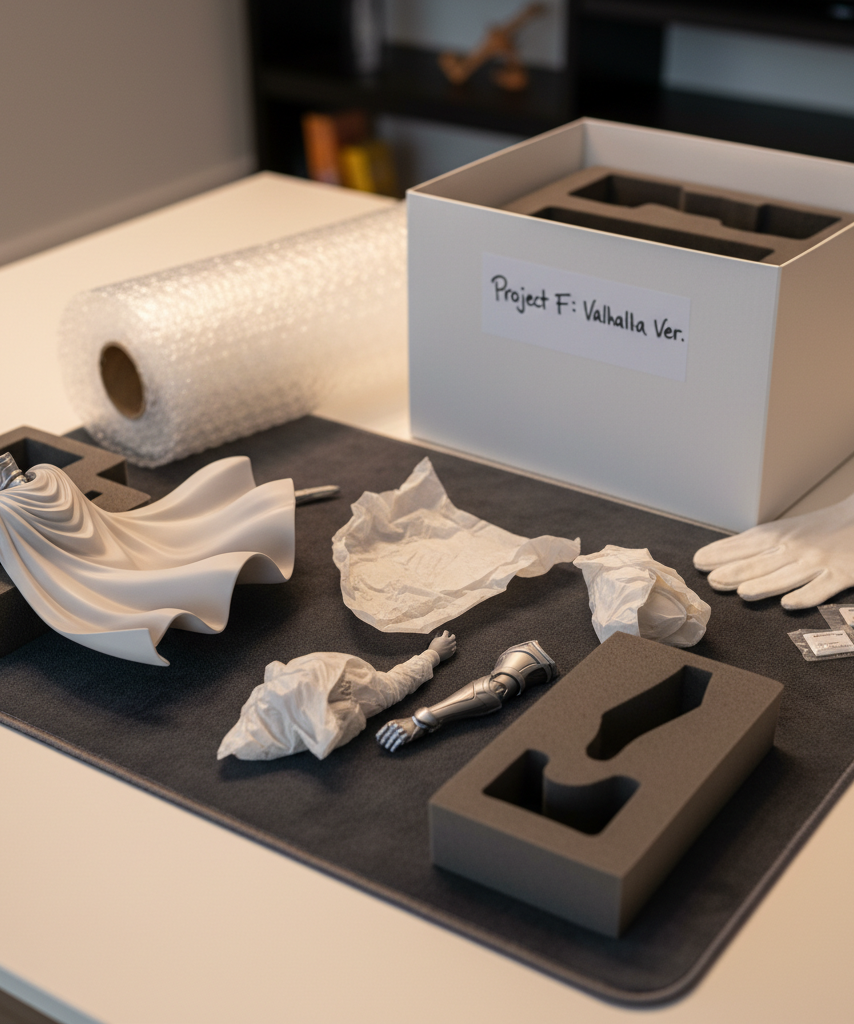
When Resin Statues Should Be Stored Instead of Displayed
Not every statue needs to stay on display all year. In fact, sometimes storage is the safer choice. Resin pieces can be better protected in storage when your room setup, shelf stability, or available space is no longer ideal.
Good reasons to store a resin statue include:
- rotating displays to reduce crowding
- moving homes or rearranging furniture
- running out of stable shelf space
- protecting seasonal or limited-theme displays
- reducing exposure during dusty renovations or room work
- preventing risky stacking or overcrowded shelves
A crowded display can be more dangerous than proper storage. For shoppers exploring this further, see resin statues category. If a statue is wedged too closely between other pieces or placed where it may be bumped, storing it carefully is often the smarter move.
Best Packing Materials and Support Methods
The best way to store resin statues is to think in terms of support, separation, and stability. You want the piece cushioned without creating pressure points, and protected without trapping risky friction against delicate paint.
Packing Materials That Help
Useful materials include:
- soft microfiber cloths or mats
- acid-free tissue paper
- soft foam sheets
- original molded packaging if it is still in good condition
- sturdy boxes that do not flex easily
- zip bags or small containers for separate accessories if padded properly
Be careful with materials that feel convenient but can create problems if used directly against painted surfaces.
Avoid using directly on delicate paint when possible:
- rough paper towels
- low-quality tissue that sheds fibers
- tight plastic wrapping against painted areas
- loose packing that allows movement in transit or storage
Step-by-Step Packing Workflow
If you need to know how to protect resin statues in storage, use a slow, methodical routine.
1. For shoppers exploring this further, see display cases category. Clean the statue lightly before packing so dust does not grind into surfaces. 2. Prepare a padded workspace before disassembly or handling. 3. Remove detachable parts carefully, supporting both sides of each connection. 4. Wrap separated parts in soft protective material without squeezing them tightly. 5. Support the main body at strong structural areas, not delicate extensions. 6. Place the heaviest parts so they cannot roll, lean, or press into thinner details. 7. Fill empty space in the box so nothing shifts during movement. 8. Label the box clearly so it is not stacked or handled carelessly later.
For many collectors, the original manufacturer packaging is still the safest option if it is intact and clean. It was designed around the statue’s shape, which is a major advantage.
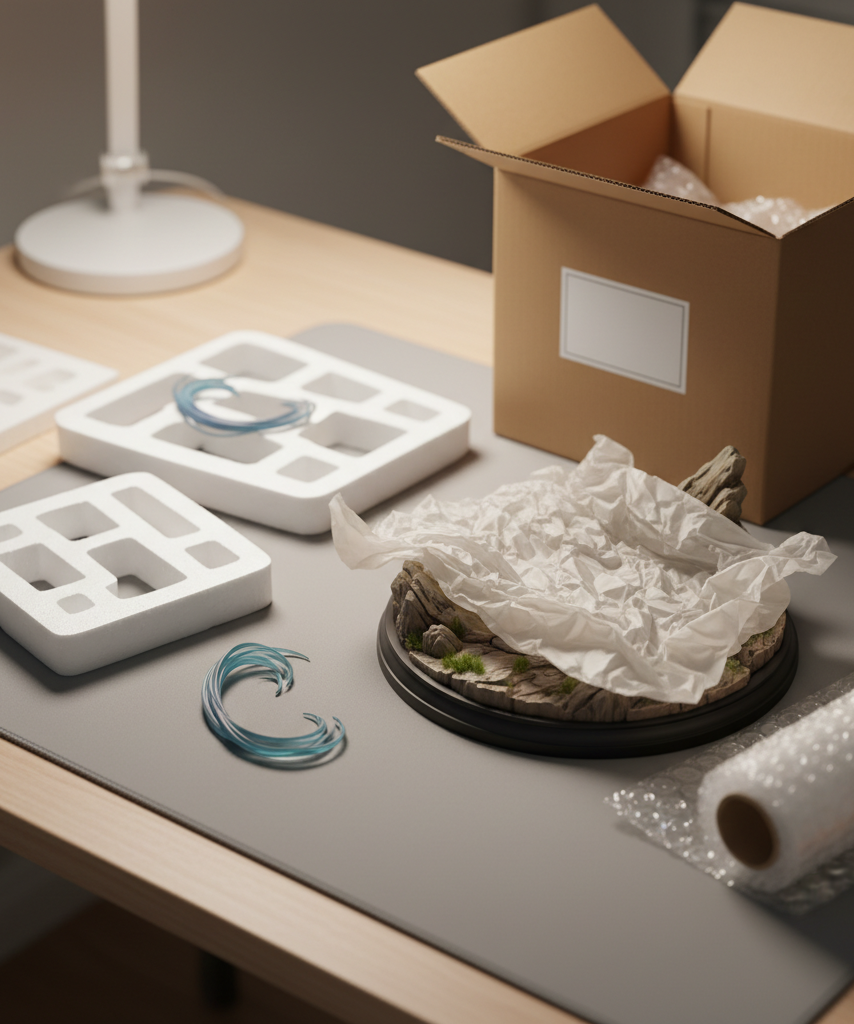
How to Avoid Pressure Damage and Paint Transfer
This is where many collectors make mistakes. Resin does not only break from drops. It can also suffer from slow pressure in the wrong place or prolonged contact between painted surfaces and unsuitable packing materials.
Preventing Pressure Damage
Pressure damage happens when weight rests on the wrong area for too long. Thin strands, sharp points, fabric edges, scenic details, and protruding accessories are especially vulnerable.
To reduce pressure damage:
- never let the statue’s weight rest on a fragile extension
- avoid stacking heavy items on top of the storage box
- keep the statue from leaning sideways in a half-supported position
- use shaped support rather than random pressure from stuffed filler
Preventing Paint Transfer and Surface Marks
Paint transfer risk increases when painted parts rub against each other or stay pressed against unsuitable material for extended periods. Matte and highly finished surfaces can be especially sensitive. For shoppers exploring this further, see clean resin statues safely.
To reduce that risk:
- separate contact points with soft non-abrasive barriers
- avoid tight wrapping that presses painted areas together
- do not force parts into cramped spaces
- check that accessories do not rub against the main body inside the box
A storage box should feel secure, not compressed. If you have to push the lid down, the setup is already too tight.
Storage Environment Tips for Long-Term Safety
Even perfect packing can be undermined by a bad room. Resin statue storage should happen in a stable indoor environment, not wherever spare space happens to exist.
Best Storage Conditions
The safest storage area is:
- indoors
- dry and climate-stable
- away from direct sunlight
- away from high humidity
- away from attics, garages, and damp basements
- protected from frequent temperature swings
Collectors who store resin figurines safely usually focus as much on room conditions as on the box itself. For shoppers exploring this further, see resin statues.
Why Environment Matters So Much
Heat, moisture, and unstable air conditions can affect paint, adhesives, foam, packaging materials, and long-term part fit. Even if the statue itself is not visibly warping, bad storage conditions can create surface issues, odor problems, or packing-related damage over time. For shoppers exploring this further, see protect figures from heat and humidity.
Good Habits for Long-Term Storage
For longer storage periods, it helps to:
- check boxes every few months
- avoid piling too many heavy containers together
- keep labels visible and orientation clear
- store valuable statues where accidental bumps are unlikely
- review packed pieces before seasonal redisplay
This matters especially for premium resin collections where a single packing mistake can cost far more than the time saved by rushing.
Final Answer: How Do You Store Resin Statues Safely Between Displays?
Store resin statues safely by using soft protective packing, supporting strong structural areas, separating delicate painted surfaces, and placing the boxed statue in a stable climate-controlled indoor space. Avoid pressure points, avoid cramped packing, and avoid harsh environments like attics, garages, or damp storage rooms.
For most collectors, the safest rule is simple: pack resin like it will be moved, even if it is only going into a closet. Good support, low friction, and stable room conditions are what protect resin statues between displays.
Comments