
How to Match Anime Figure Size to Shelf Space Before You Buy
Buying a great-looking figure and then realizing it does not fit your shelf is one of the most common collecting mistakes. A product photo can make a figure look compact, but the real-world footprint depends on height, base width, pose, depth, hair effects, weapons, and how closely you plan to display it beside other pieces. If you want a reliable anime figure shelf fit before checkout, you need to measure your display space the same way manufacturers describe the figure.
This guide breaks down how to compare anime figure size for shelf planning before you buy, how scale figures translate into actual dimensions, why base dimensions matter more than many collectors expect, and how much extra clearance to leave so your display cabinet still looks intentional instead of cramped.
Which dimensions matter before buying
The first mistake buyers make is checking only figure height. Height matters, but it is rarely enough on its own.
When you are trying to know how to know if a figure will fit on shelf, compare these measurements first:
- Maximum height: from the bottom of the base to the tallest point, including hair, hats, wings, raised weapons, or effect parts
- Maximum width: the widest left-to-right point, including arm spread, cape flow, side-swept hair, or accessories
- Maximum depth: the front-to-back space the figure needs, including dynamic lunges, extended weapons, tails, and layered bases
- Base dimensions: the actual width and depth of the stand or scenic base
- Vertical clearance above the figure: extra room needed so the shelf does not visually crush the piece
- Side clearance: breathing room to keep neighboring figures from touching
A listing may advertise a figure as “27 cm tall,” but that does not tell you whether the base is a wide oval, whether the character leans forward, or whether an accessory projects beyond the base edge. For collectors using a display cabinet, those details decide whether a figure fits comfortably or becomes a frustrating return problem.
How scale translates into real display height
Scale labels are helpful, but they are not a guarantee of exact shelf fit. A 1/7 scale figure and another 1/7 scale figure can occupy very different amounts of space depending on the character’s original height, pose, footwear, hair volume, and base design.
Common scale ranges in practical shelf terms
Here is a rough guide collectors can use when planning shelf space:
- 1/12 scale: often around 5 to 7 inches tall, usually easier to place on narrower shelves
- 1/10 scale: often around 6 to 8 inches, sometimes with a broader action-style stance
- 1/8 scale: often around 8 to 10 inches, a common size for balanced shelf displays
- 1/7 scale: often around 9 to 11 inches, but can feel much larger with dramatic hair or effects
- 1/6 scale: often around 10 to 13 inches or more, frequently needing deeper shelves and more visual breathing room
- L-size or oversized prize/statue formats: highly variable, and often more demanding than the label suggests
The key is to treat scale as a starting estimate, not the final answer. For shoppers exploring this further, see 1/6 scale figures. For shoppers exploring this further, see 1/7 scale figures. If a manufacturer provides an actual product size in centimeters or inches, use that measurement over the scale ratio every time.
Why pose changes the math
Two figures with the same listed height can display very differently:
- A straight-standing character uses height more than depth
- A crouching or lunging character may need less height but much more depth
- A figure with twin tails, wings, halberds, or effect parts may need width that the scale label does not communicate
- A seated figure may fit on a lower shelf but still require a surprisingly large base
For anime figure size for shelf planning, a calm upright pose is usually easier to place than a dynamic diagonal pose, even if both belong to the same scale class.
How much extra room to leave for width, depth, and multi-figure layouts
A shelf is not truly “large enough” just because the figure can physically squeeze into it. Good display planning leaves enough margin for safe placement, visibility, cleaning, and future additions.
A practical clearance rule
For most collectors, a useful baseline is to leave:
- 1 to 2 inches (2.5 to 5 cm) above the tallest point of the figure
- At least 1 inch (2.5 cm) on each side of a standard scale figure
- 2 inches (5 cm) or more in front-to-back reserve when the pose is dynamic or the shelf door closes tightly
If you collect larger scales or statues with effects, increase that buffer. Extra room helps prevent accidental contact during rearranging and keeps the display from looking overcrowded.
Planning for more than one figure
If you are placing multiple figures on the same shelf, do not calculate fit by adding only the base widths together. You also need to account for:
- pose overlap
- visual balance between heights
- arm or weapon spread
- empty space that keeps each figure readable from the front
- room to remove one figure without bumping the next
A shelf that can technically hold four figures may only display three well. In most cases, collectors get a better result by underfilling slightly rather than chasing maximum density.
Why base dimensions matter more than many buyers expect
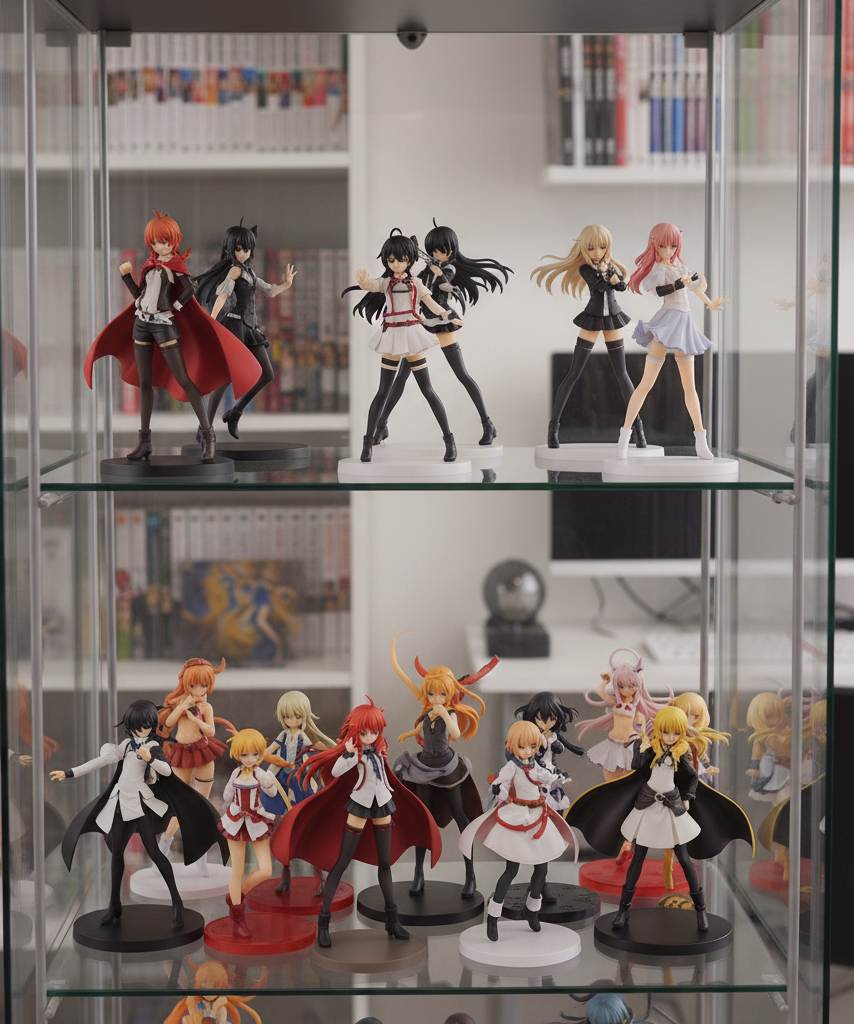
Base dimensions are one of the biggest reasons a figure that “should fit” ends up not fitting. Many buyers focus on the character body and forget that the stand can be the widest or deepest part of the entire piece.
A figure may have:
- a circular base that extends well beyond the feet
- an angled scenic base that pushes depth forward
- support rods that widen the required footprint
- effect parts that start inside the base area but extend beyond it visually
For shelf space planning, the base is the true footprint. If the listing includes only character height and no base size, inspect photos carefully and assume the real footprint may be larger than expected.
Red flags that suggest a larger footprint
Watch more carefully when the figure has:
- flowing dresses or coats
- long horizontal weapons
- wide action poses
- jumping, floating, or leaning support structures
- diorama-style terrain
- companion pieces, pets, or extra effect parts
These designs often need more depth than a standard bookshelf provides. They may fit better in a display cabinet with adjustable shelf spacing and enough front clearance to avoid the glass. For shoppers exploring this further, see how deep should a shelf be.
A simple pre-order fit-check method
If you preorder often, use the same repeatable check every time. It takes only a few minutes and prevents expensive mistakes.
Step 1: Measure the real usable shelf opening
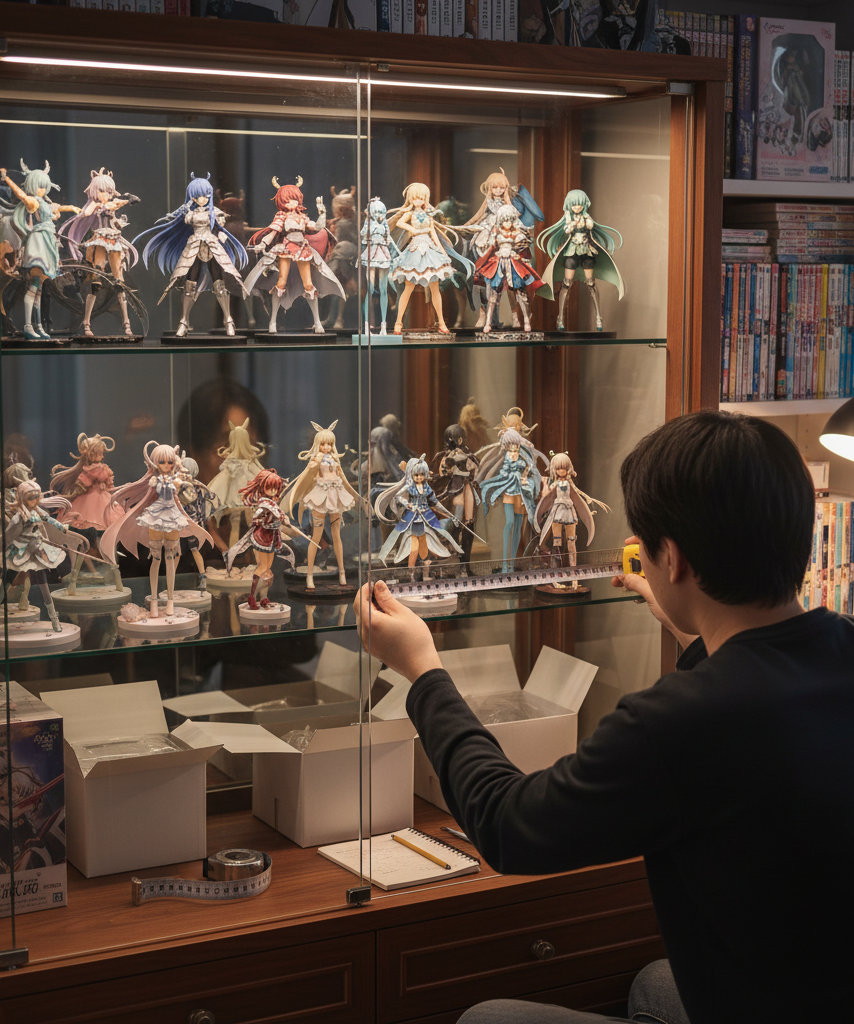
Measure the inside width, depth, and height of the shelf or display cabinet where the figure will go. Do not use outside furniture dimensions.
Also check for practical limits such as:
- cabinet door frames
- shelf lip or trim
- lighting strips
- rear panel obstructions
- uneven usable depth caused by sliding doors
Step 2: Compare with the listed figure dimensions
Use the product’s published measurements when available. Convert units if needed so everything is in the same system.
If the listing gives only height, estimate more cautiously and avoid assuming a perfect fit.
Step 3: Add safety margin
Before deciding a figure fits, add extra room for:
- top clearance
- side clearance
- front glass clearance
- hand access for dusting or repositioning
If the fit works only with zero margin, the figure does not really fit well. For shoppers exploring this further, see figure size-check guide.
Step 4: Check the surrounding layout
Ask yourself:
- Will this figure block another figure behind it?
- Will wide hair or accessories collide with neighboring pieces?
- Will the tallest point sit too close to the shelf above?
- Will the base force an awkward diagonal placement?
A display that fits physically but ruins visibility is still a bad fit.
Pre-order fit-check checklist
Use this quick checklist before buying:
- Measure the shelf’s inside width, depth, and height
- Look for the figure’s actual dimensions, not just the scale label
- Check base width and base depth whenever possible
- Review photos for weapons, hair, wings, and effects that extend beyond the body
- Leave extra room for air, cleaning, and future rearranging
- For grouped displays, plan the whole shelf composition, not just one slot
- If measurements are incomplete, treat the figure as a higher-risk purchase
Final thoughts
The best way to avoid shelf regret is to stop thinking in terms of “Will the character fit?” and start thinking in terms of “Will the full footprint fit with breathing room?” That shift makes anime figure shelf fit decisions much more accurate.
Before you buy, compare real shelf dimensions, figure dimensions, and base dimensions together. When you do that consistently, it becomes much easier to choose the right anime figure size for shelf displays, avoid overcrowding, and build a display cabinet that looks clean, intentional, and collector-worthy from day one. For shoppers exploring this further, see display cases.
Comments