
Cheap Anime Figure Websites: When a Low Price Is a Red Flag
Cheap anime figure websites are not automatically bad, but unusually low prices become a red flag when they show up alongside weak store details, vague listings, missing policies, or inconsistent product information.
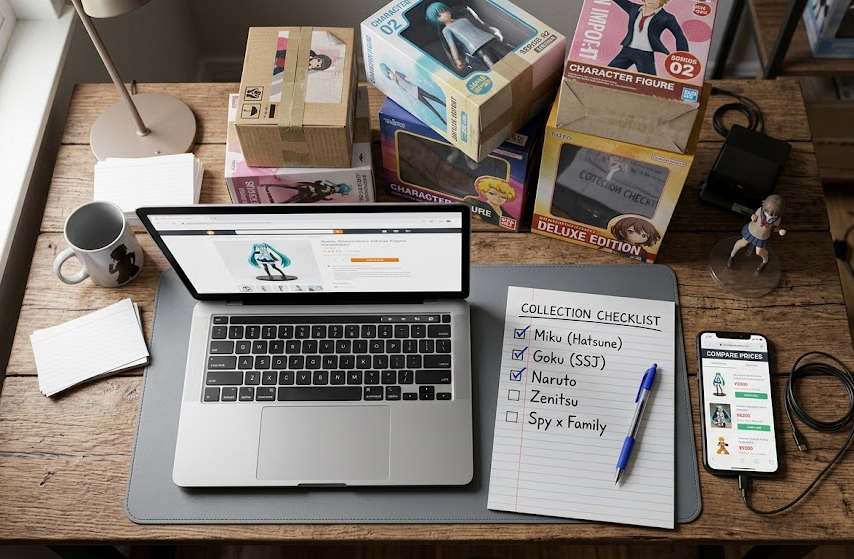
A useful sanity check is to compare current anime figure options, then review product photos, naming, and price range before trusting an unusually cheap listing.
A real bargain usually still comes with normal collector signals: clear product photos, believable release details, transparent shipping information, and a store that looks like it expects scrutiny. A risky bargain usually asks you to trust the price first and verify everything else later.
If you are trying to save money, that does not mean you need to avoid discount stores entirely. It means you need to judge price together with store transparency, listing quality, and bootleg risk, not treat the cheapest number as proof of value.
Quick Answer: Are Cheap Anime Figure Websites Legit?
Sometimes yes. Some cheap anime figure websites are legitimate because they sell prize figures, run real clearance discounts, reduce margins, or price older stock aggressively to move inventory. But a low price becomes suspicious when the same store also shows weak product detail, unclear manufacturer information, poor support policies, or photos that do not match the claimed item.
Quick value-vs-risk checklist
Use this before you buy from any discount anime figure store:
- Low risk: price is modestly below market, seller identity is clear, listings name the manufacturer, photos are coherent, and shipping/return policies are easy to find.
- Medium risk: price is attractive but not absurd, some details are present, and the store looks real but still leaves gaps you should verify before checkout.
- High risk: price is dramatically below normal, the store hides product specifics, policies are vague, and the listing feels copied, generic, or inconsistent.
A cheap anime figure store is only a good deal when the store still gives you enough evidence to trust what you are paying for.

Why Anime Figure Pricing Can Vary Legitimately
Not every low price points to bootlegs or scams. Anime figure pricing moves for ordinary business reasons, and understanding those reasons helps you avoid overreacting to every discount.
Prize figures and lower-cost lines naturally price lower
Prize figures, smaller releases, and less premium lines are often far cheaper than scale figures or limited collector editions. For shoppers exploring this further, see limited edition statues. For shoppers exploring this further, see scale figures. If a store mainly sells budget-friendly product types, lower prices may be completely normal.
Older inventory can be discounted heavily
Some stores cut prices on older stock to free shelf space or improve cash flow. That kind of discount is believable when the store still provides clear product data, normal photos, and a stable storefront.
Regional pricing and exchange differences exist
A store may have different sourcing costs, different shipping structures, or a smaller margin model. That can create real savings. But even then, discount pricing should still sit inside a believable range rather than collapsing to a level that makes the item look implausible.
Sales make sense when the store still looks professional
A real sale usually comes with the same trust signals as a regular listing:
- identifiable seller or business details
- product line or manufacturer information
- shipping expectations
- return or support policy
- listing photos that match the item category
That is the key distinction. Discount pricing can be normal. Discount pricing plus weak transparency is where cheap anime figure websites start turning into a problem.
What Low-Price Signals Should Make You Cautious?
Price alone is not the best warning sign. The more useful question is whether the low price appears next to other signs of low trust.
1. The price is far below the normal market range
A small markdown is believable. A huge drop with no explanation is different.
If a figure that normally sits in a stable retail or resale band suddenly appears for a fraction of that price, pause. Extremely cheap pricing often signals one of three things:
- the item is a bootleg
- the seller does not actually control the inventory
- the listing hides quality, condition, or authenticity issues
The problem is not just “cheap.” The problem is cheap without a convincing reason.
2. The listing avoids manufacturer and release details
Legitimate anime figure listings usually tell you what you are buying. Riskier stores stay vague.
Watch for listings that skip or blur details such as:
- manufacturer name
- figure line
- scale or size
- release version
- material details
- included accessories or base
If a store wants your payment but does not want to say exactly which release it is selling, that is a stronger red flag than price by itself.
3. Photos feel recycled, inconsistent, or too polished to trust
Many risky cheap anime figures websites rely on stock images without showing enough evidence of the actual item. That matters because bootleg sellers often borrow official photos that make the fake product look safer than it is.
Be careful when:
- every listing uses only promotional photos
- box images are missing
- angles avoid the face, base, or packaging
- the same photo style appears across unrelated products
- image quality looks inconsistent from one listing section to another
4. Store transparency is weak
Store transparency matters because a discount can be real while the seller is still unreliable. Low price anime figures are safer when the store itself is easy to verify.
Good signs include:
- business identity or contact details
- clear shipping pages
- readable return and refund policies
- support information that feels real, not copy-pasted
- consistent branding across the site
Weak signs include:
- no real company details
- generic contact forms only
- vague policy language
- contradictory shipping promises
- poor grammar across key trust pages
5. Product information contradicts itself
Inconsistent listing quality is one of the easiest ways to detect risk. A suspicious store may show a title for one figure, images from another version, and a description that sounds copied from somewhere else.
That kind of mismatch matters because listing quality often reflects how carefully the seller handles inventory in the first place. If the product page cannot keep its own details straight, you should not assume the order experience will be more reliable.
How to Compare Price Against Seller Transparency and Listing Quality
The safest way to judge cheap places to buy anime figures is to stop treating price as the main variable. Instead, compare three things together:
- Price level
- Store transparency
- Listing quality
A simple decision table
| Situation | What it usually means | Suggested action |
|---|---|---|
| Slightly lower price + strong store transparency + strong listing quality | Likely a believable deal | Reasonable to keep evaluating |
| Very low price + average transparency + average listing quality | Mixed risk | Verify more before buying |
| Extremely low price + weak transparency + vague listings | High bootleg or scam risk | Walk away |
What strong listing quality looks like
A stronger listing usually has:
- accurate naming
- coherent photos
- clear condition or packaging notes
- scale, size, or line details
- brand or manufacturer reference
- realistic shipping expectations
Listing quality matters because it tells you whether the seller expects informed buyers. For shoppers exploring this further, see bootleg vs authentic anime figures. A store that serves collectors well does not need to hide the basics.
What strong store transparency looks like
Store transparency means the seller is easy to examine before you trust them. That includes:
- visible support channels
- understandable policies
- consistent site identity
- a shopping flow that does not feel disposable
- enough business detail to suggest the store plans to be accountable after the sale
Cheap anime figure store legit checks should focus on this point more than many beginners expect. A modest discount is fine. A discount store that looks structurally untrustworthy is where the savings stop being worth it.
When Is a Modest Discount Believable?
A believable discount usually feels ordinary rather than dramatic.
Signs a modest discount makes sense
A low price can be believable when:
- the markdown is not wildly outside the normal range
- the item type is naturally lower cost
- the store has a clean and consistent presentation
- the listing gives enough detail to verify what the figure is
- policies and support look real
In other words, the price is not carrying the entire trust burden by itself.
Believable discount behavior vs suspicious discount behavior
Believable discount behavior:
- 10 to 20 percent lower than comparable listings
- clearance language on older or common inventory
- clear explanation for sale timing
- normal product detail still present
Suspicious discount behavior:
- huge price collapse without explanation
- every product on the site looks underpriced in the same extreme way
- expensive or premium items are priced like low-end budget goods
- store asks you to ignore missing details because the “deal is good”
Collectors looking for cheap anime figures websites should remember that real value usually looks calm and explainable. Fake value usually tries to feel urgent.
When Should You Walk Away From a Cheap Anime Figure Website?
Walking away is usually the correct move when multiple risk signals cluster together.
Leave the listing alone if you see several of these at once:
- unusually low price with no convincing explanation
- vague or contradictory product details
- weak store transparency
- missing manufacturer information
- poor listing quality
- only stock photos and no useful verification angles
- unclear support or refund path
At that point, the question is no longer whether the site is merely “cheap.” The issue is that the low price has become part of a broader trust problem.
For value-led buyers, that is the real takeaway: the red flag is not the discount itself. The red flag is a discount that is being used to distract you from weak evidence.
What Matters More Than Price Alone?
If you only remember one idea from this article, make it this one: store transparency and listing quality matter more than price alone.
A slightly expensive listing from a transparent seller can still be the better deal because it lowers your chance of receiving a fake, damaged, or misrepresented product. For shoppers exploring this further, see marketplace sellers vs dedicated figure stores. For shoppers exploring this further, see browse trusted anime figures. A dramatically cheap listing from a weak seller can be expensive the moment it becomes a refund fight or a bootleg disappointment.
Best decision criteria for bargain hunters
Use these questions before checkout:
- Do I understand exactly what figure this is?
- Does the store look accountable after the sale?
- Are the photos and details consistent enough to trust?
- Is the discount believable for this product type?
- Would I still feel comfortable buying if the price were slightly higher?
If the answer to most of those questions is no, the listing is probably not a value play. It is a risk play.
Summary Takeaway
Cheap anime figure websites can be legitimate, but low prices become a red flag when they appear with weak store transparency, vague listings, missing policies, inconsistent product information, or other bootleg risk signals. A believable bargain still gives you enough evidence to trust the seller. A suspicious bargain asks you to trust the discount instead.
For most collectors, the safest rule is simple: buy the listing and the store, not just the price tag.
FAQ
Are cheap anime figure websites legit?
Some are. Cheap anime figure websites can be legitimate when they sell lower-cost lines, older stock, or real clearance inventory. They become risky when low pricing is paired with weak store transparency, vague product details, or inconsistent listing quality.
How cheap is too cheap for an anime figure?
There is no single number, but a price becomes suspicious when it falls far below the normal market range without a believable reason. The lower the price drops, the more important it is to check listing quality, manufacturer details, and seller transparency.
Why are some anime figure stores much cheaper than others?
Some stores source differently, accept lower margins, or discount older inventory. Others look cheaper because they cut trust signals, hide weak product information, or sell risky stock. The difference is not just the number—it is the supporting evidence around the number.
What red flags matter more than price alone?
The biggest red flags are weak store transparency, poor listing quality, missing manufacturer details, contradictory product information, and photo sets that do not help you verify the actual item. Those signals usually matter more than the discount by itself.
Comments