
Do Action Figures Need Protective Cases? When Boxed Collectibles Benefit Most
Protective cases are most worthwhile for boxed or carded action figures that are fragile, collectible, or resale-sensitive, while many loose figures do not need the extra cost. If the package condition matters to you for display, long-term storage, or future resale, action figure protective cases are usually a smart buy. If the figure is already loose, inexpensive, and handled casually, a full protector is often overkill.
For boxed or frequently posed pieces, compare current action figures with available display cases so protection matches the figure style.
Quick Answer: Which Collectibles Benefit Most From Protectors
If you are wondering do action figures need protective cases, use this rule of thumb:
- carded figures benefit the most because bubbles, corners, and hanging tabs crush and crease easily
- mint-in-box or sealed boxed collectibles benefit when box condition affects value, display quality, or giftability
- premium window-box figures benefit when the package itself is part of the collectible appeal
- loose figures usually do not need a full acrylic protector unless they are in a high-dust, high-sunlight, or accident-prone display area
- high-value, limited, signed, or hard-to-replace collectibles are the strongest candidates for an acrylic or hard-plastic case
The simplest way to decide is to ask one question: Are you protecting the figure, the packaging, or the future value? When the box or card matters, a protector makes much more sense.
Use-Case Matrix: When a Protector Is Worth It
| Collector situation | Protector value | Why |
|---|---|---|
| Carded vintage or retro figure | High | Card edges, bubbles, and corners show damage quickly |
| Modern boxed figure you want to display sealed | High | Window boxes scuff, dent, and collect dust fast |
| Limited edition or convention exclusive | High | Condition-sensitive collectibles lose appeal with visible wear |
| Loose figure on an open shelf | Low to medium | Dust matters, but a full package protector may not |
| Loose figure in a closed display case | Low | The display case already handles most dust and handling risk |
| Figure kept for kids or regular posing | Low | Daily access matters more than mint packaging preservation |
Carded vs Boxed vs Loose Figures: Different Protection Needs
Carded Figures Need the Most Help
A carded figure protector is often the best value purchase in this category because cardbacks are easy to bend, blister bubbles can dent, and top hang tabs are vulnerable during storage moves. Even small pressure marks can make a carded piece look tired.
Collectors who keep vintage-style releases on pegs, in bins, or stacked in closets usually benefit from protectors because they reduce:
- edge wear
- soft corner crushing
- bubble scuffs
- friction marks from figures rubbing together
- accidental pressure from stacked storage
For carded action figures, the protector is often protecting both display quality and resale condition at the same time.
Boxed Figures Benefit When the Packaging Is Part of the Collectible
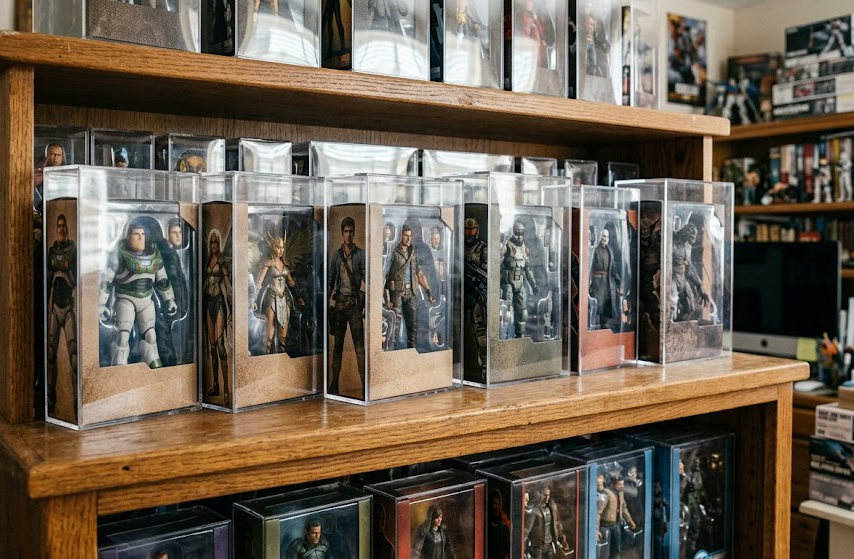
Many modern action figures come in window boxes, collector boxes, or premium presentation packaging. These are sturdier than thin cardbacks, but they still pick up problems easily:
- corner dents
- scratched plastic windows
- shelf dust in seams and edges
- sun fading on printed panels
- compression wear during storage or transport
If you plan to keep the figure sealed, stack boxes, or maintain near-mint presentation, protective cases for boxed action figures make sense more often than many buyers expect. For shoppers exploring this further, see should you keep figure boxes.
Loose Figures Usually Need Simpler Protection
Loose action figures are different. If the box is already gone, a rigid box protector no longer solves the main problem. In that situation, most collectors are better off focusing on:
- dust control
- UV avoidance
- stable shelving
- safer spacing between figures
- enclosed display cabinets when possible
Loose figures can still justify an action figure acrylic case if the figure is unusually valuable, signed, custom-painted, or displayed in a busy area where bumps and dust are constant issues. But for many standard loose figures, a clean display case or cabinet does the job more efficiently.
What Protective Cases Actually Prevent
Crushing, Corner Dings, and Scuffs
The most obvious benefit of a protector is impact buffering. Acrylic and clear PET protectors help prevent everyday shelf damage like corner rubs, small dents, and window scratching. This matters most for boxed collectibles that get moved, stacked, or stored seasonally.
Dust Build-Up and Handling Wear
Dust protection is not just about cleanliness. Every time you wipe a box window or glossy panel, you create another chance for micro-scratches. A protector takes that wear instead of the collectible packaging.
That relationship matters: protective cases -> less direct handling wear -> better resale condition.
UV and Room Exposure
Not every protector blocks UV well, but some acrylic options add a real layer of light protection. Even when UV protection is limited, the extra barrier still helps reduce direct surface exposure from room dust, oils, and casual touching.
Storage Friction During Moves or Reorganization
Collectors usually notice the value of protectors when reorganizing a room or moving house. Box edges rub together. Cardbacks catch. Plastic windows get cloudy. A good protector adds enough separation that boxed collectibles survive storage much more gracefully.
Pros and Cons of Protective Cases for Action Figures
Pros
- preserve cleaner edges, corners, and windows
- reduce dust contact with the original packaging
- help maintain resale-sensitive condition
- make stacked storage safer for boxed collectibles
- improve presentation for mint-in-box and mint-on-card displays
Cons
- add cost to a collection quickly
- take up more shelf and storage space
- cheap protectors can look cloudy or flimsy
- not every figure gains enough value to justify one
- protectors cannot fully compensate for poor sunlight or humidity control
When a Protector Is Worth the Cost and When It Is Overkill
Worth It for Resale-Sensitive or Hard-to-Replace Collectibles
A protector is usually worth buying when one or more of these are true:
- the figure is limited, exclusive, or discontinued
- the card or box condition directly affects resale value
- the packaging artwork is part of why you bought it
- you store figures stacked or move them often
- the collectible is displayed in a room with dust, pets, or frequent handling
Probably Overkill for Everyday Loose Display Pieces
If you open everything, pose figures regularly, and care more about the sculpt than the packaging, dedicated protectors are often unnecessary. For shoppers exploring this further, see figure display cabinet for dust. In that case, your money usually goes further toward:
- a better enclosed display shelf
- spacing upgrades
- risers for cleaner presentation
- curtains or placement changes that reduce direct sunlight
Cost-vs-Benefit Table
| Situation | Buy a protector? | Reasoning |
|---|---|---|
| Sealed collector box you want to keep crisp | Yes | Packaging condition matters long term |
| Carded figure with soft corners or vintage-style bubble | Yes | These formats damage easily |
| Convention exclusive or signed item | Yes | Replacement cost and resale sensitivity are high |
| Loose figure in a glass cabinet | Usually no | Main risks are already reduced |
| Loose figure on an open bookshelf in sunlight | Maybe, but fix sunlight first | UV and environment are bigger problems than box contact |
| Cheap mass-market figure opened for posing | No | Access and play matter more than mint package preservation |
How to Choose the Right Size and Material
PET Protectors vs Acrylic Cases
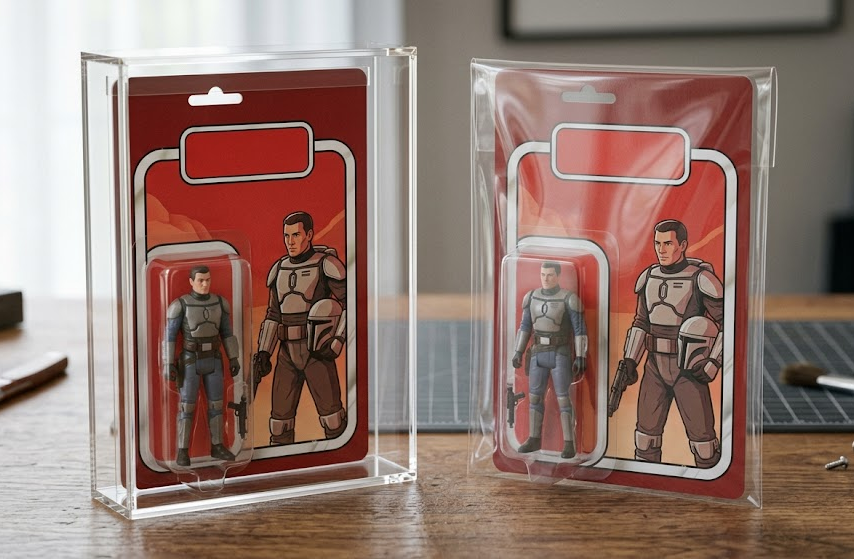
Soft clear PET protectors are the common value choice for boxed and carded collectibles. They are lighter, cheaper, and practical for bulk storage.
Acrylic cases are usually better when:
- the collectible is premium or especially fragile
- you want stronger structure and cleaner display presentation
- the item is displayed prominently rather than stored in quantity
- you want a more rigid shell with better long-term shape retention
Fit Matters More Than Marketing Claims
A protector should fit closely without squeezing the package. Too loose, and the item shifts around. Too tight, and corners or blister edges can take pressure.
When shopping, check:
- exact package dimensions
- whether the protector is designed for boxed or carded formats
- material clarity
- fold quality or seam quality
- whether the listing mentions UV resistance or stackability
Storage and Display Tips for Boxed Collectibles
Even the best protector works better when the surrounding setup is sensible.
Keep Protectors Out of Direct Sunlight
Sunlight is still one of the fastest ways to age boxes, fade print, and stress plastic windows. A protector helps, but it is not magic.
Avoid Tight Stacking Pressure
If you stack boxed collectibles, leave enough support that lower boxes are not taking all the weight on vulnerable corners or windows.
Handle by the Protector When Possible
When a box already has a fitted protector, use the protector as the outer contact surface. That reduces fingerprints and friction on the actual package.
Watch Heat and Humidity
High heat, attic-like storage, and damp rooms are bad news for packaging. A protector helps with surface wear, but it does not replace a stable environment.
Summary Takeaway
Do action figures need protective cases? Some absolutely do, and many do not. Protectors are most valuable for boxed collectibles, carded figures, and resale-sensitive items where packaging condition is part of the collectible itself. For many loose figures, basic display protection like dust control, closed shelving, and UV avoidance is enough. The more the box matters, the more a protector is worth the money.
FAQ
Are acrylic protectors worth it for action figures?
Yes, especially for premium boxed collectibles, signed items, and high-value figures where presentation and resale condition matter. For inexpensive loose figures, they are often more luxury than necessity.
Do loose action figures need protective cases?
Usually not full package protectors. Loose figures benefit more from enclosed display storage, dust control, and protection from sunlight or bumps.
What figures benefit most from box protectors?
Carded figures, vintage-style blister-card releases, mint-in-box collectibles, convention exclusives, and any figure where the original packaging affects value or display appeal.
Do protectors help preserve resale value?
They can help preserve the package condition that buyers care about. A protector does not guarantee value, but it reduces the small wear that often lowers buyer confidence.