
How to Store Anime Figures Safely When You Run Out of Display Space
When you run out of display space, the safest way to store anime figures is to clean them first, remove or protect fragile parts, place them in padded containers with minimal pressure, label everything clearly, and keep the containers in a cool, dry, stable area away from sunlight. Good overflow figure storage is less about hiding figures in any empty box and more about preventing paint transfer, breakage, dust buildup, and the all-too-common problem of forgetting what you packed.
If your shelves are full, do not panic-pack figures into random bins. That is how collectors end up with bent accessories, scuffed paint, warped plastic, and missing parts a few months later. A better system protects the figures you cannot display right now without turning storage into a future rescue job.
Quick answer: safest short-term and long-term storage approach
The safest anime figure storage workflow looks like this:
- Dust and inspect each figure before it goes into storage
- Remove loose or fragile parts when possible
- Wrap figures individually with non-abrasive protective materials
- Use sturdy containers that prevent shifting and crushing
- Label by character, series, size, or shelf rotation plan
- Store everything in a cool, dry, dark place with stable temperature
For short-term overflow storage, you can use easy-access containers so figures are simple to rotate back onto shelves. For longer-term storage, use more deliberate padding, stronger organization, and tighter protection against heat, humidity, and accidental compression.
Clean-before-storage checklist
Before packing anything away, make sure the figure is actually ready for storage. Dust, skin oils, and trapped debris become more annoying over time, especially if they sit under wrapping or inside enclosed storage boxes.
Quick checklist
- wash and dry your hands before handling figures
- use a soft brush or manual air blower to remove surface dust
- check for loose pegs, leaning poses, or older glue repairs
- make sure the figure is completely dry before wrapping
- separate swappable face plates, hands, weapons, and effect parts
- confirm the base and accessories are matched to the right figure
If a figure already feels sticky, tacky, or heat-stressed, do not pack it tightly and forget about it. That usually means the storage environment needs extra care, and the figure may need a more breathable setup and occasional inspection.
Step-by-step: how to pack anime figures safely
1. Decide what stays assembled and what should be separated
Not every figure should be stored in one piece. Large hair sections, wings, swords, clear effect parts, and tiny accessories are often safer when removed and wrapped separately. If a part is designed to come off, forcing it to stay attached can increase stress during storage.
Good candidates for separate wrapping include:
- swappable hands and faces
- thin weapons and poles
- detachable wings
- effect parts
- support rods
- bonus accessories stored with the original packaging
If a part feels permanently fixed or unusually tight, do not force it. In that case, protect the whole figure around that weak point instead.
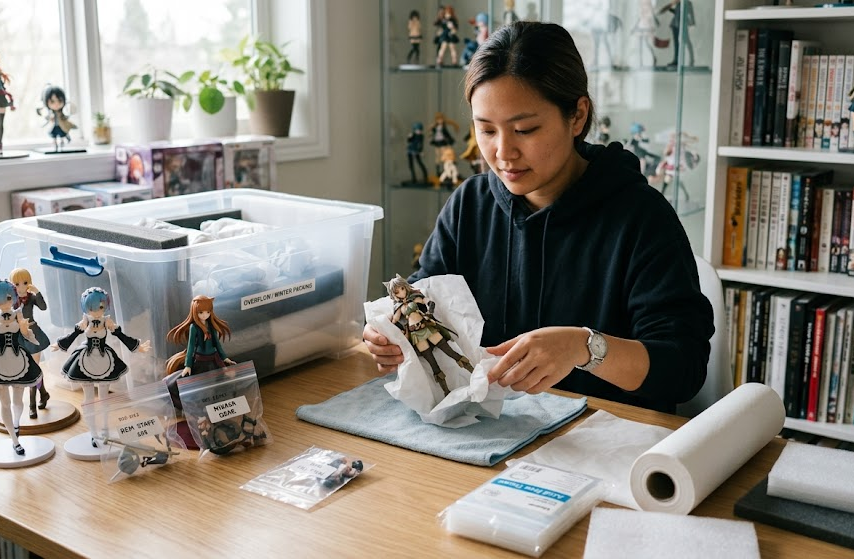
2. Wrap the figure to prevent paint rub and part pressure
The biggest packing mistake is letting painted surfaces rub against hard plastic, rough paper, or another figure. Wrap each figure individually so no painted area is scraping anything during storage.
Safer padding materials include:
- acid-free tissue paper
- soft, non-abrasive wrapping foam
- clean microfiber cloths
- small zip bags for detached accessories, kept away from painted surfaces
- bubble wrap as an outer layer only, not pressed directly onto delicate paint for long periods
A simple rule helps here: soft layer closest to the figure, firmer protection outside that layer.
3. Keep original boxes when they are still the best protection
If you still have the original blister packaging, use it for the figures that are most expensive, fragile, or awkwardly shaped. Factory inserts are often the safest fit because they already account for the sculpt and accessory layout.
This matters most for:
- scale figures with delicate hair or clothing edges
- resin or heavier display pieces
- figures with many loose parts
- collectibles you may resell later
For boxed figures, store the inner blister and accessories together so you do not create a mystery box problem six months later. For shoppers exploring this further, see storing figures in plastic bins.
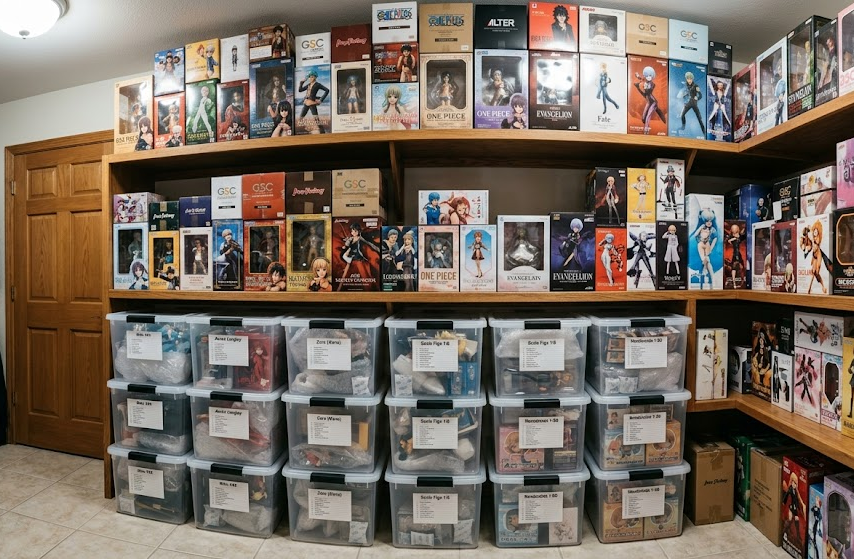
4. Choose containers that reduce shifting, crushing, and dust
The best container is not always the cheapest bin you can find. Good storage boxes should protect against dust and light while keeping weight off the figure itself.
For short-term rotation storage, a dustproof hard-sided organizer works well because it keeps figures visible and easy to retrieve. For example, a stackable acrylic action figure storage box is a more controlled option than tossing overflow pieces into a soft carton where they can lean into each other.
In general, good container choices include:
- rigid plastic bins with smooth interiors
- acrylic storage/display boxes for accessible overflow rotation
- original manufacturer boxes inside larger outer bins
- compartment setups for small blind-box or trading-size figures
Less ideal choices include:
- thin cardboard that can sag or absorb moisture
- overpacked bins that put weight on top figures
- loose plastic bags with no structural protection
- unstable stacks near doors, heaters, or windows
Best padding materials and container setup
Once you have the right container, the next job is stopping movement inside it. Figures usually get damaged in storage because they slide, tip, or carry weight through one fragile point.
A safe setup usually looks like this
- heavier items at the bottom
- no direct weight pressing onto hair tips, weapons, or effect parts
- empty space filled with soft padding so items do not shift
- accessories bagged and matched to the correct figure
- a little breathing room instead of aggressive overpacking
If you are storing smaller prize figures or blind-box style collectibles without original packaging, individual wrapping plus a divided organizer or padded row system is usually safer than one big open bin.
Materials list
Use these when possible:
- acid-free tissue paper
- polyethylene or other non-abrasive soft foam sheets
- microfiber cloths
- resealable accessory bags
- silica gel packs nearby in the container area, but not rubbing directly on painted surfaces
- sturdy labels or inventory cards
Avoid these as direct-contact materials when possible:
- newspaper or dyed paper that can transfer ink
- rough paper towels
- adhesive tape touching the figure
- old foam that crumbles
- scented household liners or moisture-trapping fabrics
How to label and organize so figures do not disappear into storage
Bad storage is not just physical damage. For shoppers exploring this further, see best storage boxes for figures. It is also losing track of what you packed.
If your collection has grown beyond a few overflow pieces, label containers by a system you will still understand later. The best organization method is usually the one that matches how you actually browse your collection.
Useful labeling options include:
- by series or franchise
- by character
- by figure line or brand
- by size or scale
- by priority, such as “display next,” “seasonal rotation,” or “long-term storage”
A simple inventory note inside or outside the box can save a lot of time. Even a quick card listing the figure name, accessories, and storage date is enough to prevent forgotten duplicates and missing-part confusion.
Where not to store figures: heat, humidity, sunlight, and unstable spaces
A good packing job can still fail if the storage location is bad. Anime figures are far safer in a stable closet than in a hot attic, damp basement, or sun-exposed room.
Avoid these storage spots
- attics with major heat swings
- damp basements without humidity control
- window ledges or bright sunlit corners
- garages with seasonal temperature extremes
- shelves near radiators, heaters, or vents
- unstable stacks where boxes can slide or collapse
Heat can soften plastic, weaken glue, and increase tackiness. Humidity can affect cardboard boxes, packaging inserts, and some glued joints. Sunlight can fade paint and yellow clear parts over time.
That is why the safest answer to how to store anime figures is not just about wrapping. Storage boxes, padding materials, humidity, and sunlight all interact. A well-packed figure in a bad room is still at risk. For shoppers exploring this further, see display cases and storage boxes.
Do and don’t list for overflow figure storage
Do
- clean figures before storing them
- wrap each figure separately
- remove detachable fragile parts when practical
- use sturdy containers with padding
- label containers clearly
- check stored figures occasionally if the environment is not perfectly controlled
Don’t
- let painted figures rub directly against each other
- overfill bins until parts are under pressure
- store collectibles in hot, damp, or bright places
- leave small accessories loose in the bottom of a box
- use random abrasive packing materials
- assume short-term storage is harmless if the environment is poor
FAQ
What is the safest way to store anime figures?
The safest method is to clean them first, wrap them individually with soft non-abrasive materials, separate fragile parts when possible, place them in sturdy padded containers, and keep them in a cool, dry, dark location.
Can you store anime figures in plastic bins?
Yes, as long as the bin is clean, rigid, and not overpacked. Plastic bins are much safer when each figure is wrapped individually and prevented from shifting around inside.
Should figures be cleaned before storage?
Yes. Dust and oils left on the surface can become harder to deal with later, especially if the figure stays packed for a long time. A quick gentle cleaning before storage is the safer habit.
Where should you avoid storing collectible figures?
Avoid attics, garages, damp basements, window areas, and any place with strong heat, humidity, sunlight, or unstable stacking conditions.
Final takeaway
If you have run out of shelf space, the smart move is not to rush your anime figures into whatever box is nearby. The safer approach is to treat overflow storage like a preservation job: clean first, protect fragile parts, use padded storage boxes, label everything, and keep the whole setup away from heat, humidity, and sunlight.
That workflow protects both loose displayed figures and boxed collectibles, and it makes it much easier to rotate favorites back onto your shelves later without discovering avoidable damage.