
How to Tell if an Anime Figure Is Fake Before You Buy
Buying anime figures online can be great when the listing is legitimate, but it can also be where collectors get burned the fastest. If you have ever found a suspiciously cheap listing, a vague resale post, or a marketplace seller with stock photos and almost no details, you have already seen the conditions where bootlegs spread. Knowing how to tell if an anime figure is fake before you buy is one of the most useful collector skills because it helps you avoid wasted money, disappointing quality, and long refund fights.
The good news is that most fake listings give off warning signs before you place the order. You usually do not need to hold the figure in hand to spot the risk. By checking the seller, the price, the product photos, the box details, and the manufacturer information, you can often filter out a bootleg anime figure before it ever reaches your shelf.
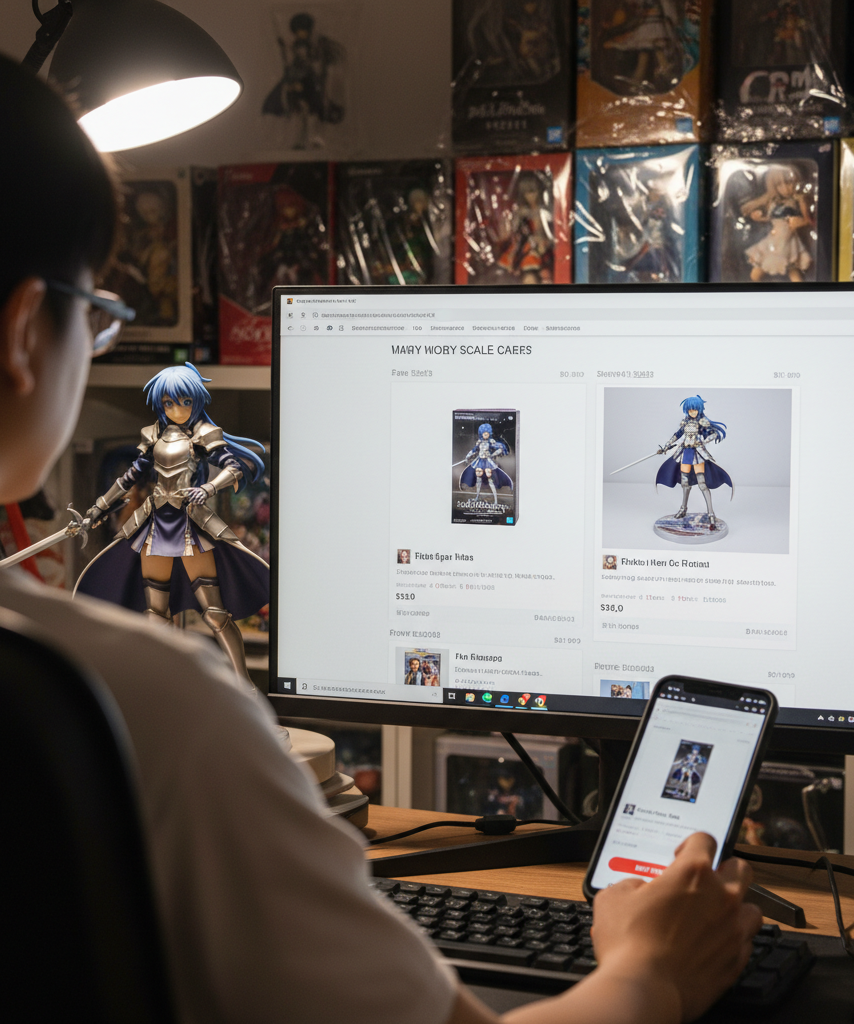
Common Signs of a Fake Anime Figure
If you are trying to decide whether an anime figure fake listing is worth the risk, start with the most obvious red flags. Bootleg sellers tend to repeat the same patterns because they compete on price and speed, not credibility.
Here are the most common warning signs:
- the price is dramatically lower than normal retail or resale market value
- the seller uses low-resolution, reused, or inconsistent photos
- the listing title is vague and avoids the official manufacturer name
- the description leaves out scale, release line, materials, or brand details
- the box photos are missing entirely or only shown from one angle
- the seller has weak feedback, a new account, or a history of mixed-product sales
- the figure is described as “China version,” “overseas version,” or “same quality”
A single red flag does not always prove a bootleg, especially in secondhand sales. But several red flags together usually mean you should walk away.
Why Fake Figures Usually Show Themselves Before Purchase
Collectors often think authenticity checks start after unboxing, but the truth is that pre-purchase screening is where you save yourself the most trouble. Most fake anime figure listings fail on consistency. Official figures usually have traceable release information, known manufacturer names, expected packaging, and a price range that makes sense. Bootlegs often fall apart when you compare the listing against those basics.
That is why an authentic anime figure check should start with verification, not hope. Before you buy, compare the listing to the original product information from trusted shops, manufacturer pages, or well-known collector databases. If the listing cannot survive that comparison, it is not worth gambling on.
Box, Logo, and Manufacturer Details to Inspect
One of the best ways to tell if an anime figure is fake is to inspect the listing for packaging and branding details. Even before shipping, many sellers reveal enough in their photos to help you assess authenticity.
Check the Manufacturer Name
A legitimate listing should normally mention the actual maker, such as Good Smile Company, Kotobukiya, Alter, MegaHouse, FREEing, or another recognized brand. If the seller avoids naming the manufacturer, misspells it, or swaps it for generic phrases like “anime PVC statue,” that is a bad sign. For shoppers exploring this further, see collectible statues.
For prize figures, the exact line also matters. Banpresto, Sega, Taito, Furyu, and similar brands have recognizable release lines and packaging styles. A fake seller often knows buyers search by character name, but not by the proper manufacturer details.
Look for Official Logos on the Box
Box photos are useful because official packaging usually includes consistent logos, series branding, and production marks. Depending on the product, you may also see licensing marks, age warnings, barcodes, authenticity stickers, or distribution labels.
Red flags include:
- logos that look blurry, stretched, or slightly wrong
- colors that do not match official promo or store photos
- missing manufacturer branding on the front or side panels
- box art that looks cropped or printed at poor quality
- no box photos at all when the item is claimed to be new and sealed
Bootleg packaging can look convincing in thumbnails, so zoom in whenever possible. If the seller only provides tiny images, ask yourself why.
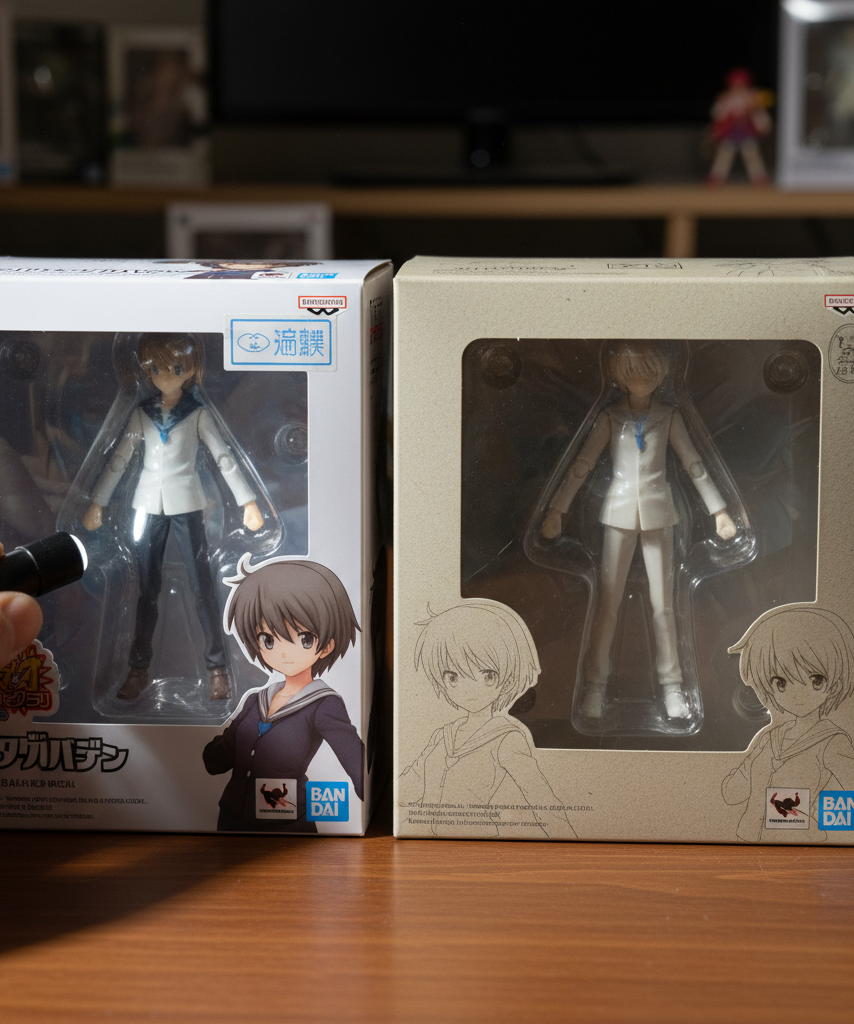
Compare Listing Photos to Official Product Photos
An authentic anime figure check gets easier when you compare what the seller shows against official release photos from trusted retailers. Pay attention to:
- paint accuracy
- face sculpt quality
- eye alignment
- base shape and finish
- support rods or pegs
- accessory molding
- color saturation
- overall proportions
Fake figures often look slightly “off” rather than completely different. The expression may be weaker, the skin tone may be muddy, the gradients may be rough, or the base may be simplified to reduce production cost.
Price Red Flags and Seller Warning Signals
If a listing looks too cheap, that is usually the first and biggest warning. Price alone does not prove a fake, but it is one of the strongest pre-purchase signals.
Understand the Real Market Range
Before buying, check what the figure normally sells for across a few reliable sources. That can include the original release price, current aftermarket listings, and sold prices where available. If a scale figure that usually sells for $180 to $250 is suddenly offered “brand new” for $45, there is almost always a reason. For shoppers exploring this further, see scale figures. For shoppers exploring this further, see browse authentic anime figures.
Cheap authentic deals do happen, but they usually come with an explanation:
- damaged box
- missing bonus item
- visible paint flaw
- local pickup only
- seller needs a quick sale
If none of those explanations appear and the listing is still far below market, treat it as a likely bootleg anime figure listing.
Watch for Marketplace Behavior That Feels Wrong
Seller behavior matters as much as the product photos. For shoppers exploring this further, see bootleg vs authentic figure signs. Warning signals include:
- multiple high-demand figures listed at unrealistically low prices
- identical backgrounds across unrelated products
- repeated use of promotional photos instead of real item photos
- refusal to answer basic questions about condition or origin
- vague replies when asked where the figure was purchased
- no mention of box condition, defects, or missing parts in a resale listing
A trustworthy seller usually sounds like someone who actually owns the item. A risky seller sounds like someone moving generic inventory.
What to Verify Before Placing an Order
Before you commit, run through a quick verification checklist. This is the simplest way to reduce the chance of buying a fake anime figure.
1. Confirm the Exact Product Identity
Match the listing against the exact character, version, scale, and manufacturer. Many figures have alternate colorways, re-releases, prize variants, and special editions. If the seller combines mismatched details, that is a problem.
2. Ask for Real Photos if Needed
If the listing only shows stock images, ask for:
- front and back of the box
- close-up of the face
- base and pegs
- accessories still in blister packaging if unopened
- any seals, stickers, or barcode panels
If the seller refuses or disappears, that answers the question for you.
3. Check Seller Reputation and History
Look at reviews, completed sales, account age, and the kinds of products they normally sell. A collector downsizing a real collection usually leaves a different pattern than a bootleg reseller pushing random “new” figures.
4. Verify Return and Buyer Protection Terms
Marketplace buyer protection matters because even careful collectors can get fooled by a polished fake listing. If the platform offers poor dispute handling, you should be even stricter before purchasing.
5. Trust Pattern Recognition, Not Wishful Thinking
Most bad purchases happen when buyers notice several red flags and talk themselves into ignoring them because the deal feels exciting. If the listing is cheap, vague, and oddly photographed, it is probably not the lucky find you want it to be.
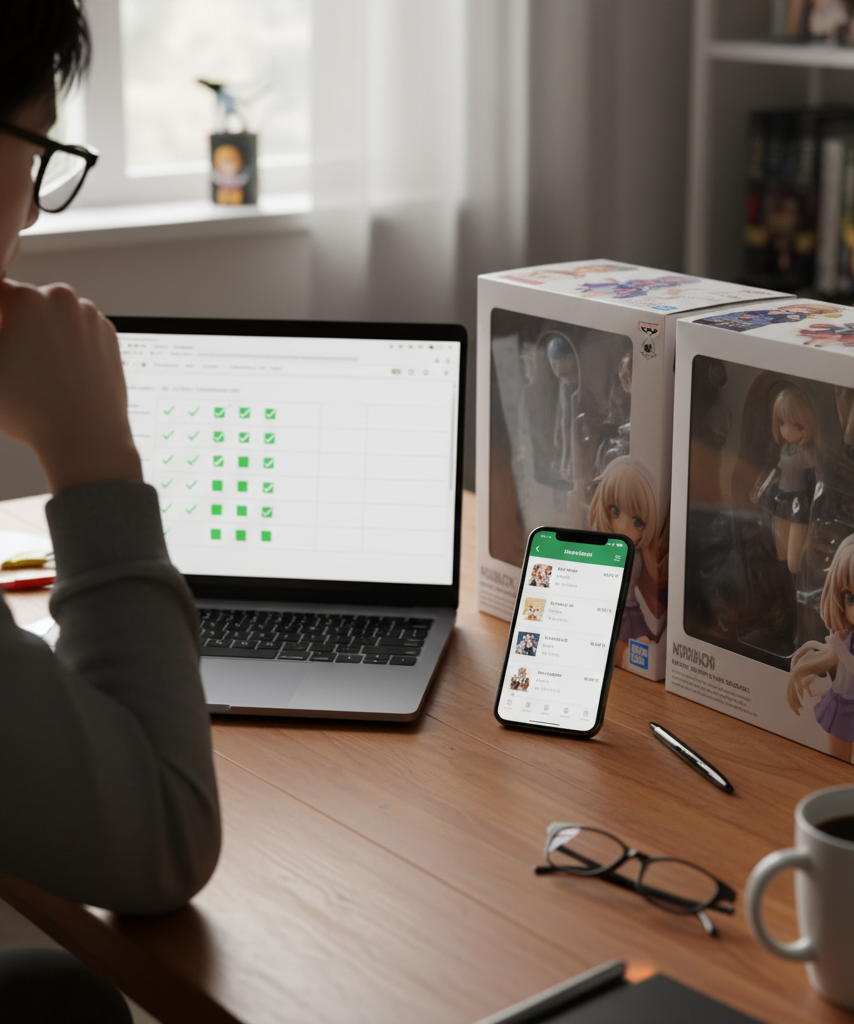
Marketplace-Specific Situations Where You Should Slow Down
Some listing environments deserve extra caution:
Resale Apps and Local Marketplaces
These can be great for genuine secondhand deals, but they are also full of rushed listings with weak verification. Ask for timestamped photos and packaging shots whenever the item value is meaningful.
Large Generic Marketplaces
If dozens of sellers use the same stock image and nearly the same title, do not assume you are seeing separate legitimate inventory sources. That pattern often points to factory-copy distribution. For shoppers exploring this further, see are Amazon anime figures legit.
“Imported Version” Language
Some sellers use phrases like “overseas version” or “special channel version” to make a fake sound like a harmless regional variant. Sometimes regional packaging does differ, but vague wording is often used to soften the fact that the figure is not officially licensed.
Best Rule: Buy the Seller as Much as the Figure
Collectors focus on the character and sculpt, but authenticity is often easier to judge through seller quality than product claims. A good seller provides specific details, clear photos, fair pricing, and answers that make sense. A risky seller relies on urgency, ambiguity, and the buyer’s fear of missing out.
If you are unsure how to tell if an anime figure is fake before you buy, remember this: the safest listings usually feel boring in a good way. They are specific, consistent, and easy to verify.
Final Answer: How to Tell if an Anime Figure Is Fake Before You Buy
The most reliable way to spot a fake anime figure before purchase is to check for a pattern of red flags: unrealistic pricing, vague seller language, missing or weak box photos, unclear manufacturer information, and product images that do not match official references. A proper authentic anime figure check starts before checkout, not after delivery.
If the listing looks suspiciously cheap, hides the brand, avoids real photos, or gives you a bad feeling after basic verification, skip it. In collecting, passing on one questionable deal is far cheaper than paying for a bootleg you already suspected was fake.
Comments