
How Deep Should a Shelf Be for Anime Figures? A Size Planning Guide
If you are trying to plan a display before buying new furniture, shelf depth matters more than many collectors expect. Height gets most of the attention, but depth is often what decides whether a figure actually fits without its base hanging over the edge, a sword pointing into the glass, or a wide pose making the whole shelf feel cramped. If you have been wondering how deep should a shelf be for anime figures, the answer depends less on a single magic number and more on the kinds of figures you collect.
For practical depth planning, compare common formats like 1/6 scale figures and 1/7 scale figures before deciding whether a shelf or case is deep enough.
For most collections, a practical starting point is 10 to 14 inches of shelf depth. Smaller prize figures can often work on shallower shelves, while many 1/7 scale figures look better with a bit more breathing room. Once you move into 1/6 scale, resin pieces, winged characters, or dramatic action poses, depth requirements climb quickly.
This guide breaks down realistic anime figure shelf depth ranges by figure type, explains how bases and poses change the numbers, and shows how much front clearance to leave so your display feels intentional instead of overcrowded.
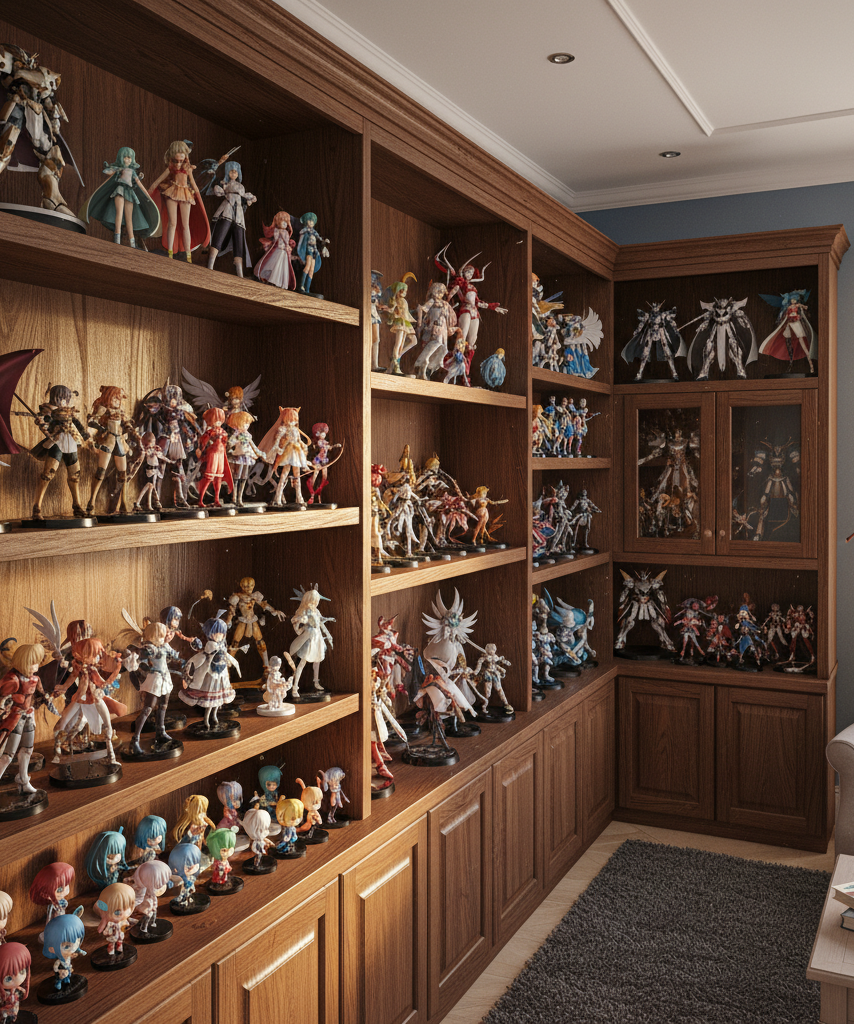
Why Shelf Depth Matters More Than Shelf Height for Many Figures
A lot of collectors measure only the height of a shelf opening because tall hair, bunny ears, or raised weapons are easy to notice. But on real displays, depth is often the bigger limitation.
A figure can technically fit within the shelf height and still display badly if:
- the base sits too close to the front edge
- a cape, weapon, or hair sculpt touches the back panel
- the pose forces neighboring figures to angle awkwardly
- the shelf looks visually crowded even though the dimensions are “enough”
Depth affects both physical fit and presentation quality. A shelf that is barely deep enough makes a display feel tense. A shelf with proper front and rear clearance looks cleaner, photographs better, and gives your figures enough room to read as premium collectibles rather than clutter.
For that reason, planning figure display shelf depth should start with footprint and pose spread, not just listed scale.
Quick Answer: Recommended Shelf Depth by Figure Type
If you want the short version, this table is the easiest planning baseline.
| Figure type | Typical figure/base footprint | Recommended shelf depth | Notes |
|---|---|---|---|
| Small trading figures / chibi | ~3 to 5 in footprint | 6 to 8 in | Fine for compact rows, but shallow shelves can still feel busy fast |
| Prize figures | ~5 to 7 in footprint | 8 to 10 in | Good minimum range for most upright poses |
| 1/8 scale figures | ~6 to 8 in footprint | 9 to 11 in | Safer when bases are round or spread wide |
| 1/7 scale figures | ~7 to 10 in footprint | 10 to 12 in | Best all-around range for many anime collections |
| 1/6 scale figures | ~9 to 12 in footprint | 12 to 14 in | Better if you want front clearance and easier dusting |
| Large statues / resin / effect-heavy figures | 11 in+ footprint | 14 to 18 in+ | Depends heavily on wings, weapons, scenic bases, and diagonal placement |
These are not box-spec guarantees. For shoppers exploring this further, see 1/4 scale figures. They are planning ranges that leave room for a display to look good instead of merely “fit.”
Suggested Shelf Depth Ranges for Prize Figures, 1/7, 1/6, and Larger Pieces
Prize Figures: Usually 8 to 10 Inches Deep Is Enough
Most prize figures are friendlier to shallow shelves because they tend to have simpler bases and less aggressive sculpt spread than larger premium scales. If your collection is mostly upright Banpresto, Taito, Sega, or FuRyu prize figures, 8 to 10 inches of shelf depth usually works.
That said, even prize figures can surprise you when they include:
- wide twin-tails or flowing hair
- long staffs or swords
- bent-leg action poses
- oversized circular bases
If you mix a lot of prize figures together, 10 inches usually feels more forgiving than 8 because it gives you room to stagger placement instead of lining everything up at the front edge.
1/7 Scale Figures: 10 to 12 Inches Is the Sweet Spot
For many collectors, 10 to 12 inches is the safest answer to “how deep should a shelf be for anime figures” because so many collections revolve around 1/7 scale. This range usually gives enough room for the base, a little rear clearance, and some space in front so the figure does not look like it is about to fall off the shelf.
A straightforward standing 1/7 can sometimes work on a 9-inch shelf, but that is where displays start becoming fussy. Round bases, tilted poses, or hair and accessories extending backward can eat that margin quickly. If you collect a lot of 1/7s and want a cleaner look, deeper shelves are usually worth it.
If you are still comparing how much room different premium scales need, our guide to how big a 1/7 scale anime figure usually is helps put shelf footprint expectations into context before you buy furniture.
1/6 Scale Figures: Aim for 12 to 14 Inches
Once you move into 1/6 scale, shelf depth stops being a small detail. These figures often have more visual mass, broader poses, and larger bases. 12 to 14 inches is a safer planning zone if you want the display to feel comfortable rather than squeezed.
This is especially true for:
- seated poses with extended legs
- fashion-heavy characters with layered skirts or coats
- characters with wide weapons
- figures meant to read as centerpiece pieces instead of dense shelf groups
A 1/6 figure may fit on a 10-inch shelf in technical terms, but it often will not look balanced there.
Large Statues, Resin Pieces, and Dynamic Sculpts: 14 Inches and Up
This is where generic shelf advice breaks down. Large bases, wing effects, leaping poses, and environmental sculpts can require 14 to 18 inches or more. At that point, you are not just planning for scale — you are planning for the entire silhouette.
For resin collectors or anyone buying dramatic centerpiece figures, always trust the listed product dimensions more than the scale label.
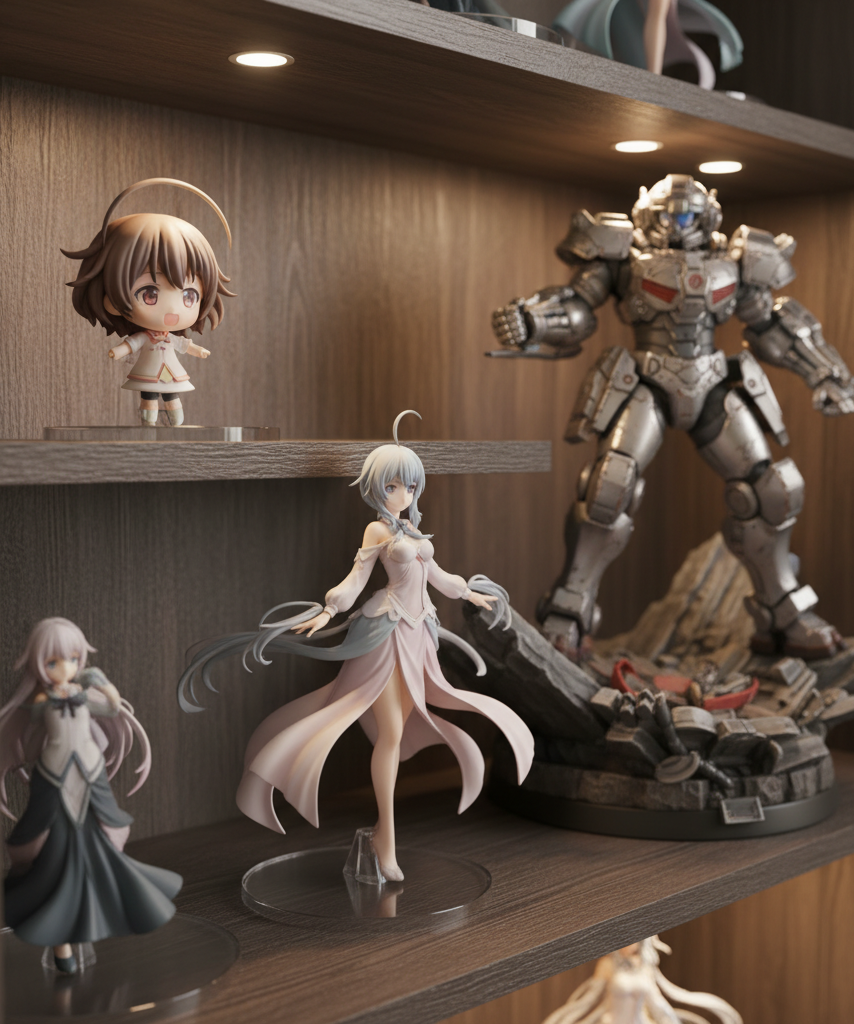
How Bases, Weapons, Wings, and Dynamic Poses Change Fit
Collectors often ask for the right anime figure shelf dimensions as if scale alone answers everything. It does not. Two figures with the same listed scale can need very different shelves.
Base Shape Changes the Real Footprint
A compact oval or hexagonal base is much easier to place than a dramatic scenic base. This is one reason some premium figures feel much larger than expected even when their stated height sounds manageable.
Base-related issues that increase depth needs include:
- large round bases that push the figure toward the front edge
- scenic terrain bases with uneven protrusions
- support rods placed behind the figure
- diagonal character stance that increases front-to-back spread
Accessories Often Extend Beyond the Body
Weapons, wings, flowing coats, tails, and hair strands can all break the neat mental model of “the character stands here, so I need this much space.” In practice, these details are often the parts that contact the back panel or get too close to glass.
When planning shelf size for scale figures, assume that the decorative silhouette matters just as much as the body.
Dynamic Poses Increase Required Clearance Fast
Action poses are where collectors underestimate shelf depth most often. A lunging or twisting pose can create a front-to-back footprint that is much larger than the product looks in a straight-on promo image.
Safe rule: if a pose looks dramatic in photos, add extra margin rather than using the minimum fit number.
How Much Front and Side Clearance Should You Leave?
A good display is not measured only by whether the figure fits. It is also measured by whether the figure has enough breathing room to look intentional.
Front Clearance
A useful baseline is to leave at least 1 to 2 inches of front clearance between the front-most part of the base or figure and the shelf edge. More is better for valuable or top-heavy pieces.
That front margin helps with:
- visual balance
- safer cleaning and dusting
- reducing the “about to fall” look
- preventing minor bumps from becoming major accidents
Rear Clearance
Leave about 1 inch or more behind the figure when possible, especially if the back panel is solid or the shelf sits against a wall. Tight rear placement can make a shelf look packed even before it is truly full.
Side Clearance
For grouped displays, leave roughly 1 to 2 inches between neighboring figures unless you are intentionally going for a dense lineup. Wider dynamic pieces may need more to avoid overlapping silhouettes. For shoppers exploring this further, see arrange large anime figures.
If dust control is part of your shelf-planning decision, it also helps to think beyond raw dimensions and consider enclosure strategy. Our article on protecting anime figures from dust pairs well with depth planning when choosing between open shelving and cabinets.
Common Shelf-Depth Mistakes That Make Displays Feel Cramped
Even collectors who buy large shelves can end up with awkward displays if they make a few common planning mistakes.
Mistake 1: Buying for Height and Ignoring Footprint
This is the classic one. A shelf may be tall enough for a figure but still too shallow for the base and pose.
Mistake 2: Using the Absolute Minimum Fit Number
If the shelf depth exactly matches the base depth, you are not planning a display — you are planning a tolerance test. Minimum fit rarely looks good. For shoppers exploring this further, see match figure size to shelf space.
Mistake 3: Assuming All Figures in the Same Scale Need the Same Shelf
A simple standing 1/7 and a sweeping fantasy 1/7 are not the same display problem. Scale helps, but it is not the whole story.
Mistake 4: Forgetting Door, Glass, or Lip Clearance
On cabinets and enclosed cases, usable depth can be smaller than the advertised shelf depth. Door frames, lips, and track systems can steal the margin you thought you had.
Mistake 5: Not Planning for Future Purchases
Collectors rarely stop at the current shelf lineup. If you are buying storage once, it is smarter to leave some depth headroom for future characters with larger bases or more elaborate poses.
Best Shelf Depth for Most Anime Figure Collectors
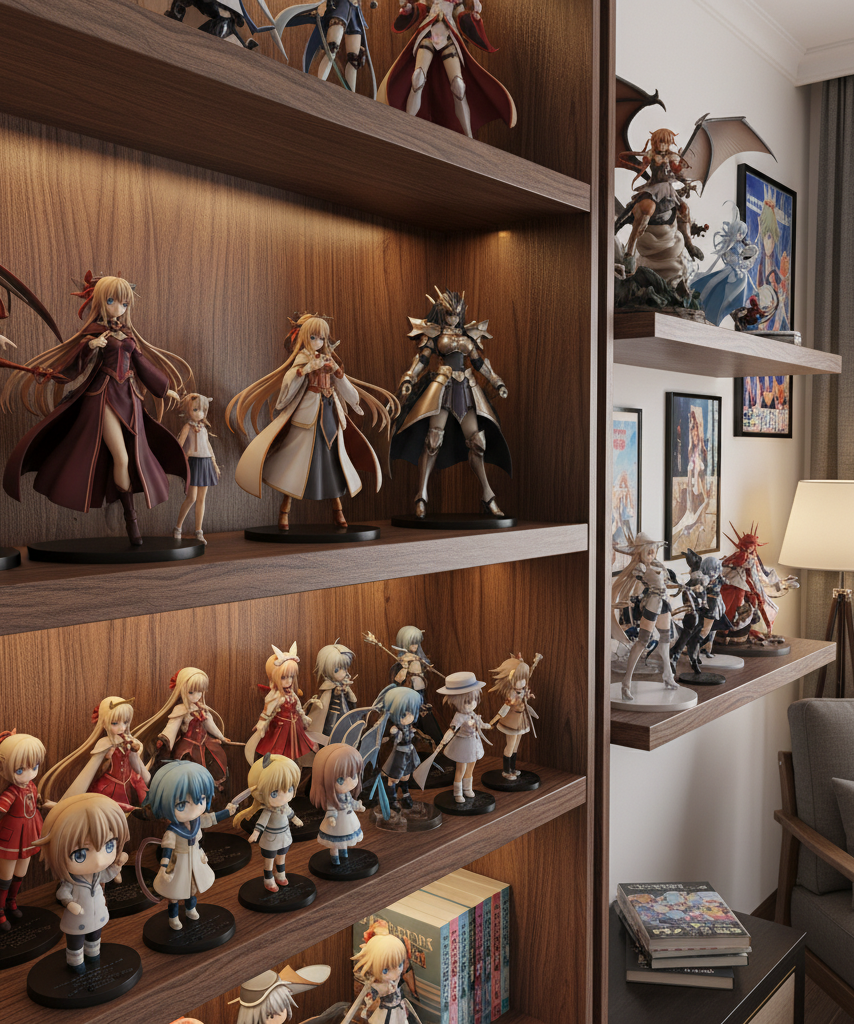
If you want one broadly useful recommendation, 12 inches of shelf depth is the most flexible choice for many anime figure collections. For shoppers exploring this further, see display cases and cabinets. It handles prize figures easily, works well for many 1/7 scale figures, and gives you better odds of accommodating wider bases without constant shelf Tetris.
That does not mean everyone needs 12-inch shelves. If you collect mostly compact prize figures, shallower shelves may be more space-efficient. But for mixed collections, 12 inches is often where practicality and presentation meet.
If your collection leans heavily toward premium scales, dynamic poses, or resin pieces, you may be happier starting at 14 inches instead.
Final Answer: How Deep Should a Shelf Be for Anime Figures?
For most collectors, the best answer is 10 to 14 inches, with 12 inches being the most versatile middle ground. Prize figures often work on 8 to 10 inches, many 1/7 scale figures display best on 10 to 12 inches, and 1/6 scale figures or larger statues usually benefit from 12 to 14 inches or more.
The key is to plan for base size, pose spread, and front clearance, not just figure height. If you buy shelves based only on scale labels or the narrowest possible fit, your display will feel cramped fast. If you leave a little extra depth margin, your figures will look safer, cleaner, and much more intentional on the shelf.
Comments