
Will This Figure Fit Your Shelf? A Collector’s Size-Check Guide
If you are asking will this figure fit my shelf, do not rely on the quoted figure height alone. A real anime figure shelf fit check needs five numbers: the figure’s full height, its widest point, its deepest point, the extra spread created by hair, weapons, or effects, and the clearance you lose to risers, cabinet frames, or shelf lips. If those five measurements fit with a little safety margin, the figure is likely display-safe. If they do not, you are gambling on a return, a cramped pose, or a display you already know will feel wrong.
Quick Answer: How to Tell if a Figure Will Fit
Use this simple rule before you buy:
- compare the figure’s true height to your usable vertical clearance
- compare the figure’s widest point to the shelf width available for that spot
- compare the figure’s deepest point and base shape to the usable shelf depth
- add extra space for pose spread, hair, weapons, capes, or effect parts
- subtract space lost to risers, case doors, shelf lips, and top panels
For most collectors, the safest fit check is to leave at least 1 to 2 cm of spare clearance on the tight side and more for dynamic pieces. That buffer matters because manufacturer dimensions, promo photos, and final in-hand poses do not always match perfectly.
Why Quoted Figure Height Is Not Enough
Many buyers see a listing that says a figure is 25 cm tall and assume a shelf with 26 cm of room is fine. That is where display mistakes start.
The quoted figure height usually tells you only one dimension, and sometimes not even the most important one. A figure may technically be 25 cm tall but still need more space because:
- the hair leans backward into the case wall
- the weapon points outward past the base edge
- the base is oval instead of compact and round
- the character pose creates a diagonal footprint
- the figure needs to sit on a riser that steals vertical room
A collector shelf clearance guide should treat listing height as a starting clue, not a final answer.
The 5 Measurements That Matter Before Buying
1. Full Height
Measure or estimate the tallest physical point of the finished display, not just the character’s head height. Hair spikes, rabbit ears, swords, banners, flight stands, and effect pieces can all create the real top edge.
For example, a standing 1/7 scale may be listed at 27 cm, but the tallest hair strand or clear support arm can push the practical display height higher. For shoppers exploring this further, see 1/7 scale figures. Inside enclosed cabinets, that difference can be the line between an easy fit and a top panel collision.
2. Maximum Width
Width is the number collectors skip when they focus too hard on scale labels. A figure can be narrow at the feet but wide at the elbows, cape, twin tails, or weapon swing. For shoppers exploring this further, see match figure size to shelf.
Check the widest point across the entire silhouette. This matters most when:
- you want multiple figures on one shelf
- you display near a cabinet side panel
- you use detolf-style or narrow modular shelving
- the figure has a dramatic sideways pose
3. Maximum Depth
Depth decides whether a piece actually sits on the shelf safely. If you have already read our guide on how deep a shelf should be for anime figures, think of this article as the yes-or-no buying version of that planning step.
Depth should include:
- the base front-to-back measurement
- any foot, cape, tail, or effect part that projects behind the base
- the safe margin you want between the figure and the back panel or door
A figure that technically matches your shelf depth on paper can still look cramped if the base touches the front edge or if the hair nearly scrapes the wall behind it.
4. Pose Spread
Pose spread is the measurement people notice only after unboxing. It includes everything that expands beyond the tidy catalog silhouette: flowing hair, long sleeves, weapons, wings, smoke effects, twisting torsos, or leaning support rods.
This is one reason a compact-seeming scale can suddenly dominate a shelf. Two 1/7 figures may share similar listed heights while needing very different display footprints.

5. Real Clearance After Accessories and Furniture Limits
Usable shelf space is almost always smaller than the outside dimensions suggest. Subtract the space taken by:
- shelf lips or front rails
- cabinet door frames
- top panels that reduce vertical opening
- risers under the figure
- LED strips or puck lights
- neighboring figures that crowd the same zone
That is why a figure size check guide should always use usable interior dimensions, not marketing dimensions for the furniture.
How Bases, Dynamic Poses, and Hair Effects Change Fit
Collectors often ask how to measure shelf for figure placement when no exact in-hand dimensions are available. The practical answer is to evaluate what usually changes the footprint.
Bases Can Be Bigger Than the Character
Many premium scales look vertical in photos but use wide scenic bases, angled nameplates, or splash effects that quietly add depth and width. If a shop only lists figure height, inspect photos for:
- oval or irregular base shapes
- support rods placed behind the figure
- effect parts extending past the feet
- large fabric-like sculpt movement
A scenic base can make a modest character require a surprisingly large shelf position.
Dynamic Poses Create Diagonal Fit Problems
A figure that leans forward or swings a weapon sideways often creates a diagonal footprint rather than a neat rectangle. That matters because collectors usually plan shelf slots as if every figure occupies a clean square.
For display fit for anime figures, diagonal poses are where you should increase your safety margin. The more motion the sculpt suggests, the less reliable the listing height becomes.
Hair and Effect Parts Are Frequent Clearance Traps
Long hair flowing backward is one of the most common reasons a figure fails a cabinet fit test. From the front, the figure looks fine. From the side, the hair or effect arc reaches into the back panel, mirror, or door space.
This is especially important in enclosed cabinets and when using risers. If you are also planning tiered display, our article on acrylic risers for anime figures is useful because riser height can solve visibility problems while creating new top-clearance problems.
Shelf, Riser, and Case Clearance Mistakes Collectors Make
Mistake 1: Measuring the Shelf But Not the Exact Slot
The whole shelf may be 40 cm wide, but the actual slot left beside your other figures may be only 24 cm. Fit is positional, not theoretical.
Mistake 2: Forgetting the Door or Front Swing Space
Glass doors, acrylic panels, and cabinet frames can reduce usable depth. A figure that fits on an open shelf may not fit inside a case with the door closed.
Mistake 3: Adding a Riser Without Rechecking Height
Risers improve sight lines, but they also lift the figure into top-panel danger. For shoppers exploring this further, see display case sizes by scale. If you are planning a cabinet build, the sizing logic in best display case sizes for anime figures by scale helps because display-case dimensions and figure dimensions must be matched together, not separately.
Mistake 4: Trusting Stock Photos Too Much
Store images can hide how far a weapon, sleeve, or hair sculpt extends from the base. Always compare multiple product photos, especially side views and top-down views when available.
Mistake 5: Leaving No Safety Margin
A figure that only fits if everything is perfect does not really fit. Tight displays are harder to dust, harder to reposition, and more likely to bump neighboring pieces.
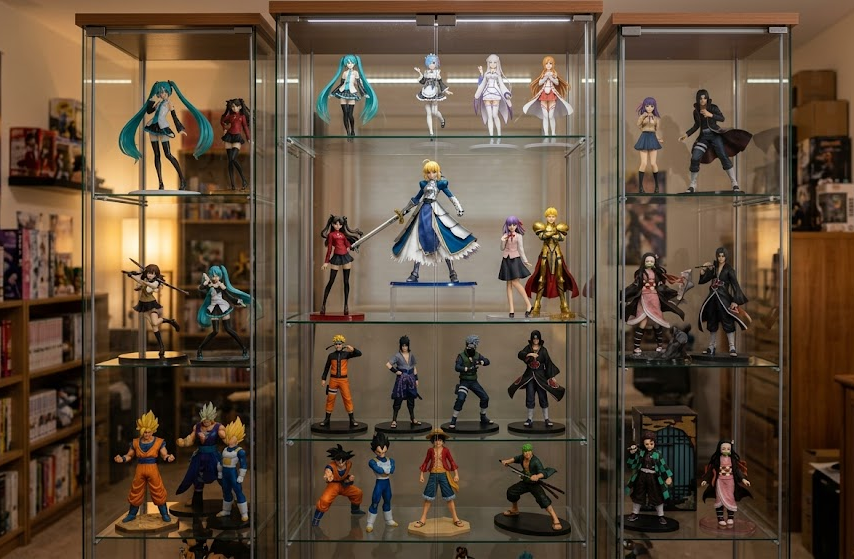
A Repeatable Size-Check Method You Can Reuse Before Ordering
Use this quick pre-order method every time:
Step 1: Measure the Real Display Space
Record the usable:
- width
- depth
- height
- front-door clearance if in a case
- extra height lost to risers or lighting
Step 2: Estimate the Figure’s True Footprint
From the product listing and photos, estimate:
- tallest point
- widest point
- deepest point
- any part that extends beyond the base
- whether the pose is compact or dynamic
Step 3: Add a Safety Buffer
As a rule of thumb:
- compact prize or static scales: leave at least 1 cm extra on the tight side
- standard scale figures: leave 1 to 2 cm extra
- dynamic or effect-heavy pieces: leave 2 cm or more where possible
Step 4: Check the Neighbor Relationship
Do not test the figure against an empty shelf unless that is how it will be displayed. Test it against the neighboring figures, wall, case frame, and riser plan it will actually live with.
Step 5: Decide Using a Yes / No Filter
Ask:
- does it fit the shelf depth without hanging awkwardly?
- does it clear the top once the riser is included?
- does the widest part avoid crowding the next figure?
- do hair, weapons, and effects clear the back and sides?
- will it still look intentional, not squeezed in?
If any answer is no, the figure does not fit that spot yet.
Quick Fit Checklist Collectors Can Screenshot
Before buying, confirm all five:
- the height fits the usable opening
- the width fits the real shelf position
- the depth fits without overhang or wall contact
- the pose spread fits around nearby figures
- the clearance still works after risers, doors, and lighting are considered
Example Size-Check Scenarios
1/8 Scale on an Open Shelf
A simple 1/8 scale with a compact round base may fit comfortably on a shallow shelf even if the listed height seems close. Open shelves forgive a little overhang visually, but you still want stability and enough side space for dusting.
1/7 Scale With Flowing Hair in a Glass Cabinet
This is where collectors get caught. The height may be fine, but the backward hair arc can reduce usable depth, and the riser you planned for better visibility may remove the last bit of top clearance.
Large Prize Figure With an Oversized Base
Prize figures are not always tiny-footprint pieces. A large rectangular base can eat width and depth faster than expected, especially when you are trying to fit several figures in one row.
Summary Takeaway
The best answer to will this figure fit my shelf is not a guess based on scale or listed height. It is a repeatable check using full height, max width, max depth, pose spread, and real clearance after furniture limits. Collectors who use that method make fewer impulse-fit mistakes, plan cabinets more confidently, and build displays that stay flexible instead of cramped. For shoppers exploring this further, see Display Cases.
FAQ
How do I measure shelf for figure placement before the figure arrives?
Measure the usable shelf width, depth, and height first, then estimate the figure’s real footprint from listing photos. Look for the widest point, the deepest point, and any parts extending beyond the base.
Is quoted figure height accurate enough for shelf planning?
Not by itself. Height helps, but it misses width, depth, pose spread, and clearance issues caused by hair, weapons, risers, or cabinet framing.
How much extra space should I leave around a figure?
For many collectors, 1 to 2 cm of spare clearance is a safe minimum for standard scales, with more room for dynamic pieces or enclosed cases.
Do risers make figure-fit problems worse?
They can. Risers improve visibility, but they reduce vertical clearance and can push a figure closer to a top panel or cabinet light.
What is the biggest shelf-fit mistake collectors make?
Treating a product listing like a complete measurement sheet. Real fit depends on the full display footprint, not the height number alone.
Comments