
Best Display Case Sizes for Anime Figures by Scale
Choosing a display case gets easier once you stop thinking only about figure height. For most collectors, display case depth, usable interior width, shelf height, and door clearance matter more than the scale label by itself. A 1/7 scale figure can look perfectly comfortable in one case and badly cramped in another if the base is wide, the pose leans forward, or the door frame steals a little usable space.
Before buying a case, compare scale figures by size with available display cases so height, depth, and clearance match the figures you collect.
If you are looking for the best display case sizes for anime figures, the practical answer is to match case dimensions to both the figure’s scale and the way you want to display it. A single spotlight display usually needs more breathing room around the figure, while a multi-figure setup can share width if you plan depth and spacing carefully.
This guide breaks down anime figure display case size planning by common scales, explains when acrylic cubes are the better buy, and shows the most common fit mistakes people make when ordering cases online.
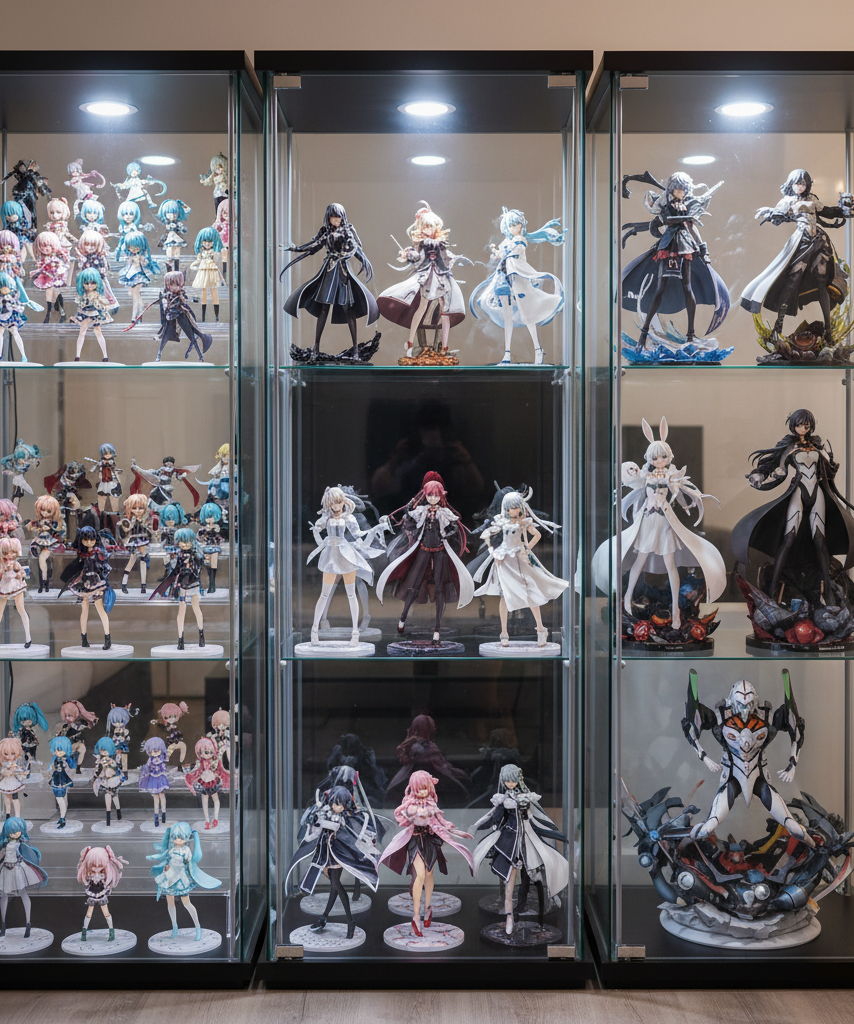
What Display Case Dimensions Actually Matter
When people shop for a case, they often focus on the product’s outside dimensions. That is a mistake. What matters is the usable interior space after you account for frame thickness, shelf supports, door tracks, and any lip at the front.
The four dimensions that matter most are:
- width: how many figures can sit side by side without shoulders, weapons, or hair colliding
- depth: whether the base fits comfortably with front and rear breathing room
- height: whether ears, wings, raised arms, or acrylic supports clear the shelf above
- door clearance: whether swing doors, sliders, or front lips reduce usable placement space
A good rule is to avoid buying a case that only meets the figure’s bare minimum footprint. If the case dimensions match the base exactly, the figure may technically fit but still look awkward and be annoying to dust.
Best Display Case Sizes for Anime Figures by Scale
The easiest way to shop is to treat scale as a starting estimate, then add margin for pose, base style, and how open you want the display to feel.
| Figure scale / type | Typical figure footprint | Good single-figure case size | Good multi-figure shelf/case size | Notes |
|---|---|---|---|---|
| Small trading figures / chibi | ~3 to 5 in footprint | 6 x 6 x 8 in | 12 to 16 in wide, 6 to 8 in deep, 8 to 10 in high | Compact cubes work well if figures are upright |
| Prize figures | ~5 to 7 in footprint | 8 x 8 x 10 in | 16 to 24 in wide, 8 to 10 in deep, 10 to 14 in high | Fine for simpler poses and smaller bases |
| 1/8 scale | ~6 to 8 in footprint | 10 x 10 x 12 in | 18 to 24 in wide, 9 to 11 in deep, 12 to 15 in high | Safer with a little extra depth |
| 1/7 scale | ~7 to 10 in footprint | 12 x 12 x 14 in | 24 to 30 in wide, 10 to 12 in deep, 14 to 18 in high | The most versatile planning range for many collectors |
| 1/6 scale | ~9 to 12 in footprint | 14 x 14 x 18 in | 30 to 36 in wide, 12 to 14 in deep, 16 to 22 in high | Better when you want front clearance and cleaner staging |
| Large resin / effect-heavy figures | 11 in+ footprint | 16 x 16 x 20 in or larger | 36 in+ wide, 14 to 18 in+ deep, 18 to 24 in+ high | Always trust listed product dimensions over scale label |
These are not hard guarantees. For shoppers exploring this further, see 1/6 scale figures. They are practical anime figure case guide ranges that leave enough room for the display to feel intentional.
Case Size for Prize Figures and Smaller Scales
Prize figures, chibi figures, and many compact 1/8 pieces are the easiest to house. If the figures are mostly upright and use ordinary round or hexagonal bases, smaller acrylic cubes or shallow cabinets are often enough.
For this part of the hobby, buyers can usually start with:
- single figure: around 8 x 8 x 10 inches
- small grouped display: 16 to 24 inches wide, 8 to 10 inches deep
- compact cube displays: excellent when shelf width is limited but stacking is possible
Smaller figures are more forgiving, but shallow cases can still feel crowded fast if you collect wide twin-tails, staffs, or bent-leg poses.
Display Case Dimensions for 1/7 Figures
For many collectors, the most important question is display case dimensions for 1/7 figures. This scale sits right in the middle of the hobby: large enough to need planning, but common enough that your case choice affects the whole room.
A practical starting point for a single 1/7 is 12 x 12 x 14 inches. That gives most upright or lightly dynamic figures enough room for the base, a little rear clearance, and some air in front so the figure does not look pressed against the glass.
If you want a multi-figure 1/7 display, a better target is:
- width: 24 to 30 inches
- depth: 10 to 12 inches
- height: 14 to 18 inches per shelf opening
If you are still judging how much physical room premium scales really take, our guide to how big a 1/7 scale anime figure usually is is a useful companion before you buy furniture or cabinets.
Case Size for 1/6 Anime Figures
A lot of shoppers underestimate case size for 1/6 anime figures because they look only at listed scale and forget how much larger the bases and visual mass can be.
For a single 1/6 figure, 14 x 14 x 18 inches is a much safer comfort zone than a tight 12-inch cube. Once you add layered clothing, seated poses, flowing hair, or wider accessories, smaller cases start to feel cramped quickly.
For multi-figure 1/6 displays, aim for:
- width: 30 to 36 inches or more
- depth: 12 to 14 inches
- height: 16 to 22 inches
If the figure is meant to be a centerpiece rather than part of a dense lineup, err on the larger side. Extra empty space usually makes a premium 1/6 look better, not worse.
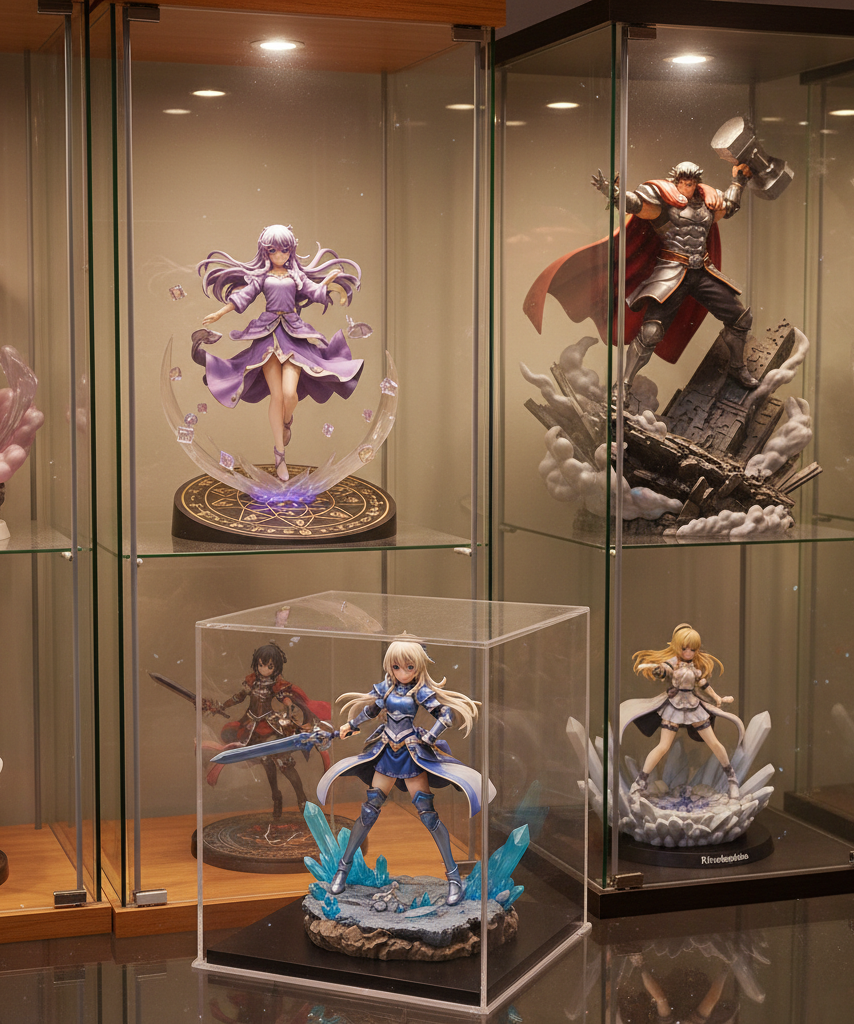
Large Dynamic Figures, Resin Pieces, and Oversized Bases
This is where scale labels become less useful. A dramatic resin statue, winged character, or figure with scenic effects can need far more space than the nominal scale suggests. For shoppers exploring this further, see resin statues.
For these pieces, prioritize:
- listed product dimensions
- base width and depth
- diagonal pose spread
- door and frame clearance
- whether the piece needs visual breathing room to read well
When in doubt, buy the case for the entire silhouette, not just the body.
Single-Figure Spotlight Case vs Multi-Figure Display Case
The best case size is not only about scale. It also depends on display style.
Spotlight Cases
A spotlight case is designed to make one figure feel important. It usually works best when there is visible space around the figure on every side.
Spotlight cases are a better choice when:
- the figure is expensive or visually complex
- the base is scenic or unusually wide
- the character has wings, weapons, or large hair spread
- you want cleaner photography and stronger visual separation
For spotlight use, it is smart to add an extra inch or two of depth and height beyond the minimum fit number.
Multi-Figure Cases
A multi-figure cabinet or long shelf is more space-efficient, but spacing becomes the real challenge. Even if the figures technically fit side by side, they can still look crowded if their silhouettes overlap.
Multi-figure cases work best when you:
- mix figure heights thoughtfully instead of lining up identical tall pieces
- leave at least 1 to 2 inches between neighboring figures when possible
- use 10 to 12 inches depth for many 1/7 collections and 12 to 14 inches for many 1/6 collections
- stagger figures slightly instead of forcing a flat front-row lineup
If your goal is a polished collector-room look, width efficiency should not override presentation quality.
When Acrylic Cubes Work Better Than Full Cabinets
Full cabinets are not always the best answer. In some setups, acrylic cubes are the smarter purchase.
Acrylic cubes work especially well when:
- you want one figure per cube
- you have limited floor space but can stack vertically
- your collection focuses on prize figures or simpler 1/8 to 1/7 pieces
- you want modular growth instead of one large furniture commitment
They are less ideal when:
- your figures have wide bases or dramatic accessories
- you want dust protection with thicker, more rigid doors
- your collection includes many 1/6 or resin centerpiece figures
For smaller and mid-size figures, acrylic cubes often beat full cabinets on flexibility. For larger premium pieces, traditional cabinets usually win on stability, depth options, and cleaner overall presentation.
Mistakes to Avoid When Buying a Display Case Online
A lot of case-buying regret comes from the same predictable mistakes.
Mistake 1: Checking Exterior Size Instead of Interior Size
Advertised dimensions can look generous until the frame, shelf brackets, and door system eat into the usable space.
Mistake 2: Ignoring Base Width and Pose Spread
The scale label alone is not enough. A wide base or diagonal pose changes fit more than many buyers expect.
Mistake 3: Forgetting Door Clearance
Sliding doors, hinged doors, and front lips can all reduce practical placement room. This matters a lot in narrower cases.
Mistake 4: Buying for Minimum Fit Instead of Good Presentation
A figure that barely fits rarely looks premium. A little extra breathing room improves both safety and appearance.
Mistake 5: Assuming One Case Size Works for Every Figure Scale
Collectors with mixed displays usually need different shelf zones or different case types. For shoppers exploring this further, see how deep should a shelf be. A case perfect for prize figures may be frustrating for 1/6 scales.
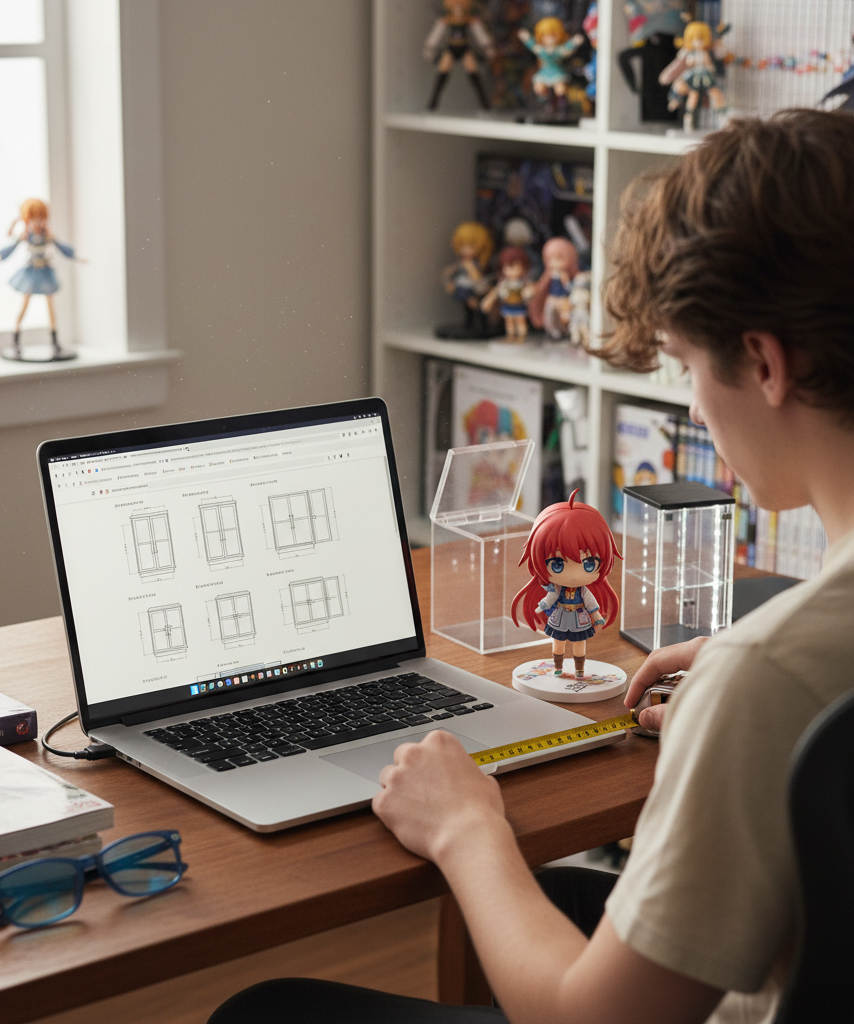
Best All-Around Display Case Size for Mixed Anime Figure Collections
If you want one flexible recommendation for a mixed collection, a case or shelf opening around 24 to 30 inches wide, 10 to 12 inches deep, and 14 to 18 inches high is one of the safest all-around ranges. It handles many 1/7 scale figures well, still works for smaller figures, and does not feel instantly obsolete if your collection gets a little larger.
If your display leans heavily toward 1/6 scales or dynamic centerpiece figures, stepping up to 12 to 14 inches depth is usually worth it. For shoppers exploring this further, see best Detolf alternatives.
Final Answer: Best Display Case Sizes for Anime Figures by Scale
The best anime figure display case size depends on both scale and display style. Smaller figures and prize figures often work well in 8 to 10 inch deep cases or compact cubes. Many 1/7 scale figures look best in cases around 12 x 12 x 14 inches for single display or 10 to 12 inches depth for shared cabinets. Many 1/6 anime figures need at least 14 x 14 x 18 inches for a spotlight setup or 12 to 14 inches depth in larger cabinets.
The safest shopping approach is simple: measure the figure’s real footprint, add breathing room for the pose and base, and check interior dimensions instead of exterior dimensions. That is what keeps a case from being merely usable and makes it actually look good in a collector setup.
Comments