
How to Choose a Figure Display Cabinet for Dust Protection and Visibility
Choosing a figure display cabinet sounds simple until you start balancing three competing goals: keep dust off your collection, keep every figure easy to see, and keep enough flexibility for future rearranges. For shoppers exploring this further, see display cases. A cabinet that looks elegant in product photos can still turn into a frustrating collector setup if the shelves are too deep, the glass reflections are harsh, or the spacing wastes vertical room.
The best figure display cabinet is not automatically the most expensive one. It is the cabinet that fits your figure sizes, your room, and the way you actually display. For most collectors, that means choosing a cabinet that improves dust protection without trapping the whole collection behind awkward glare, fixed shelf heights, or bulky framing.
If dust is your first concern, start with an enclosed setup instead of trying to clean open shelving constantly. This dust protection guide covers the maintenance side well: How to Protect Your Anime Figures from Dust
Open shelves vs enclosed cabinets for anime figures
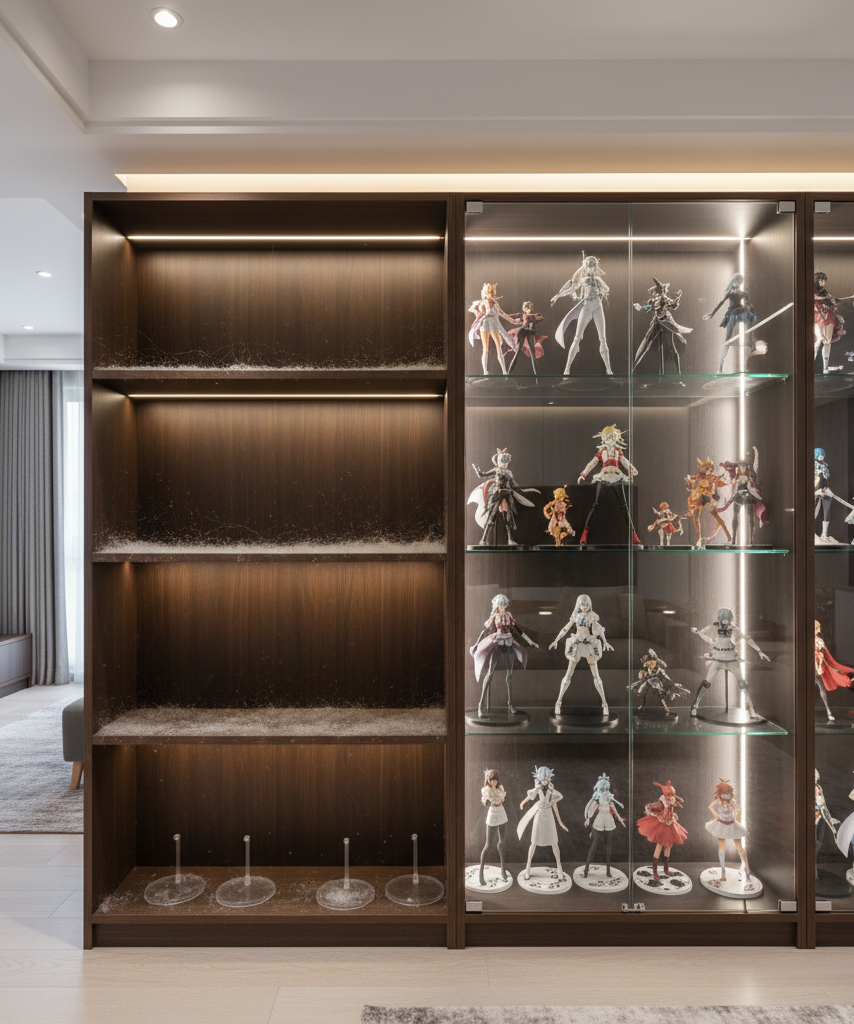
Open shelves are cheaper, easier to access, and often easier to photograph. They also collect dust fast, especially if your room has fabric, pets, fans, or frequent window airflow. That makes them fine for casual display, but harder to manage when you own detailed scale figures with textured hair, layered paint, and transparent effect parts.
An enclosed display cabinet for anime figures solves the dust problem better because the sides, doors, and top reduce how much airborne debris settles directly onto the collection. The tradeoff is that not every cabinet preserves visibility equally well.
Here is the practical difference:
- Open shelves favor easy access, quick rearranging, and lower upfront cost.
- Enclosed cabinets favor dust control, better long-term maintenance, and a more finished presentation.
- Poorly chosen enclosed cabinets can still be annoying if reflections, dark interiors, or fixed shelf positions hide detail.
For collectors who clean figures regularly and rotate pieces often, open shelving can still work. But if your goal is a dust proof anime figure cabinet that keeps your setup presentable with less weekly effort, enclosed furniture is the better starting point.
What cabinet features matter most for dust protection
Not all closed cabinets protect equally. A cabinet reduces dust best when it limits open gaps and gives particles fewer easy entry points.
Door style and gap control
Look closely at the front opening. Full glass doors with relatively tight seams usually outperform open-front cube shelving or cabinets with large side gaps. Tiny gaps are normal, but oversized openings around door edges reduce the whole point of buying enclosed furniture.
Top, side, and back coverage
A cabinet with glass doors but open sides is still only partial protection. For better dust reduction, choose a cabinet with:
- a fully covered top
- solid or glass side panels
- a real back panel rather than open framing
- shelf surfaces that are easy to wipe without moving everything constantly
Stable interior environment
Dust is not the only environmental issue. If your display room runs hot, humid, or gets direct sun, cabinet choice should support better placement rather than giving a false sense of protection. Humidity and heat can still affect materials even inside a cabinet, so this guide is worth reading before you decide where the cabinet will live: How to Protect Anime Figures from Heat and Humidity
A cabinet helps with cleanliness. It does not cancel out a bad room location.
Glass visibility, lighting compatibility, and shelf adjustability
Collectors often focus on dust proofing first, then regret buying a cabinet that makes the figures harder to enjoy. Visibility is what keeps a cabinet from feeling like storage.
Clear sightlines matter more than maximum capacity
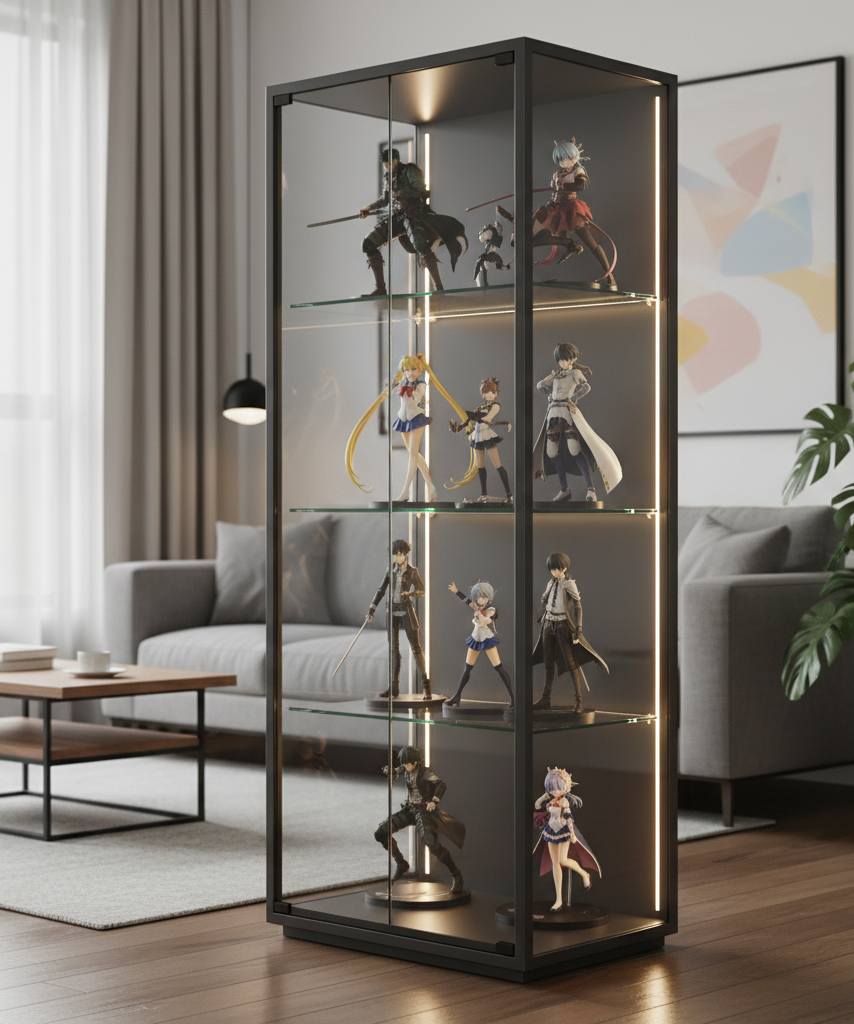
A cabinet with crystal-clear doors and thin framing usually shows figures better than a chunkier unit that technically holds more. Thick frames, dark borders, or narrow viewing windows can cut across faces, weapons, and effect parts once figures are actually in place.
If you want strong display cabinet visibility, prioritize:
- large clear viewing panels
- minimal frame obstruction across the middle shelves
- enough depth to avoid crowding, but not so much depth that rear rows vanish
- interior height that lets taller figures breathe without forcing wasted empty space above smaller ones
Shelf adjustability is a collector feature, not a bonus feature
Fixed shelves are one of the easiest ways to overpay for a cabinet that limits display flexibility. Figure collections change. You may start with prize figures, then add 1/7 scales, wider bases, or tall effect-heavy pieces. For shoppers exploring this further, see 1/7 scale figures. A cabinet with adjustable shelf positions lets you rebuild around the collection instead of around the furniture.
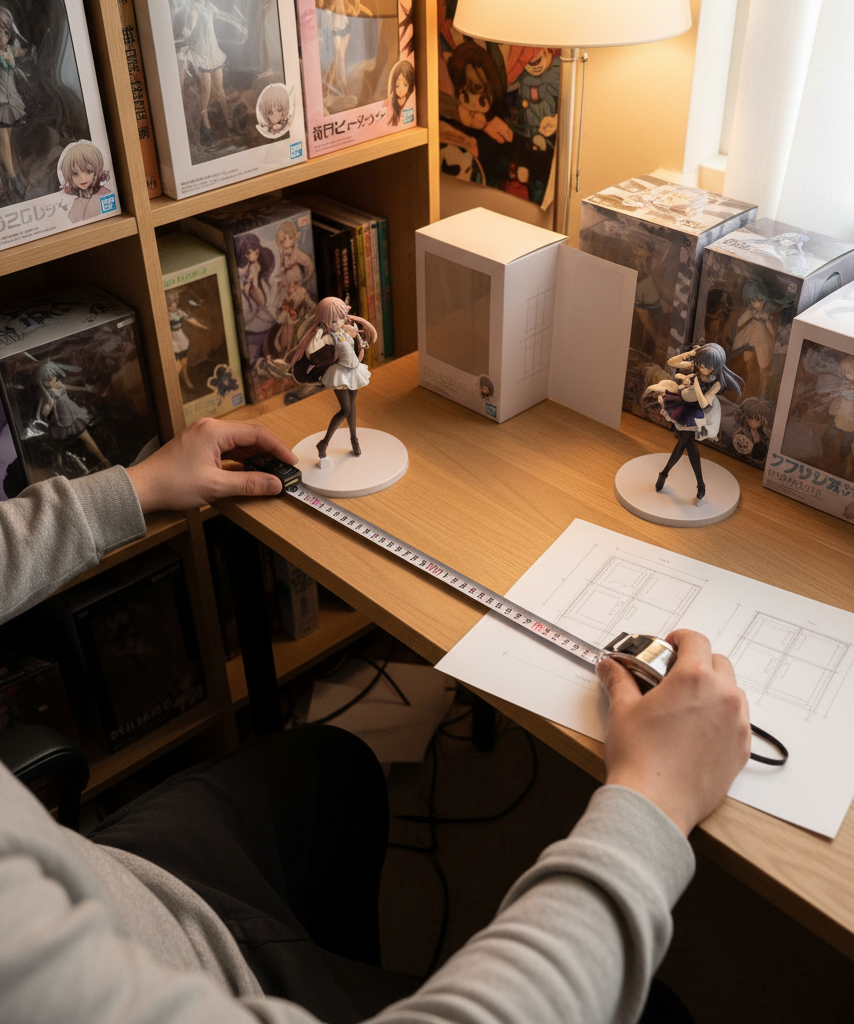
That matters even more if you are still planning ideal shelf dimensions. Before buying extra-deep furniture, compare your figure footprints and base sizes with How Deep Should a Shelf Be for Anime Figures? A Size Planning Guide
Lighting compatibility
Many collectors want LED lighting inside the cabinet. That means you should check:
- whether cable routing is easy
- whether shelf edges leave room for light strips or bars
- whether the back panel color will absorb too much light
- whether the glass creates harsh reflections from the viewing angle you use most often
A good cabinet should still look good with the lights off. Lighting should enhance the cabinet, not rescue it.
Which cabinet styles suit different collection sizes
The right cabinet depends partly on how many figures you own and how quickly the collection is growing.
Small collections
If you own a modest number of figures, a narrow vertical cabinet is often the smartest choice. It gives you enclosed protection without consuming too much floor space. This works especially well for:
- a few scale figures
- a themed character lineup
- one shelf per franchise or color story
- collectors in apartments or small rooms
The main caution is not to choose a cabinet so narrow that dynamic bases feel cramped.
Medium collections
For medium collections, the best figure display cabinet is usually a wider multi-shelf unit with adjustable spacing. This gives you room to separate scales, build cleaner sightlines, and avoid stacking everything shoulder to shoulder.
A medium-size collector benefits most from cabinets that support:
- mixed shelf heights
- flexible layout changes
- future expansion without replacing the whole unit immediately
- enough depth for centerpiece figures without turning the back row invisible
Large collections
For large collections, one oversized cabinet is not always better than multiple coordinated cabinets. For shoppers exploring this further, see best display case sizes by scale. Several matching units can make the room easier to manage because you can group by franchise, scale, or display style. That also helps maintenance, lighting control, and future rearranging. For shoppers exploring this further, see Detolf alternatives for anime figures.
The risk with large single cabinets is that they invite overfilling. Once every shelf becomes a dense wall of figures, dust protection improves but visibility collapses.
How to avoid overpaying for a cabinet that limits display flexibility
A lot of buyers spend too much on finishes and not enough attention on function. Expensive does not automatically mean collector-friendly.
Watch for these common buying mistakes:
- paying extra for decorative framing that blocks figure sightlines
- choosing fixed shelf spacing that wastes vertical room
- buying excessive depth that hides back-row figures
- prioritizing total claimed capacity instead of readable display capacity
- ignoring door access and realizing later that rearranging is awkward
A smart anime figure cabinet guide should treat flexibility as part of the value equation. If a cabinet only works for your current lineup and not your next ten figures, it is not really a long-term solution.
A practical cabinet-buying checklist
Before you buy, ask these questions:
- What figure heights and base widths do I actually own most often?
- Do I want one showcase cabinet or a system I can expand later?
- Is my bigger problem dust, room footprint, or poor sightlines?
- Will this cabinet still work if I shift from prize figures to scale figures?
- Can I add lighting without turning the glass into a reflection problem?
- Are the shelves adjustable enough to support future display changes?
If you cannot answer those clearly, the safest move is to buy for flexibility first and decorative style second.
The best cabinet is the one that protects without hiding the collection
A good figure display cabinet should make your collection easier to maintain and easier to appreciate. That means reducing dust, preserving clear viewing angles, supporting shelf adjustments, and leaving room for the way your collection will evolve.
If you mainly want less cleaning, choose enclosed construction with better door seams and full side coverage. If you mainly care about presentation, focus on glass clarity, lower frame obstruction, and shelf spacing that keeps figures visible. For most collectors, the sweet spot is a cabinet that does both reasonably well instead of maximizing only one feature.
Buy like a collector, not like a furniture shopper. The right cabinet should protect the figures and still let them perform. For shoppers exploring this further, see display cabinets.
Comments