
Heat and humidity are two of the most overlooked threats to anime figure collections. Most collectors worry about dust and sunlight first, but high room temperature, trapped moisture, and poor airflow can quietly damage paint, soften plastics, weaken adhesives, warp packaging, and create that sticky or tired look that makes a figure feel older than it should. If you live in a hot climate, a humid apartment, or a place with dramatic seasonal weather, protecting your collection means paying attention to the room itself, not just the shelf.
The good news is that anime figure heat damage and humidity-related problems are often preventable. You do not need a museum-grade storage room, but you do need to avoid the worst environmental patterns: hot windows, sealed corners with stale air, damp closets, and storage boxes left in garages or attics. A few practical habits can make a huge difference for both displayed and boxed figures.
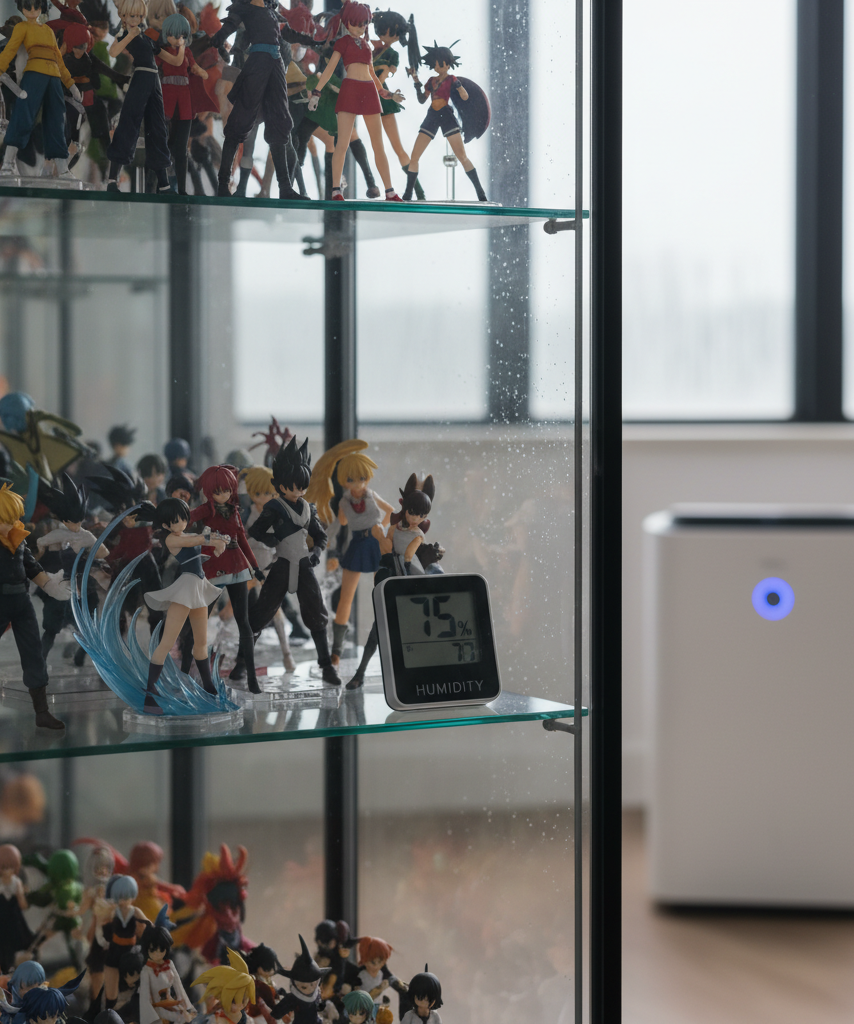
Why Heat and Humidity Matter for Displayed Figures
Anime figures are made from materials that react to environmental stress over time. PVC, ABS, paint layers, clear coatings, glue points, and packaging inserts all age faster when exposed to too much heat or too much moisture. A room does not have to feel extreme to a person for those effects to start building up.
Heat is a problem because it softens materials and speeds up chemical aging. Humidity is a problem because moisture in the air can affect adhesives, encourage stickiness on some surfaces, and make boxes, paper inserts, and blister packaging absorb dampness. When both happen together, the risk gets worse.
Collectors searching for how to protect anime figures from heat and humidity usually want to know whether the damage is real or exaggerated. It is real. The question is less about whether risk exists and more about how often your figures sit in those conditions.
Common environmental risks include:
- rooms that stay hot in summer afternoons
- display cabinets near windows or radiators
- closed shelves with poor airflow
- storage closets on exterior walls
- basements with damp air
- attics or garages with major temperature swings
Even if a figure still looks fine today, repeated exposure can slowly reduce long-term display quality. For shoppers exploring this further, see display cases.
Warning Signs of Environmental Damage
Environmental damage often starts subtly. Many collectors do not notice it until a box warps, an effect part feels tacky, or a figure begins leaning in a way it did not before.
Signs of Heat Damage
Anime figure heat damage can show up as:
- softening or slight warping in thin parts
- leaning figures or bent accessories
- loosened pegs or joints that feel less stable
- glossy surfaces looking uneven
- paint that appears slightly dulled after prolonged heat exposure
Long hair strands, weapons, banners, and other extended sculpted parts are usually more vulnerable because they are thinner and more likely to shift when materials warm up repeatedly.
Signs of Humidity Problems
Anime figure humidity issues can include:
- sticky or tacky surface feel
- cloudy clear parts
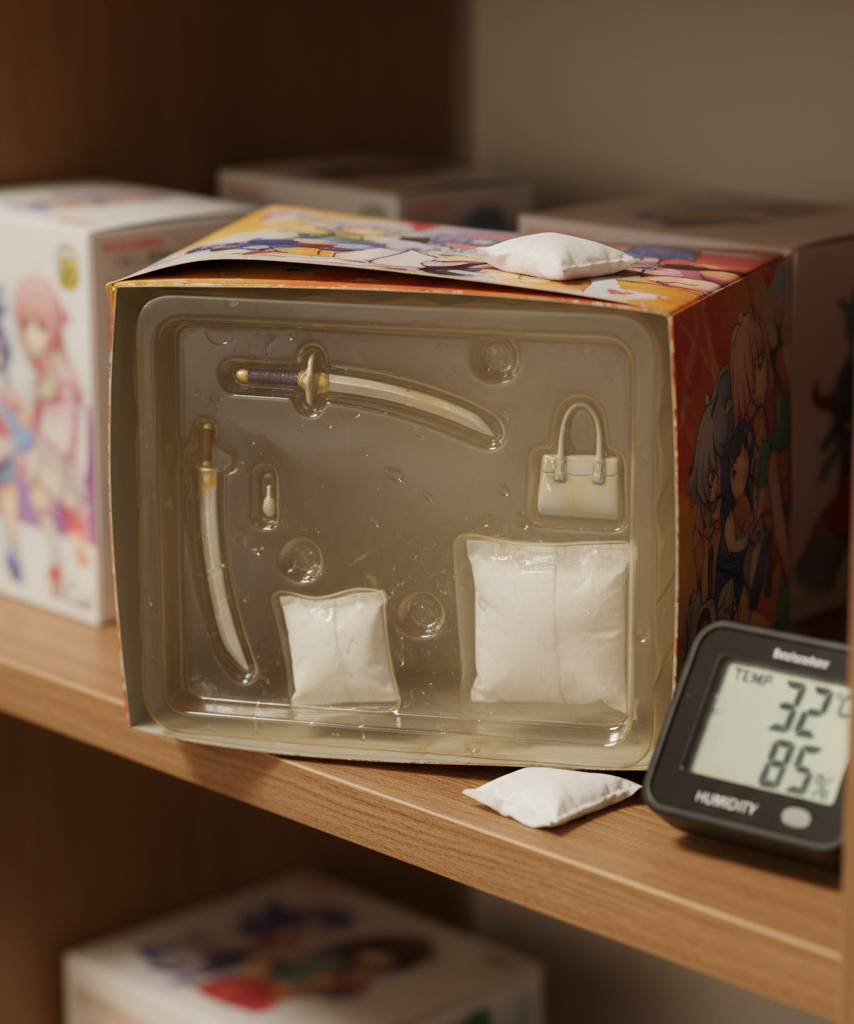
- packaging that feels soft, wavy, or swollen
- musty smell in storage boxes or cabinets
- labels, inserts, or cardboard corners curling over time
- weakened glue on small decorative pieces or bases
For boxed figures, humidity can be just as damaging as heat because even if the figure itself stays clean, the packaging and internal supports may slowly degrade.
Best Room Conditions for Figure Storage and Display
The best environment for anime figures is stable, moderate, and dry enough to avoid moisture buildup without turning the room into a desert. Collectors do not need perfect laboratory numbers, but they should aim for a room that stays comfortable for both people and materials.
Ideal Temperature Range
A normal indoor temperature range is usually fine. Problems begin when a room stays hot for long periods, especially above ordinary comfort levels. Seasonal spikes matter more than short temporary changes. A room that hits high heat every afternoon all summer is much riskier than one that occasionally warms up for an hour.
As a practical rule:
- stable cool-to-moderate indoor temperature is low risk
- regularly warm rooms are moderate risk
- hot rooms with trapped air are high risk
Avoid placing figures in spots where heat collects, such as:
- near windows with sun exposure
- beside radiators or heaters
- above electronics that throw off heat
- on top shelves where warm air gathers
Ideal Humidity Range
For most collectors, moderate indoor humidity is best. Very damp air can cause more trouble than slightly dry air. If a room often feels clammy, smells musty, or causes paper items to soften, that is a warning sign for figure storage too.
Collectors dealing with anime figure storage humidity should especially watch:
- rainy seasons
- basement rooms
- coastal homes
- poorly ventilated apartments
- rooms where windows stay closed for long periods
A small hygrometer is one of the simplest upgrades a collector can buy because it turns vague room conditions into something measurable.
Simple Prevention Steps Collectors Can Use
Protecting figures from heat and humidity is mostly about reducing repeated stress. You do not need complicated equipment for every shelf, but a few climate-practical habits go a long way.
Prevention Checklist for Displayed Figures
Use this short checklist for displayed figures:
- keep shelves away from direct sun and heat sources
- improve airflow in stuffy rooms
- avoid placing cabinets in damp corners
- run air conditioning or a fan during hot spells when possible
- use a dehumidifier in humid seasons or wet rooms
- monitor room conditions with a hygrometer
- inspect leaning figures and clear parts every few months
These steps help prevent both anime figure heat damage and long-term moisture-related wear. For shoppers exploring this further, see anime figures fading in sunlight.
Prevention Checklist for Boxed or Stored Figures
Stored figures need protection too, especially if they are kept for resale, rotation, or limited-space reasons.
Best practices include:
- store boxes in climate-controlled indoor rooms
- avoid garages, attics, sheds, and damp basements
- keep boxes off the floor if moisture is a possibility
- use shelving rather than stacking heavy weight on delicate boxes
- add silica gel packs where appropriate
- check storage areas during seasonal weather changes
If you only remember one rule, make it this: never treat collectible figures like ordinary household storage items. The environment matters more than most people think.
Real-World Seasonal Advice
Summer is usually the hardest season for figure collections. A room that seems fine in spring may become risky in July or August. Likewise, rainy seasons can push a previously acceptable storage closet into humidity trouble.
A realistic seasonal routine looks like this:
- check room temperature and humidity when seasons change
- move valuable figures away from problem spots before peak summer
- empty damp storage areas before moldy smells appear
- rotate boxed inventory if one part of a room gets warmer than the rest
This kind of simple prevention is cheaper and easier than replacing a damaged scale figure. For shoppers exploring this further, see scale figures. For shoppers exploring this further, see protect anime figures from dust. For shoppers exploring this further, see anime figures.
Final Answer: How Do You Protect Anime Figures from Heat and Humidity?
Protect anime figures from heat and humidity by keeping them in a stable indoor room, away from trapped heat, away from damp air, and away from storage spaces with seasonal extremes. Use airflow, moderate cooling, and humidity control where needed, and check both displayed figures and boxed figures for early warning signs.
For most collectors, the smartest setup is simple: a climate-controlled room, no hot window exposure, no damp storage corners, and a cheap hygrometer to confirm conditions. That is enough to protect long-term display quality far better than waiting until damage becomes visible.
Comments