
Resin statues need more careful cleaning than ordinary PVC figures. For shoppers exploring this further, see resin statues. They are often heavier, more brittle, more expensive, and more likely to include sharp edges, thin attachments, delicate paint, and complex surface textures that do not forgive rough handling. If you treat a premium resin piece the same way you would a simple prize figure, you increase the risk of chips, snapped parts, paint wear, and stress damage.
That is why collectors searching for how to clean resin statues are usually not looking for generic dusting advice. They want a safer workflow that protects paint and avoids damage to fragile parts. The good news is that resin statue cleaning does not have to be complicated. It just needs to be slower, lighter, and more deliberate than PVC cleaning.

Why Resin Statues Need Different Care Than PVC Figures
PVC figures are usually lighter, slightly more forgiving, and easier to handle during routine cleaning. Resin statues are different. They often have more weight concentrated in fewer support points, more brittle material behavior, and more intricate sculpting that creates vulnerable edges and contact points.
That difference matters because resin can be less tolerant of:
- sudden pressure on thin extensions
- awkward lifting angles
- accidental taps against hard surfaces
- overly aggressive rubbing on painted edges
- unstable handling during disassembly or repositioning
Many resin pieces also include sharp hair strands, weapons, fabric tips, wings, or scenic base elements that can chip if your hand slips during cleaning. Even when the statue feels solid overall, the delicate areas may not be.
Paint Safety Matters More Than You Think
High-end resin statues often rely on detailed paint gradients, matte finishes, and subtle texture work. Strong rubbing, rough cloths, or liquid misuse can dull or mark those finishes. That is why the best way to clean resin statues usually starts with dry, low-contact methods first rather than jumping straight to wiping.
Safe Tools and Cleaning Methods
The safest resin statue cleaning kit is simple. You do not need harsh chemicals or elaborate products. You need soft tools, stable handling, and patience.
Safe Cleaning Tools
Good tools include:
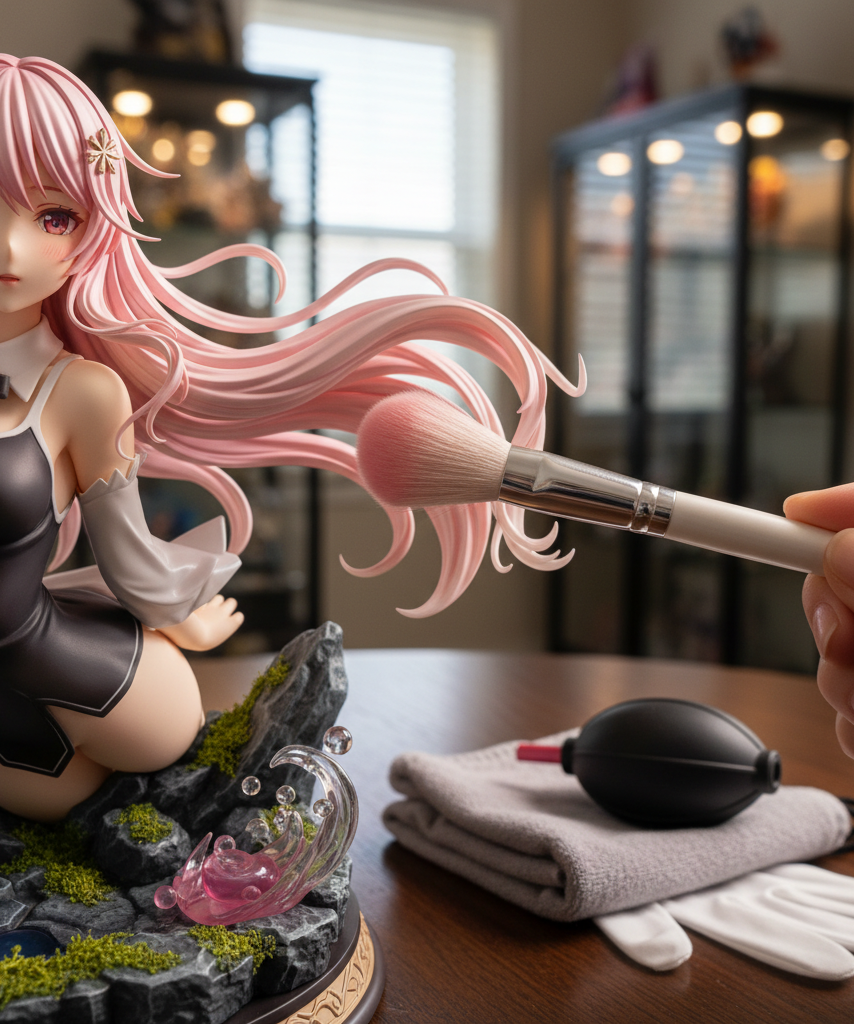
- a soft makeup brush or anti-static detailing brush
- a handheld air blower
- a clean microfiber cloth for limited use
- cotton gloves or clean dry hands with good grip
- a padded work surface such as a folded towel or microfiber mat
These tools reduce the chance of scratching paint or slipping during handling.
Step-by-Step Dry Cleaning Workflow
For most resin pieces, dry cleaning is the safest starting point.
1. Clear a stable workspace before moving the statue. 2. Place a soft towel or mat under the piece. 3. Support the heaviest and strongest part of the statue when lifting. 4. Use an air blower to loosen light dust first. 5. Gently sweep dust away with a soft brush. 6. Work from top to bottom so dust does not resettle everywhere. 7. Inspect fine edges and recessed areas before putting the piece back.
This is the clean resin figures routine most collectors should use for regular maintenance.
When to Use a Microfiber Cloth
A microfiber cloth can help with broad, stable surfaces, but only when used lightly. Do not scrub painted details, thin protrusions, or textured sculpt areas. On resin, wiping is riskier than brushing because it adds friction and accidental pull.
Should You Use Water or Cleaners?
For most routine resin statue cleaning, avoid liquid unless truly necessary. Light dust does not require water. If you are dealing with grime rather than dust, test very cautiously and use the smallest possible amount of moisture on a soft cloth, never directly on the statue.
Avoid:
- household cleaning sprays
- alcohol-based cleaners
- abrasive cloths or paper towels
- soaking parts
- spraying water directly onto the piece
Collectors often do more damage through “deep cleaning” than through ordinary dust.
Parts and Surfaces That Need Extra Caution
Some areas of a resin statue are much riskier than others. These are the parts where you should slow down and reduce contact as much as possible.
Thin Protruding Parts
Hair tips, fingers, ribbons, weapon ends, cape corners, and decorative effects are common danger zones. Never pinch or steady the statue by these parts while cleaning.
Matte and Airbrushed Surfaces
Matte paint and subtle airbrushed gradients can show wear more easily than glossy surfaces. Repeated rubbing may flatten the finish or leave faint marks that are hard to reverse.
Scenic Bases and Tight Recesses
Large resin bases often look sturdy, but they can include tiny sculpted textures, foliage, rubble, or layered elements that trap dust. Brush these areas slowly rather than trying to wipe across them.
Seams, Pegs, and Joined Parts
If your resin statue has removable parts, do not repeatedly detach them unless necessary. Frequent disassembly can increase wear or loosen fit over time. For shoppers exploring this further, see resin vs PVC figures comparison. If you do separate anything, support both sides carefully and avoid twisting fragile connections.
Cleaning Mistakes That Can Cause Chips or Paint Damage
Most resin cleaning damage happens because the collector moves too fast or applies force without realizing it.
Common Mistakes to Avoid
Avoid these mistakes:
- lifting the statue by a fragile extension
- brushing too aggressively around sharp details
- wiping dust sideways across delicate paint edges
- cleaning over a hard tabletop with no padding
- using liquid on dust that would come off dry
- rotating the statue one-handed
- rushing through recessed or complicated sculpt areas
The Biggest Risk Is Handling, Not Dust
Ironically, the statue is often safer sitting dusty for a week than being cleaned carelessly in five minutes. Resin damage usually comes from handling accidents, not from a light layer of dust. That is why the best way to clean resin statues is calm, controlled, and minimal. For shoppers exploring this further, see resin statues.
How Often Should You Clean a Resin Statue?
Light routine dusting is better than waiting for heavy buildup. If dust accumulates too much, you may feel tempted to use more pressure later. A gentle maintenance schedule keeps cleaning easier and safer.
A practical approach is:
- light dusting every few weeks in open displays
- less frequent cleaning in enclosed cabinets
- extra checks after moving, redecorating, or seasonal dust spikes
Collectors with premium resin pieces should also think about prevention, not just cleaning. For shoppers exploring this further, see premium statues. Enclosed cases, stable placement, and lower-dust rooms reduce how often the statue needs direct handling.
Final Answer: How Do You Clean Resin Statues Safely? For shoppers exploring this further, see storing resin statues safely.
Clean resin statues by using soft dry tools first, supporting the statue carefully, brushing dust away with minimal pressure, and avoiding rough wiping or unnecessary liquid. Treat fragile parts, matte paint, and detailed surfaces with extra caution, and always clean over a padded surface.
For most collectors, the safest resin statue cleaning rule is simple: less force, less moisture, and more control. If you move slowly and prioritize handling safety over speed, you dramatically reduce the chance of chips, paint damage, or broken parts.
Comments