
How to Replace a Missing Anime Figure Stand Without Ruining the Pose or Stability
If an anime figure stand is missing, the safest fix is usually a compatible universal support stand matched to the figure’s peg style, weight, and center of balance rather than a random DIY substitute. The goal is not just to make the figure stand up again, but to protect the paint, preserve the original pose, and avoid slow leaning or sudden falls.
If the original support is gone, start by checking figure accessories and replacement parts before improvising a fix that might stress the figure.
Quick Answer: Start With the Safest Replacement Option
If you need to replace a missing anime figure stand, use this order of priority:
- Original replacement part from the manufacturer, seller, or aftermarket parts source if it is still available.
- A universal anime figure support stand with an adjustable support arm if the original base cannot be found.
- A clear acrylic figure base with the correct peg size only if the figure was originally designed for a fixed peg insert.
- A temporary stabilizing setup only for short-term storage or display while you wait for a proper replacement.
The safest replacement stand is the one that matches three things at the same time:
- the peg hole size and depth
- the figure’s weight and center of gravity
- the original display method, whether that was a figure base, foot peg, waist support arm, or multi-point support system
A loose fit can cause wobble. A tight fit can crack plastic or scrape paint. A badly balanced replacement can look fine for a day and then start leaning.
Step-by-Step Checklist Before You Buy Anything
Use this quick fit guide before ordering a replacement stand:
- Check whether the figure originally used a foot peg, back support arm, crotch support, or dynamic flight stand.
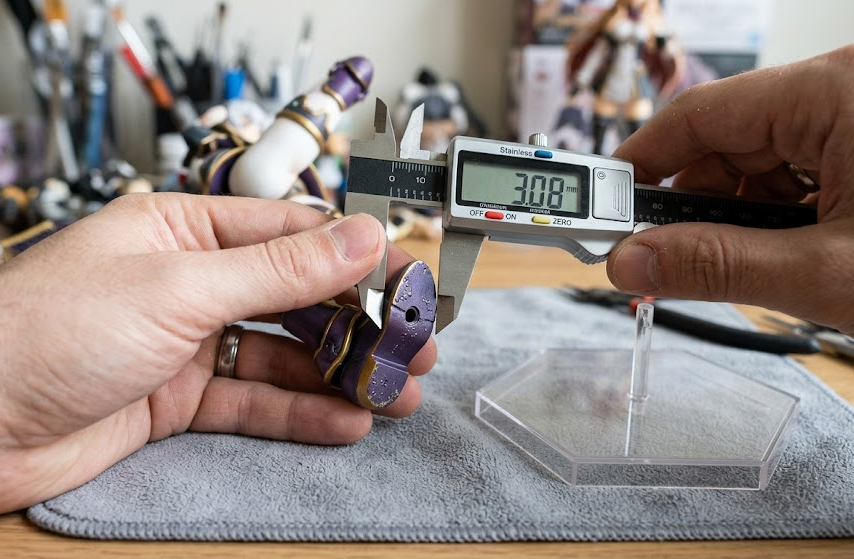
- Measure the peg hole diameter with a caliper if possible.
- Measure the peg hole depth so the replacement peg does not bottom out too early.
- Check whether the support point touches bare plastic, painted areas, or fragile sculpted parts.
- Test the figure’s balance point by supporting it gently with clean hands over a soft surface.
- Estimate whether the figure is front-heavy, side-heavy, or top-heavy because that determines how strong the support arm needs to be.
- Avoid any replacement that forces the pose into a new angle just to make it stand.
If you cannot verify those basics, choose an adjustable support arm instead of a random peg base. It is usually the safer fallback for collector display.
Identify What Kind of Stand the Figure Originally Used
Not every anime figure base works the same way, and replacing the wrong type creates most stability problems.
Fixed Peg Base
This is common on prize figures and many scale figures. For shoppers exploring this further, see current scale figures. One or two pegs insert into the feet or lower body and lock the pose into place.
What matters here:
- exact peg diameter
- spacing between multiple pegs
- angle of insertion
- how much of the figure’s weight was meant to rest on the figure base
If your original base used two pegs, a single generic peg usually will not hold the pose correctly.
Support Arm Stand
This style is common for dynamic poses, lighter figures, and some figures with one raised foot or airborne movement. A support arm usually braces the waist, back, or lower torso.
What matters here:
- clamp or cradle shape
- pressure point on the figure
- whether the contact area risks paint rub
- whether the arm can counter the figure’s forward or sideways pull
Support-arm replacements are often safer than improvised peg fixes when the original pose is unbalanced.
Multi-Point or Specialty Base
Some figures use sculpted scenic bases, hidden supports, or proprietary connectors. In those cases, a true one-to-one replacement is often best.
If the missing part was customized to the exact sculpt, forcing a generic replacement may keep the figure upright but ruin the intended pose or strain the attachment point.
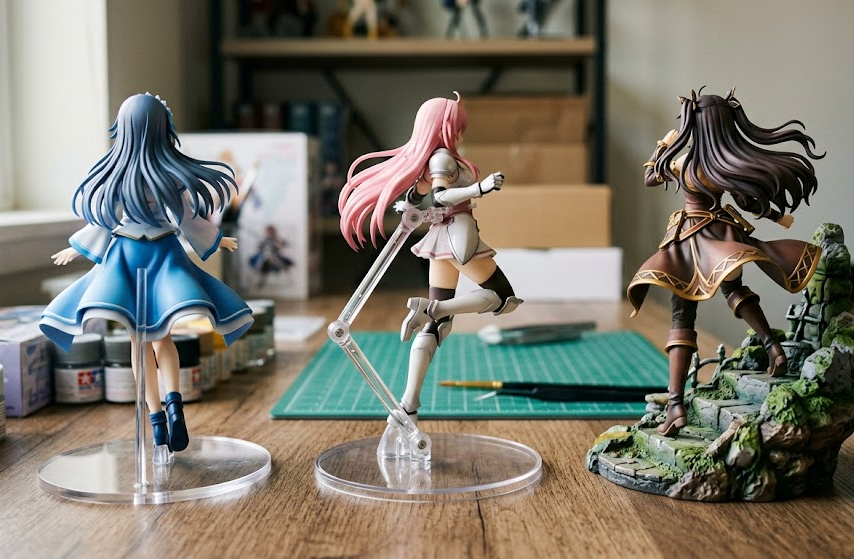
Universal Stand Types That Work Best
When the original part is gone, universal stands can save the display if you choose the right kind.
1. Adjustable Clear Support Stands
These are usually the safest universal option for a missing anime figure stand replacement because they let you adjust height, angle, and contact point without forcing a mismatched peg.
Best for:
- jumping or flying poses
- one-leg poses
- figures that no longer balance naturally
- collectors who are unsure of the original peg size
Main advantage: they solve for stability first.
Main risk: if the support arm presses against painted surfaces or sharp sculpt edges, you can get pressure marks or paint wear over time.
2. Acrylic Peg Bases
These work well when the figure originally relied on a simple foot peg and the replacement peg matches the hole closely.
Best for:
- basic upright poses
- lighter figures
- figures with an obvious original peg hole in one or both feet
Main advantage: clean look and close match to the original display style.
Main risk: a slightly wrong peg size can create stress, cracking, or a sloppy fit that makes the figure tilt.
3. Doll Stands or Waist-Brace Stands
These can work for emergency display, especially on prize figures or simpler upright sculpts, but they are less elegant and not always ideal for long-term collector presentation.
Best for:
- temporary display
- backup support during storage or rearranging shelves
- figures that cannot safely free-stand
Main risk: the brace shape may not align with the sculpt, and visible support hardware can look awkward.
How to Measure Peg Holes, Weight, and Balance Points
This is where collectors usually avoid the expensive mistake.
Measuring the Peg Hole
Use a digital caliper if possible. Measure:
- inside diameter of the peg hole
- depth of insertion
- distance between holes if there are two pegs
- whether the hole is round, oval, angled, or keyed
Even small differences matter. A peg that is only slightly oversized can whiten plastic, stress the socket, or chip the edge when inserted repeatedly.
Checking Weight and Center of Gravity
A replacement stand is not just about fit. It also has to control the figure’s balance.
Ask:
- Is the heaviest part the torso, hair, or accessory?
- Does the pose lean forward?
- Is one side carrying more weight?
- Was the original base doing more work than it looked like?
The relationship is simple:
- heavier figure + smaller support point = higher instability risk
- bad center of balance + weak support arm = leaning or tipping risk
- painted contact point + constant pressure = possible paint rub
Testing Fit Safely
Never force a test fit over a hard shelf.
Use this method:
- Lay down a soft towel.
- Support the figure with one hand at the torso.
- Insert the peg or brace slowly.
- Stop immediately if you feel resistance beyond a normal seated fit. For shoppers exploring this further, see anime figure stands explained.
- Let go only when the base feels stable without twisting.
If the figure needs pressure to stay upright, that replacement is probably wrong.
What Not to Do If You Want to Avoid Paint Rub or Leaning Damage
Collectors usually damage figures by trying to solve a missing stand too fast.
Do Not Jam a Larger Peg Into the Hole
This can split the socket, stress the foot, or leave visible marks around the opening.
Do Not Use Sticky Putty as a Main Structural Fix
A small amount of museum putty may help reduce micro-wobble on a stable base, but it should not be the main support for a figure that clearly needs a stand. Overreliance on putty can shift the pose, attract dust, and leave residue depending on the material and environment.
Do Not Let a Support Arm Press on Delicate Paint or Sharp Edges
A support arm should touch the strongest and safest contact point possible. If it bites into a painted waist, soft PVC skirt edge, or glossy finish, long-term pressure can leave marks.
Do Not Ignore Slow Leaning
A figure that looks stable today can still develop a lean if the support is slightly off. Recheck new replacements after the first day, the first week, and after warm room conditions.
Temporary Fixes vs Permanent Replacements
A temporary fix is acceptable when your real goal is to protect the figure until the correct part arrives.
Safer Temporary Fixes
- store the figure lying safely in a padded display box
- use a soft cradle stand for very short-term support
- stabilize a correct-fitting base with a minimal amount of museum putty
- move the figure away from shelf edges until the replacement arrives
Better Permanent Replacements
- original manufacturer part
- original seller support if spare parts are still available
- aftermarket replacement base built for the same connector style
- high-quality universal stand matched to the figure’s actual support needs
If the figure is valuable, a permanent fix should prioritize material safety over invisibility. A slightly visible but stable support is better than a hidden setup that slowly damages the figure. For shoppers exploring this further, see figure accessories and parts.
When to Contact the Seller or Manufacturer Instead
Sometimes the best anime figure stand replacement is not universal at all.
Contact the seller, manufacturer, or official distributor first if:
- the figure used a proprietary sculpted base
- the missing part includes unique keyed connectors
- the figure is expensive, rare, or difficult to rebalance
- the stand broke at the original attachment point
- you bought the figure recently and the missing base may qualify as a support issue
This is especially important for premium scale figures where the original replacement stand geometry was designed around one exact pose. For shoppers exploring this further, see anime figure stands vs risers.
Are Universal Anime Figure Stands Safe to Use?
Yes, universal anime figure stands can be safe to use if they match the figure’s support style, contact point, and balance needs. They are safest when the figure does not require a proprietary scenic base and when the support arm holds the body without scraping painted areas.
They are less safe when:
- the figure depends on an exact two-peg alignment
- the pose is extremely dynamic
- the support point sits on fragile sculpt details
- the replacement changes the figure’s angle just to make it stand
Summary Takeaway
If you want to replace a missing anime figure stand without ruining the pose or stability, treat the stand like a fit-and-balance problem, not just a missing accessory problem. Match the replacement to the original support type, measure the peg hole carefully, protect painted contact points, and use a proper support arm when stability matters more than hiding the hardware.
FAQ
Can I replace a missing anime figure stand?
Yes. In many cases you can replace a missing anime figure stand with either an original spare part or a compatible universal stand. The safest choice depends on the original stand style, peg fit, and the figure’s balance.
How do I find the right replacement base for a figure?
Start by identifying whether the figure used a peg base, support arm, or specialty stand. Then measure peg holes, check the figure’s weight distribution, and compare that with the replacement stand’s connector size and support range.
Are universal anime figure stands safe to use?
They can be safe when matched correctly. Adjustable clear support stands are often safer than random DIY solutions because they let you fine-tune the support position without forcing a wrong peg into the figure.
What happens if a figure is displayed without proper support?
A figure without proper support can wobble, lean over time, develop paint rub where it contacts the shelf or brace, or fall and break. That risk is highest for dynamic poses, older PVC figures, and top-heavy sculpts.
Comments