
Marketplace Sellers vs Dedicated Figure Stores: Which Is Safer for Anime Figures?
Dedicated figure stores are usually the safer choice for anime figures because they offer more consistent product context, clearer trust signals, and fewer unknowns around what you are actually buying. Marketplace sellers can still be worth using, but only when the specific seller and listing pass a much stricter verification check.
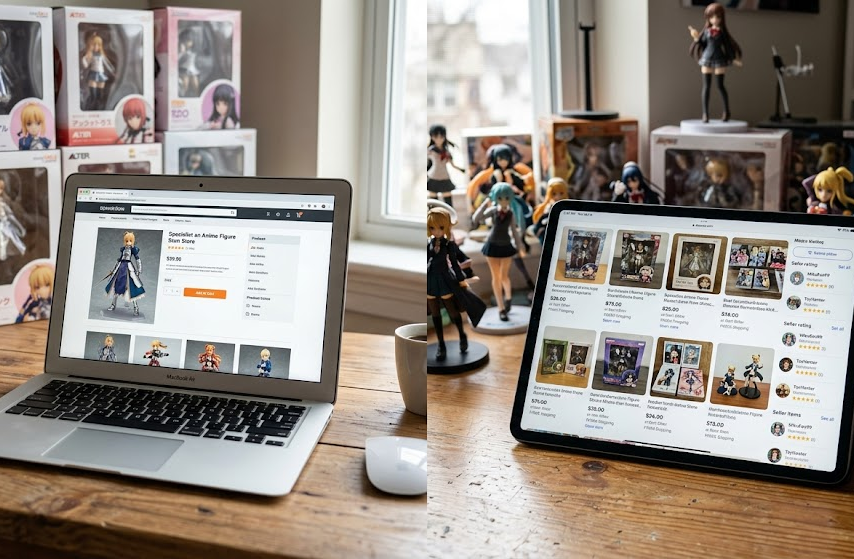
If you are comparing marketplace sellers vs dedicated figure stores, the real difference is not just price or shipping speed. It is how much uncertainty you are accepting. A specialist store usually gives you a cleaner catalog, clearer product labeling, and policies written for collectors. For shoppers exploring this further, see action figures catalog. A marketplace can be convenient, but quality varies sharply from one seller to the next, which increases buyer risk and makes seller verification far more important.
Quick Answer: Which Route Is Usually Safer?
For most buyers, dedicated figure stores are the safer default. They usually make it easier to confirm product details, seller focus, return expectations, and overall legitimacy before you order.
Marketplace sellers become a reasonable option when all of these are true:
- the seller is identifiable and has a believable track record
- the listing clearly names the manufacturer and product line
- the price looks realistic for the release
- the photos and reviews support the exact item being sold
- the marketplace policy gives you a realistic path if the item arrives wrong
If one or more of those checks are weak, a dedicated store is usually the lower-stress choice.
| Buying route | Safety level for most buyers | Main strength | Main risk |
|---|---|---|---|
| Dedicated figure store | Higher | clearer trust signals and product context | may cost more or ship slower |
| Marketplace seller | Mixed | convenience, speed, and occasional deals | inconsistent seller quality and higher bootleg risk |
Why Marketplace Seller Quality Varies So Much
A marketplace is not one store. It is a platform where multiple sellers operate under the same umbrella. That is why shoppers asking where to buy anime figures online often feel confused: the storefront looks familiar, but the trust level can change dramatically from listing to listing.
Common marketplace variation points include:
- seller experience with collectibles versus general merchandise
- packaging standards for fragile boxes and figure parts
- accuracy of product descriptions and brand naming
- willingness to show real-item photos
- response quality if something arrives damaged, used, or incorrect
That variation is the core problem. A marketplace listing can look normal while still hiding a weak seller behind a polished platform interface.
The biggest marketplace risk is uncertainty stacking
The main problem is not that every marketplace seller is unsafe. It is that uncertainty stacks faster:
- you may need to verify the seller
- you may need to verify the listing
- you may need to verify whether reviews belong to the exact item
- you may need to judge whether the platform will actually help if the order goes wrong
That extra filtering work is why marketplace anime figure seller searches are usually driven by caution rather than convenience.
Why Dedicated Figure Stores Can Reduce Uncertainty
A dedicated figure store usually gives buyers a tighter trust environment. That does not make every specialist shop automatically perfect, but it does mean the store is more likely to be built around the exact concerns collectors care about.
Dedicated stores often reduce uncertainty through:
- clearer manufacturer and figure-line labeling
- more consistent product-page structure
- catalog focus that matches anime and hobby collecting
- policy pages that address pre-orders, packaging, damage claims, and collector expectations
- fewer mixed-review or merged-listing problems than broad marketplaces
For newer buyers, this matters a lot. A clean specialist catalog removes some of the noise that makes bootleg or mislisting issues harder to catch on larger platforms.
Why policy clarity matters more than many buyers expect
One reason trusted anime figure stores feel safer is policy clarity. If the store clearly explains shipping, cancellations, damage reporting, and returns, you can judge risk before paying. Marketplace systems sometimes offer broad buyer protection, but the exact item experience can still depend heavily on the seller and listing quality.
If you want a cleaner hobby-first browsing path while comparing options, ShelfFigure’s Japanese anime figures collection is closer to how a specialist store organizes figure shopping than a mixed marketplace feed.
Comparison Table: Marketplace Sellers vs Dedicated Figure Stores
| Comparison point | Marketplace sellers | Dedicated figure stores |
|---|---|---|
| Authenticity confidence | varies by seller and listing quality | usually more consistent when the store is reputable |
| Product context | can be thin, generic, or merged | usually clearer and more collector-focused |
| Price | sometimes lower or more competitive | often steadier and more predictable |
| Shipping speed | can be faster on major platforms | may be slower depending on source and preorder model |
| Policy clarity | split between platform policy and seller behavior | usually centralized and easier to review |
| Buyer effort required | higher, because verification work is on you | lower, because the environment is more focused |
| Best fit | deal hunters and experienced listing-checkers | beginners, cautious buyers, and collectors who want cleaner trust signals |
When Marketplaces Still Make Sense
A marketplace is not automatically the wrong choice. It can still be sensible when convenience matters and the listing looks strong enough to justify the risk. For shoppers exploring this further, see are Amazon anime figures legit.
Marketplaces make the most sense for:
- buyers who already know the exact release and normal price range
- shoppers who can spot vague seller behavior quickly
- mainstream or lower-risk items with strong listing detail
- situations where shipping speed or easier platform-level returns genuinely matter
Marketplaces are a weaker fit for:
- first-time collectors
- buyers who care a lot about box condition and presentation
- high-value figures where authenticity risk is especially costly
- shoppers choosing mainly by the lowest visible price
Buyer-Type Decision Matrix
Best choice for beginners
If you are new to figure collecting, a dedicated store is usually the better starting point. The environment is simpler, product context is clearer, and it is easier to learn what normal listings should look like.
Best choice for deal hunters
If you already understand price bands, makers, and listing red flags, a marketplace can be worth checking for selective deals. For shoppers exploring this further, see browse anime figures. Just do not let a low number override missing trust signals.
Best choice for urgent shoppers
If you need faster shipping and the marketplace seller looks credible, the marketplace route can work. But speed should not excuse poor seller transparency.
Best choice for risk-averse buyers
If your goal is straightforward confidence rather than hunting for the cheapest listing, dedicated stores are usually the better fit.
Pros and Cons at a Glance
Marketplace sellers
Pros
- can offer faster shipping
- may have competitive pricing
- useful when you already know exactly what to verify
Cons
- seller quality can swing widely
- reviews and listings may be messy or merged
- bootleg risk is harder to filter quickly
- more buyer effort is required before purchase
Dedicated figure stores
Pros
- clearer trust signals and hobby-specific context
- more consistent catalog quality
- easier comparison of policies and product details
- better fit for cautious or newer buyers
Cons
- some stores may have longer waits or preorder timelines
- pricing is not always the absolute lowest
- you still need to vet the store, just with fewer moving parts
Decision Checklist by Risk Tolerance
Use this quick filter if you are stuck between the two routes:
- Do you recognize the manufacturer and expected price range? For shoppers exploring this further, see how to tell if a figure is fake.
- Can you identify who is actually selling the item?
- Does the listing or product page show enough detail to verify the figure confidently?
- Would a damaged box, wrong item, or fake figure be a major problem for you?
- Do you want the lowest friction path, or are you willing to do extra verification work for convenience or price?
If you answered “I’m not sure” to several of those, a dedicated figure store is usually the safer pick.
FAQ
Are dedicated figure stores safer than marketplace sellers?
Usually yes. Dedicated figure stores tend to provide more consistent product context, clearer trust signals, and less seller-to-seller variation than marketplaces.
When is it okay to buy anime figures from a marketplace?
It is usually okay when the seller is identifiable, the listing is detailed, the price is believable, and reviews or photos support the exact item being sold.
What is the biggest risk with marketplace anime figure listings?
The biggest risk is stacked uncertainty. You may need to verify the seller, the listing quality, the review relevance, and the return reality all at once.
Which option is better for new collectors?
Dedicated figure stores are usually better for new collectors because they reduce noise and make it easier to evaluate what a trustworthy figure listing looks like.
Summary Takeaway
If you are deciding between marketplace sellers vs dedicated figure stores, the safer default is usually the dedicated store route. Marketplaces can still work, but only when the specific seller and listing give you enough evidence to trust the purchase. If you want less guesswork and lower overall buyer risk, dedicated figure stores usually win.