
Anime Figure Stands vs Risers: What Each One Solves in a Crowded Display
If your shelf is crowded, stands solve support problems while risers solve visibility problems. In practice, anime figure stands help keep leaning, airborne, or unbalanced figures secure, while risers lift figures in the back so they do not disappear behind the front row.
For crowded shelves, figure accessories and parts can help solve height, support, and spacing problems without rearranging the whole display.
The short decision is simple: use a stand when a figure cannot present safely on its own, use a riser when a figure is technically stable but visually blocked, and use both when a dense shelf needs stability and layered sightlines at the same time. That distinction matters because many collectors buy one tool expecting it to solve the other problem, then end up with a display that is still cluttered.
Quick Answer: Stands Solve Support, Risers Solve Visibility
| Display problem | Stand | Riser | Best call |
|---|---|---|---|
| Figure leans, tilts, or has a dynamic pose | Yes | No | Use a stand |
| Back-row figures are hidden | No | Yes | Use a riser |
| Front row blocks faces or details behind it | No | Yes | Use a riser |
| Jumping or one-leg pose needs extra support | Yes | No | Use a stand |
| Dense shelf needs both height and stability | Yes | Yes | Use both |
| You want a cleaner layered display without adding more shelf depth | Sometimes | Yes | Usually a riser |
Choose a stand if:
- the figure has weak balance or a dramatic pose
- the base footprint is small compared with the figure’s height
- hair, weapons, or accessories shift the center of gravity
- you are worried about leaning over time
- the problem is stability rather than shelf layering
Choose a riser if:
- the figure already stands securely on its own
- figures in the back are invisible from normal viewing angles
- shelf depth is limited and you need vertical layering
- you want to separate smaller figures behind taller ones
- the problem is visibility rather than physical support
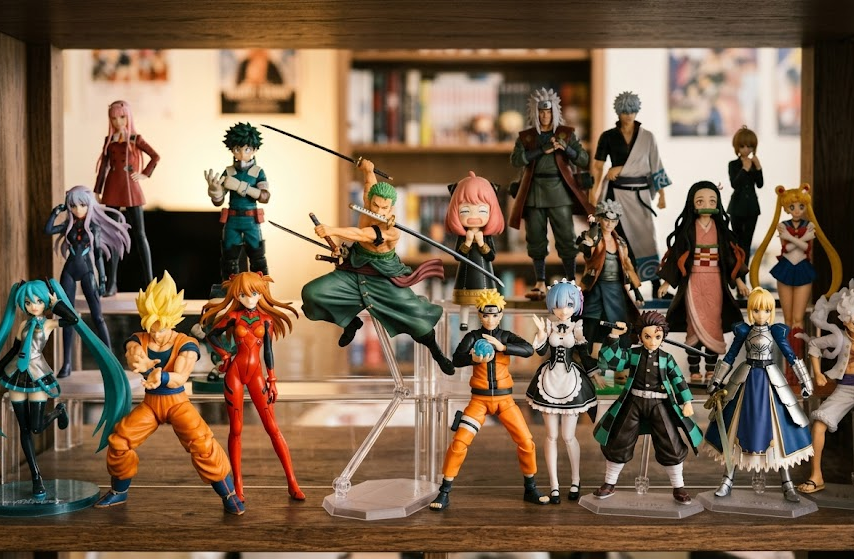
What a Figure Stand Actually Fixes
A stand fixes support and posture. That sounds obvious, but it is where a lot of crowded anime figure display mistakes start. Collectors sometimes think a riser will tidy everything up, then discover the real issue was a figure that was never stable enough for a packed shelf in the first place.
A figure stand is for figures that need help staying upright, staying level, or holding a pose safely over time. The stand is solving mechanical stress.
Problems a stand solves well
- leaning caused by uneven weight distribution
- airborne, running, or one-foot poses that need extra contact points
- top-heavy figures whose sculpt or hair shifts balance backward or sideways
- fragile-looking display positions where a shelf bump could cause a fall
- shelves where dense spacing leaves no margin for a wobbling figure
In other words, a stand helps when the figure itself is the risk. It is not mainly there to improve line of sight. If the figure is safe but still hard to see, you are dealing with a riser problem instead.
If you are still deciding whether support hardware is necessary at all, do anime figures need stands for stability and posing support covers the support side in more detail.
What a Riser Actually Fixes
A riser fixes height hierarchy and visibility. On a crowded shelf, that matters almost as much as stability because collectors usually view their display from one or two normal angles, not from above.
When figures are arranged directly on the same flat plane, the front row steals attention and the back row turns into partial silhouettes. A riser restores visibility by lifting the rear figure high enough that its face, sculpt details, and pose can still be seen.
Problems a riser solves well
- back-row figures disappearing behind larger front-row pieces
- a shelf that has enough depth for two rows but not enough height separation
- small prize figures getting swallowed by larger scale figures
- displays that look flat because every base sits at the same level
- collections with many characters where you want layered visibility instead of a wall of overlapping heads
A riser is not a substitute for stability hardware. For shoppers exploring this further, see action figures. It improves sightlines. If a dynamic figure is already unstable, lifting it higher without support can make the display feel worse rather than better.
For the shelf-planning side, how deep a shelf should be for anime figures: a size planning guide is useful when you are trying to decide how many rows a shelf can really support.
When You Need Both in the Same Display
Collectors often need both tools when space is tight.
That happens when a figure in the back row needs to be seen clearly and the figure’s pose or weight distribution is not trustworthy enough to leave unsupported. In a dense shelf, stands and risers are not competing solutions. They solve different failure points in the same setup.
The common crowded-shelf combination
You need both when:
- a dynamic figure belongs in the back row and would otherwise be blocked
- a small footprint figure is placed on a higher tier and needs extra confidence
- a layered display uses risers to improve visibility, but one or two characters still need posture support
- the front row is stable but the second row contains more delicate action-oriented sculpts
The practical rule
Use the riser to create a visible tier. Use the stand to make sure the figure on that tier is still secure.
That is the easiest way to think about anime figure stands vs risers without overcomplicating the choice.
Best Use Cases by Figure Size and Pose Style
| Figure type | Main display challenge | Stand or riser? | Why |
|---|---|---|---|
| Static prize figure with wide base | Hidden behind front row | Riser | Usually stable already; visibility is the issue |
| Scale figure with dramatic lean | Balance over time | Stand | Support prevents tilt and shelf-risk |
| Nendoroid or small chibi figure | Too short to be seen in back | Riser | Needs height more than support |
| Figure with jump or airborne pose | Dynamic support | Stand | Pose stability is the main concern |
| Small dynamic figure in second row | Hidden and somewhat unstable | Both | Needs height and support |
| Large statue or heavy resin centerpiece | Shelf spacing and dominance | Usually neither, sometimes riser nearby | Often becomes the front anchor rather than a raised item |
By pose style
Static, straight-standing poses
Usually need risers first, not stands. For shoppers exploring this further, see acrylic risers for anime figures. If the figure already plants well on its base, there is no reason to add support hardware just because the shelf is crowded.
Wide action poses
Often need stand consideration first. Large lateral motion, elevated limbs, and visual weight shifts create more support risk.
Small figures with strong sculpt detail
Usually benefit most from risers because detail visibility is easy to lose when larger figures sit in front.
Shelf-Depth and Line-of-Sight Tips
A crowded anime figure shelf fails when the second row exists physically but not visually. Good layering depends on what your eyes can still see from normal distance. For shoppers exploring this further, see Display Cases.
Line-of-sight rules that actually help
- keep the tallest, widest, or most dramatic piece from blocking too much of the shelf center
- use risers in the back row rather than randomly mixing heights in the front
- let front-row figures anchor the shelf, and let back-row risers expose faces and upper-body detail
- avoid raising everything, because then nothing reads as a clear focal layer
- if shelf depth is shallow, reduce the number of rows before adding more riser height
Stability rules that matter in dense layouts
- do not place a shaky figure on a riser without testing how secure it feels
- use stands for figures with awkward balance before worrying about perfect symmetry
- leave a little side clearance around figures with extended weapons, hair arcs, or effect parts
- treat a crowded shelf as a bump-risk environment even if it looks neat when untouched
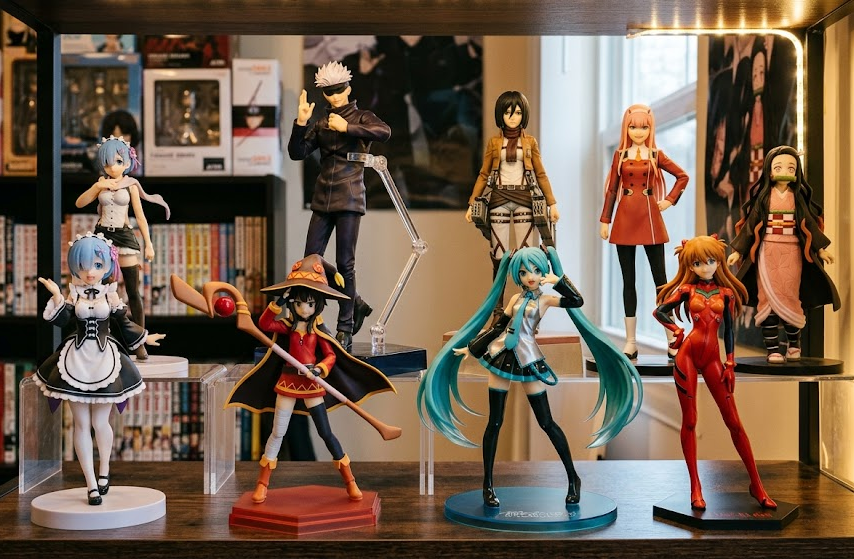
Common Display Mistakes in Crowded Setups
The most common mistake is trying to solve every display problem with one accessory.
Mistake 1: Using risers to fix a support issue
A riser will not stop a figure from leaning. If the figure is mechanically unstable, height only makes the risk more obvious.
Mistake 2: Using stands when the figure is already stable but hidden
That adds clutter without fixing visibility. If the real problem is blocked sightlines, a riser is cleaner and more effective.
Mistake 3: Filling every tier to maximum density
Crowded does not have to mean packed. Once each row starts blocking the row behind it, the display loses clarity and shelf presence. For shoppers exploring this further, see replace a missing anime figure stand.
Mistake 4: Ignoring shelf depth
Some shelves simply do not have enough usable depth for layered rows. In those cases, forcing risers may create a cramped stack instead of a readable display.
Mistake 5: Raising the wrong figures
The back row usually benefits most from risers. Raising large front-row figures often makes the whole shelf harder to read.
If dust and enclosure planning are part of the same setup problem, how to choose a figure display cabinet for dust protection and visibility pairs well with this topic.
Summary Takeaway
Anime figure stands and risers are not substitutes for each other. Stands solve stability and pose support, while risers solve visibility and shelf layering. In a crowded display, use a stand when the figure itself is risky, use a riser when the layout hides the figure, and use both when tight space creates both problems at once.
FAQ
Do anime figures need stands or risers?
Some need neither, some need one, and crowded shelves often benefit from both. The right choice depends on whether your real problem is stability or visibility.
What is the difference between a figure stand and a riser?
A figure stand supports the figure so it stays upright or holds a pose safely. A riser lifts the figure higher so it can still be seen behind other figures.
Are risers enough for dynamic poses?
Usually not if the pose already has balance issues. Risers improve visibility, but they do not replace the support function of a stand.
How do you display many figures without hiding the ones in back?
Use layered rows intentionally, keep larger figures from blocking the center too aggressively, and add risers to back-row figures that are stable but otherwise hidden.