
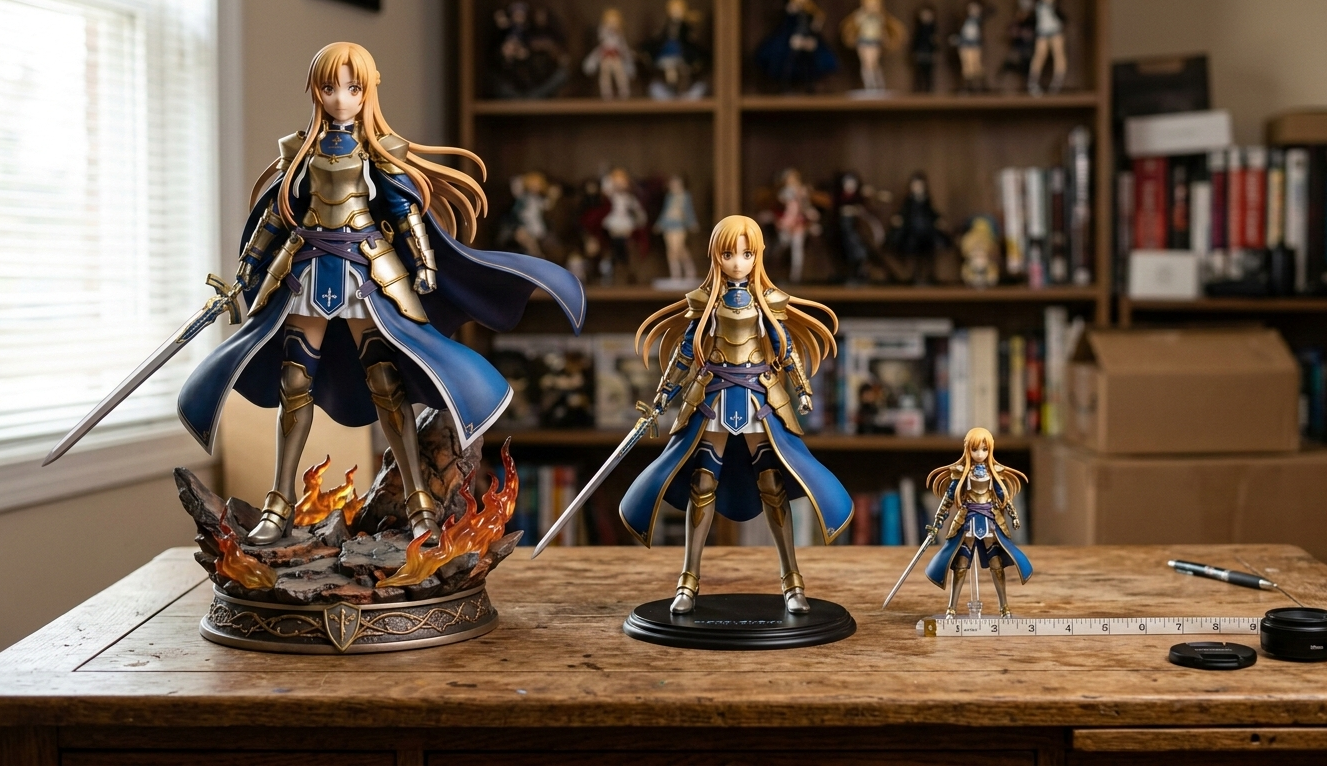
Collecting scale figures has become one of the most popular hobbies among anime, movie, and game enthusiasts. However, one of the most confusing topics for new collectors is figure scale.
When choosing between large and mid-size formats, compare 1/4 scale figures with 1/6 scale figures so the shelf footprint and budget are easier to judge.
/wp:paragraph wp:paragraphWhen browsing collectible figures online, you will often see sizes labeled 1/4 scale, 1/6 scale, or 1/12 scale. These numbers represent the proportion of the figure compared to the original character’s real-life height.
/wp:paragraph wp:paragraphUnderstanding these scale differences is essential when building a display, planning shelf space, or deciding which figures fit your collection style. In this guide, we’ll break down the differences between 1/4 vs 1/6 vs 1/12 scale figures, including their size, detail level, display requirements, and which type is best for collectors.
/wp:paragraph wp:separator/wp:separator wp:heading
What Does Figure Scale Actually Mean?
/wp:heading wp:paragraphIn the figure collecting world, scale refers to the ratio between the figure and the character’s supposed real-world size.
/wp:paragraph wp:paragraphFor example:
/wp:paragraph wp:list- 1/4 scale means the figure is one quarter the height of the character.
- 1/6 scale means the figure is one sixth the height of the character.
- 1/12 scale means the figure is one twelfth the height of the character.
If a character is canonically 180 cm (5’11”) tall, the approximate figure heights would be:
/wp:paragraph wp:table| Scale | Approximate Height |
|---|---|
| 1/4 Scale | ~45 cm (18 inches) |
| 1/6 Scale | ~30 cm (12 inches) |
| 1/12 Scale | ~15 cm (6 inches) |
Because of this scaling system, smaller ratios produce larger figures.
/wp:paragraph wp:image {“id”:19519,”sizeSlug”:”large”,”linkDestination”:”none”}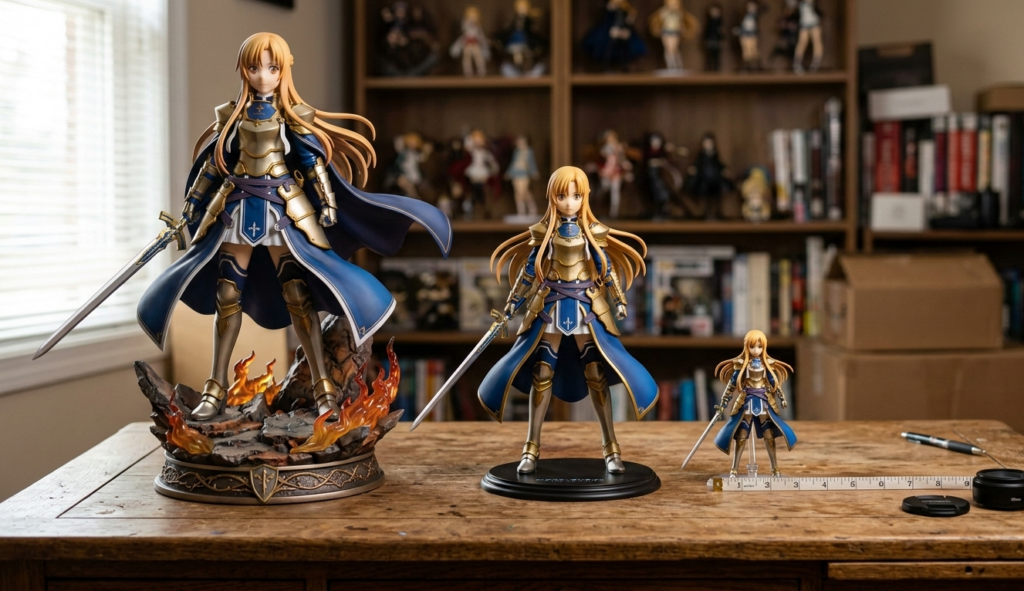
/wp:separator wp:heading
1/4 Scale Figures: Large and Premium Collector Pieces
/wp:heading wp:heading {“level”:3}Typical Height
/wp:heading wp:paragraph16–20 inches (40–50 cm)
/wp:paragraph wp:heading {“level”:3}Key Characteristics
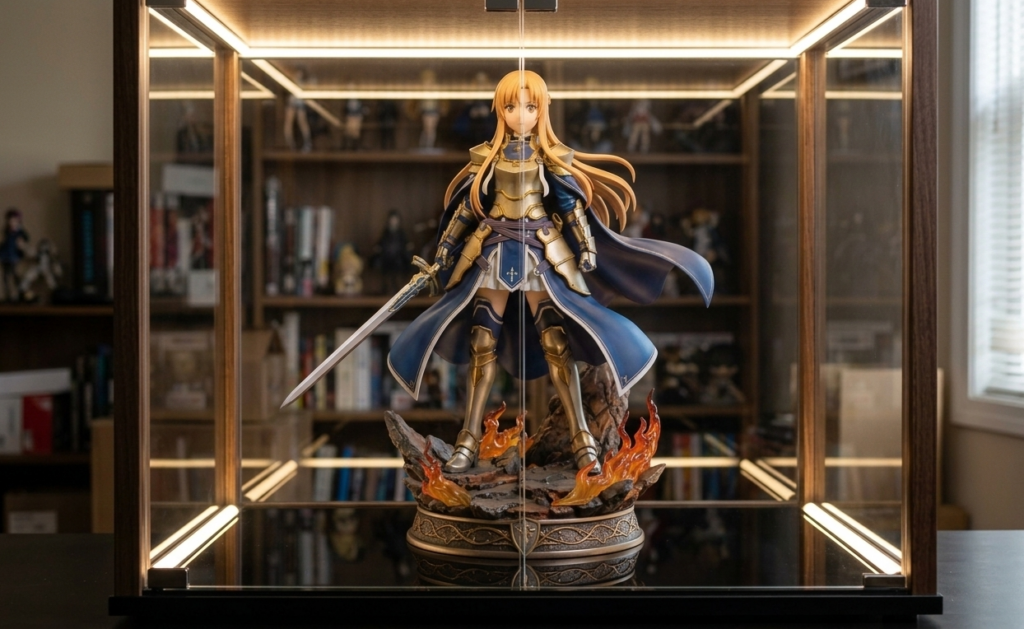
/wp:heading wp:paragraph1/4 scale figures are among the largest commercially available collectible figures. These figures are often considered premium display centerpieces.
/wp:paragraph wp:paragraphCollectors typically choose this scale for its impressive presence and detail.
/wp:paragraph wp:paragraphCommon features include:
/wp:paragraph wp:list- Extremely detailed sculpting
- Highly detailed paint applications
- Premium materials such as PVC, polystone, or resin
- Large decorative bases
- Premium price range
Because of their size, many collectors use glass display cabinets or dedicated shelves.
/wp:paragraph wp:heading {“level”:3}Advantages
/wp:heading wp:list- Exceptional visual impact
- Highly detailed sculpting
- Often limited edition collectibles
- Perfect centerpiece for a display
Drawbacks
/wp:heading wp:list- Requires significant display space
- Higher price point
- Heavier and harder to move
/wp:separator wp:heading
1/6 Scale Figures: The Most Popular Collector Scale
/wp:heading wp:heading {“level”:3}Typical Height
/wp:heading wp:paragraph10–13 inches (25–33 cm)
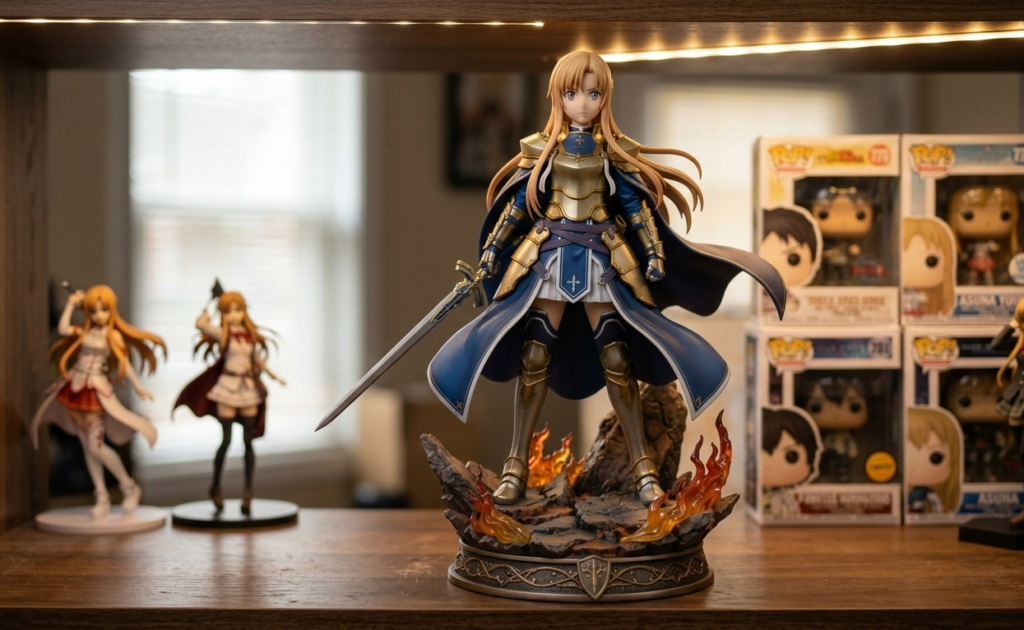
/wp:paragraph wp:paragraphThe 1/6 scale figure is widely considered the sweet spot for collectors. It balances size, detail, and display convenience, making it one of the most popular scales in the hobby.
/wp:paragraph wp:paragraphMany high-end action figure brands and anime manufacturers produce figures at this scale because it allows for excellent detail without requiring excessive display space.
/wp:paragraph wp:heading {“level”:3}Why Collectors Love 1/6 Scale
/wp:heading wp:list- Large enough to show impressive detail
- Easier to display than 1/4 scale
- Often includes accessories and interchangeable parts
- Perfect for glass display cabinets or shelves
Typical Use Cases
/wp:heading wp:paragraphCollectors often use 1/6 scale figures for:
/wp:paragraph wp:list- Character-focused displays
- Movie figure collections
- Anime centerpiece shelves
- Dynamic action poses
/wp:separator wp:heading
1/12 Scale Figures: Compact and Action-Focused
/wp:heading wp:heading {“level”:3}Typical Height
/wp:heading wp:paragraph5–7 inches (12–17 cm)
/wp:paragraph wp:paragraph1/12 scale figures are smaller but extremely versatile, especially for collectors who enjoy poseable figures or action scenes.
/wp:paragraph wp:paragraphThese figures are commonly used for:
/wp:paragraph wp:list- Action figure collections
- Dioramas
- Dynamic posing
- Photography setups
Because of their smaller size, they are much easier to display in large numbers.
/wp:paragraph wp:heading {“level”:3}Benefits of 1/12 Scale Figures
/wp:heading wp:list- Space-efficient for small rooms
- Highly poseable
- Often include multiple accessories
- Perfect for diorama scenes
- More affordable than larger scales
However, the smaller size means less sculpting detail compared to larger figures.
/wp:paragraph wp:image {“id”:19522,”sizeSlug”:”large”,”linkDestination”:”none”}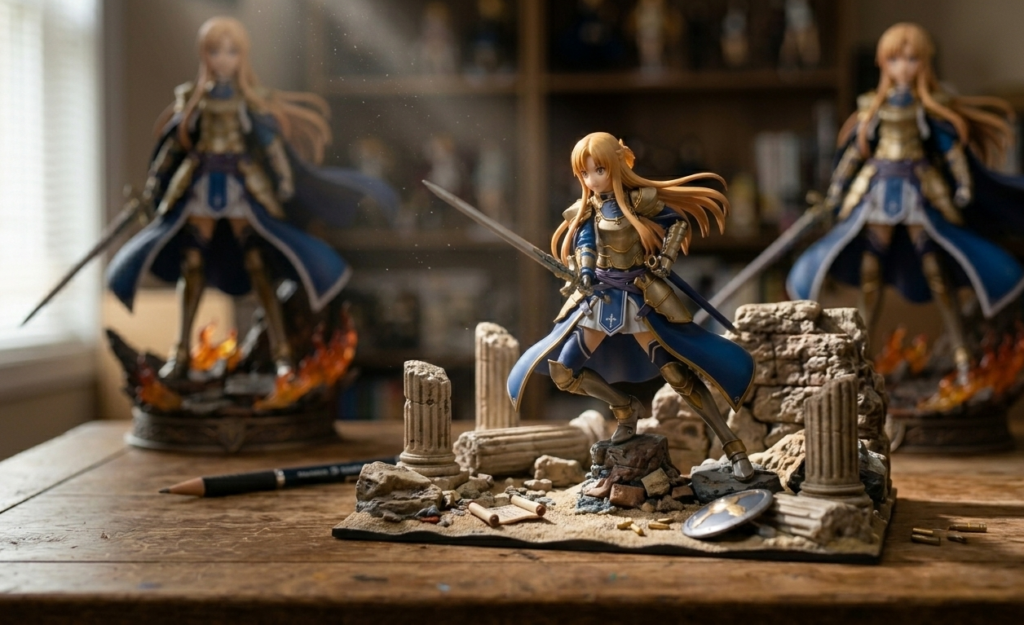
/wp:separator wp:heading
Side-by-Side Comparison: 1/4 vs 1/6 vs 1/12 Scale
/wp:heading wp:table| Feature | 1/4 Scale | 1/6 Scale | 1/12 Scale |
|---|---|---|---|
| Average Height | 16–20 in | 10–13 in | 5–7 in |
| Detail Level | Extremely high | Very high | Moderate |
| Display Space | Large | Medium | Small |
| Price Range | High | Medium–High | Low–Medium |
| Best For | Premium display | Balanced collections | Action poses & dioramas |
This comparison highlights why different collectors prefer different scales depending on their goals.
/wp:paragraph wp:separator/wp:separator wp:heading
How to Choose the Right Figure Scale
/wp:heading wp:paragraphChoosing between 1/4, 1/6, and 1/12 scale figures depends on several factors.
/wp:paragraph wp:heading {“level”:3}1. Available Display Space
/wp:heading wp:paragraphBefore buying figures, measure your:
/wp:paragraph wp:list- shelves
- cabinets
- display rooms
Large scales like 1/4 figures require significant vertical space.
/wp:paragraph wp:heading {“level”:3}2. Collection Style
/wp:heading wp:paragraphDifferent collectors prefer different styles:
/wp:paragraph wp:list- Art-focused collectors → 1/4 scale
- Balanced figure collections → 1/6 scale
- Action figure displays → 1/12 scale
3. Budget
/wp:heading wp:paragraphLarger figures typically cost more due to:
/wp:paragraph wp:list- material
- sculpt complexity
- packaging size
- shipping costs
4. Display Aesthetics
/wp:heading wp:paragraphSome collectors prefer a few large centerpiece statues, while others enjoy dense shelves filled with many smaller figures.
/wp:paragraph wp:image {“id”:19523,”sizeSlug”:”large”,”linkDestination”:”none”}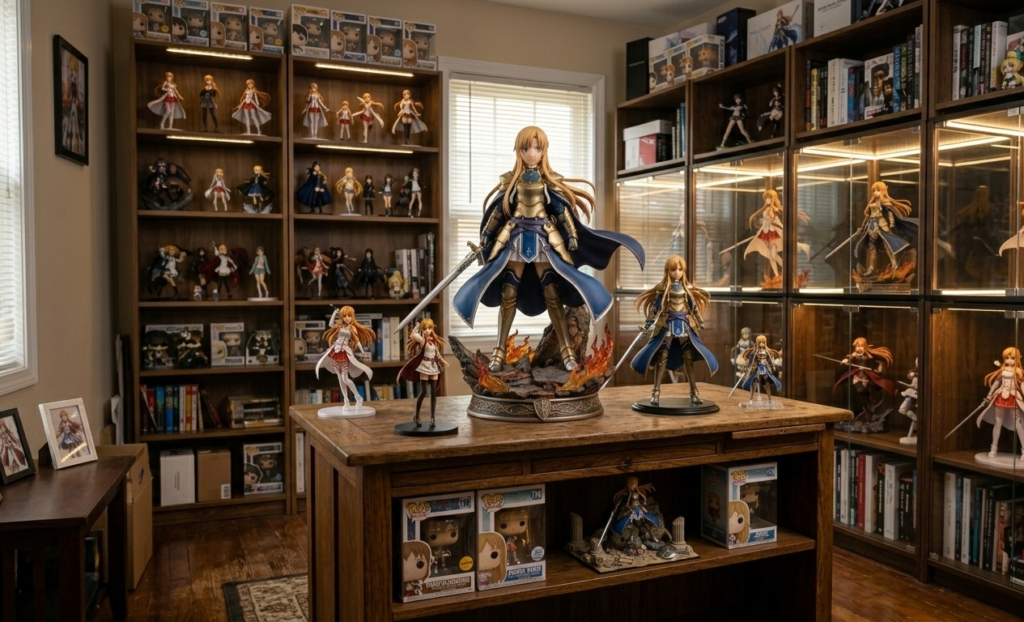
/wp:separator wp:heading
Tips for Displaying Different Figure Scales Together
/wp:heading wp:paragraphMixing scales can create visually interesting displays if done correctly.
/wp:paragraph wp:paragraphHere are some practical tips:
/wp:paragraph wp:paragraphUse height layering
/wp:paragraph wp:list- 1/4 scale figures in the back
- 1/6 scale in the middle
- 1/12 scale in the front
Separate by theme
/wp:paragraph wp:list- Movie characters
- Anime characters
- Action figure displays
Use lighting
/wp:paragraph wp:paragraphLED shelf lighting can highlight larger premium figures while still illuminating smaller ones.
/wp:paragraph wp:paragraphUse risers
/wp:paragraph wp:paragraphDisplay risers prevent smaller figures from being hidden behind larger ones.
/wp:paragraph wp:separator/wp:separator wp:heading
Final Thoughts
/wp:heading wp:paragraphUnderstanding the differences between 1/4 vs 1/6 vs 1/12 scale figures helps collectors make smarter purchasing decisions and build better-looking displays. For shoppers exploring this further, see what is a 1/6 scale figure.
/wp:paragraph wp:paragraphTo summarize:
/wp:paragraph wp:list- 1/4 scale figures are large premium display pieces with incredible detail.
- 1/6 scale figures provide the perfect balance between size, detail, and display flexibility.
- 1/12 scale figures are compact, poseable, and ideal for action scenes or dense collections.
Whether you’re just starting your collection or expanding an existing display, choosing the right figure scale will help you create a visually impressive and well-organized figure collection. For shoppers exploring this further, see how big is a 1/7 scale figure. For shoppers exploring this further, see scale figures.
/wp:paragraph
Comments