
Can You Store Anime Figures in Plastic Bins? What Collectors Should Watch for First
Yes, you can store anime figures in plastic bins, but only if the setup controls heat, prevents pressure points, and keeps painted surfaces from rubbing against each other. Plastic bin figure storage works best as a careful protection system, not as a quick “pile everything into a tote” shortcut.
Collectors usually run into trouble when a plastic bin turns into a sealed hot box, when figures shift and knock together, or when heavy items press on delicate parts for weeks or months. If you want to store anime figures in plastic bins safely, the real question is not just whether you can do it, but how controlled the conditions are inside the bin.
Quick Answer: Yes, but Only Under Specific Conditions
Plastic bins can work for anime figures when all of the following are true:
- The bin stays in a cool, stable room away from attic, garage, or window heat.
- Figures are separated so painted surfaces and protruding parts do not touch.
- Weight is distributed evenly, with no heavy figure or accessory pressing into another.
- Moisture is controlled so the bin does not trap damp air.
- The bin is used for organized storage, not for rough stacking and overfilling.
If those conditions are missing, anime figures in plastic bins become much riskier over time than collectors expect.
Risk Checklist: What Can Go Wrong Inside a Plastic Bin?
Before trusting a storage bin, check these five main risks.
Heat Buildup
Plastic bins are not automatically dangerous, but they can hold warm air if they are stored in the wrong place. Heat softens PVC and similar materials, increases the chance of leaning or warping, and can make tight contact points worse. A sealed clear bin placed near sunlight, in a garage, or in a room with large temperature swings can create exactly the kind of environment collectors should avoid.
Pressure Points
Pressure is one of the biggest problems with stacking figures in bins. Hair tips, swords, ribbons, antennas, and extended hands are all vulnerable when another object presses into them. Even if nothing snaps immediately, prolonged pressure can bend softer parts or leave a figure sitting in a stressed position for too long.
Shifting During Storage or Moving
A plastic bin that looks tidy at first can become messy after one move across the room or one car ride. Figures slide, accessories rotate, and bases turn sideways. Once pieces start shifting, the risk of scuffs, chipped paint, and bent parts goes up quickly.
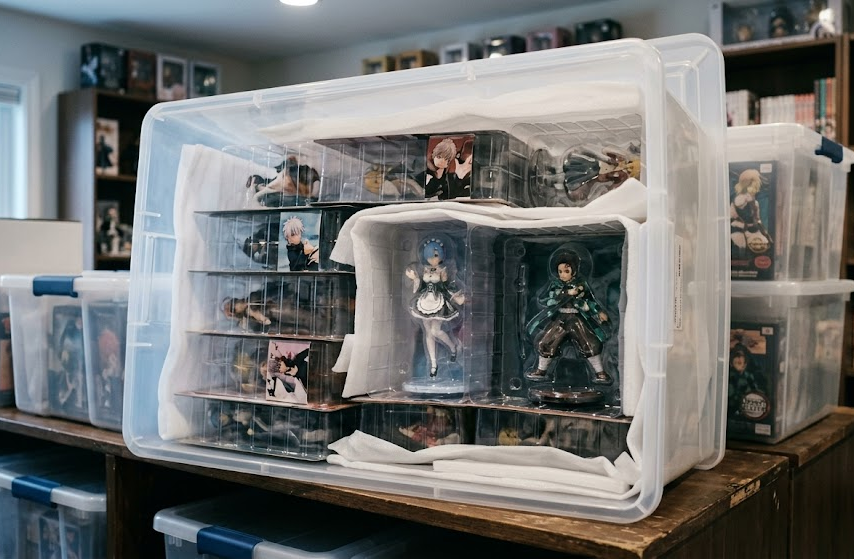
Paint Transfer and Surface Rubbing
Paint transfer happens when two painted surfaces stay in contact, especially under warmth or pressure. This is why loose figure-to-figure contact is a bad idea for long-term bin storage. Soft wraps, paint-safe dividers, or original blister trays reduce that risk because they keep surfaces from rubbing in the first place.
Moisture and Trapped Humidity
Moisture usually becomes a bigger issue when collectors assume a closed bin equals safe storage. In reality, a sealed container can trap humid air if the figures were packed in a damp room or the storage area already has poor climate control. That can lead to musty smells, sticky surfaces, or packaging damage if boxes or inserts are stored with the figures.
When Plastic Bin Storage Works vs. When It Fails
This Works Better
Plastic bin figure storage is usually safer when:
- you use one figure layer instead of multiple heavy layers
- each figure has its own separated space
- fragile parts are removed and bagged carefully when possible
- the room stays dry and temperature-stable year-round
- the bin is large enough that nothing has to be forced into place
This Usually Fails
Plastic bins are a poor storage choice when:
- figures are stacked directly on top of one another
- accessories are loose and rolling around
- the lid has to be pushed down over tall parts
- the bin lives in a hot garage, attic, shed, or sunlit corner
- figures are wrapped in materials that can stick to paint or trap moisture
The short version is simple: plastic bins are compatible with anime figures only when the bin acts like a controlled organizer. They fail when the bin becomes a pressure box.
How to Line and Separate Figures Inside a Bin
If you want to store figurines in plastic bins without creating new damage risks, focus on separation first.
Safer Ways to Separate Figures
Use materials and layout methods like these:
- original blister trays whenever you still have them
- acid-free tissue or soft, non-abrasive paint-safe wrapping
- small dividers to keep bases, bodies, and accessories from colliding
- individual sleeves or padded compartments for delicate parts
- a flat base layer so figures do not tilt into each other
Avoid rough fabrics, dyed materials that may transfer color, or tight wrapping that compresses hair strands, capes, or thin weapons.
Why Empty Space Helps
Collectors sometimes feel they should maximize every inch of a bin. That is usually the wrong instinct. For shoppers exploring this further, see best storage boxes for anime figures. Empty buffer space helps absorb small movements and keeps pressure points from developing. A half-full, well-organized bin is often much safer than a packed bin that looks efficient.
When Original Blister Trays Make Bin Storage Safer
Original blister trays make anime figures in plastic bins much safer because they already match the figure’s shape and keep fragile parts from rubbing. Blister trays also reduce shifting during moving or seasonal storage, which is why they are often the best answer for higher-end scale figures. For shoppers exploring this further, see current scale figures.
That does not mean every collector needs to keep every box forever. But if a figure has awkward hair sculpting, floating pose supports, long weapons, or delicate paint applications, the original blister tray can be the difference between convenient storage and avoidable damage.
What Kind of Bin Shape and Lid Fit Work Best?
The best plastic bins for figure storage are not necessarily the biggest ones. For shoppers exploring this further, see shop display cases. They are the ones that let you store figures without squeezing them.
Look for bins with:
- straight sides rather than heavily tapered walls
- a lid that closes without pressing down on figure tops
- enough depth for the figure and its padding to sit naturally
- sturdy plastic that will not bow badly when stacked lightly
- a size that matches the collection group you are storing
Clear bins are useful because you can inspect the contents without opening them, but they should still be kept away from direct light and heat. Opaque bins are fine too if they are stored in a cool indoor space and clearly labeled.
Warning Signs Your Current Bin Setup Is Too Risky
If you notice any of these issues, your current storage setup needs adjusting:
- the lid touches hair, ears, weapons, or raised hands
- figures lean against each other to stay upright
- accessories are loose at the bottom of the bin
- the bin feels warm after sitting in its storage location
- wrapped figures come out tacky, smudged, or with pressure marks
- you hear pieces shifting whenever the bin is moved
These warning signs matter because anime figure storage risks often develop slowly. By the time visible paint transfer or bending appears, the setup has usually been too tight or too warm for a while. For shoppers exploring this further, see protect anime figures from heat and humidity.
Dos and Don’ts for Plastic Bin Figure Storage
Do
- keep bins in a cool, dry interior room
- separate each figure with paint-safe materials
- use blister trays for delicate or expensive figures
- store accessories in labeled small bags or compartments
- check the bin every so often for heat, moisture, or shifting
Don’t
- stack heavy figures directly on lighter ones
- use bins in garages, attics, sheds, or sun-heated rooms
- let painted surfaces rest directly against each other
- force the lid closed over tall sculpted parts
- assume short-term storage habits are safe for long-term storage
Summary Takeaway
Yes, you can store anime figures in plastic bins, but only when the bin prevents heat buildup, pressure points, surface rubbing, and trapped moisture. For most collectors, plastic bins are best for organized short- to medium-term storage or for carefully packed long-term storage with blister trays and safe spacing—not for crowded, weight-heavy stacking.
FAQ
Can heat build up inside a sealed plastic bin?
Yes. A sealed plastic bin can trap warm air, especially in rooms with poor climate control or direct sunlight. The problem is usually not the plastic itself, but the hot storage location around it.
Should anime figures touch each other in storage?
No. Figures should not rest directly against each other for long-term storage because pressure and paint transfer become much more likely when surfaces stay in contact.
Are clear bins better than opaque bins for figure storage?
Clear bins are convenient because you can inspect contents quickly, but they are not automatically safer. The bigger factor is whether the bin stays in a cool, dry area away from heat and sunlight.
Is bin storage good for long-term storage?
It can be, but only if the figures are separated properly and the room conditions stay stable. For premium or fragile figures, original packaging or blister trays inside the bin usually make long-term storage much safer.
Comments