
Best Storage Boxes for Anime Figures: What Actually Protects Delicate Parts Between Displays
For most collectors, the best storage box for anime figures is a rigid, clean container that limits shifting, supports delicate parts, and keeps accessories grouped, not a huge empty tote that lets everything slide around. In practice, rigid plastic bins with paint-safe inner support work best for rotating displays, archival cardboard works for light-duty long-term organization, and original packaging is still the safest choice for especially fragile or resale-sensitive pieces.
The decision comes down to three things: how much the figure can move inside the box, whether the walls stay protective under stacking pressure, and how safely you can separate bases, effect parts, and accessories. For shoppers exploring this further, see display cases for figures. If the box is roomy but uncontrolled, it is not protective. If it is rigid and organized, it usually is.
Quick Answer: What Kind of Storage Box Works Best for Most Collectors?
| Box type | Protection level | Stacking strength | Accessory control | Best for |
|---|---|---|---|---|
| Rigid plastic bin with inner padding | High | High | High if compartmentalized | Most collectors rotating figures between display cycles |
| Archival cardboard box | Medium | Medium | Medium | Clean, light, low-pressure storage in closets or shelves |
| Original packaging | Very high when complete | Medium | Very high | Fragile figures, resale-minded collectors, moving prep |
| Oversized generic tote with loose padding | Low to medium | High outside, low inside | Low | Only acceptable if figures are individually boxed inside |
The short recommendation
Choose a rigid plastic anime figure storage box if you regularly swap figures on and off shelves and want an option that is easy to stack, inspect, and reorganize. Choose original packaging if the figure has many delicate parts, premium value, or a blister insert that already immobilizes everything correctly. Choose archival cardboard only when you need a cleaner, lighter storage format and can control humidity, dust, and crushing risk.
What matters more than the material alone
The best figure storage containers do not just hold figures. They:
- reduce internal movement
- support fragile protrusions instead of letting them bear weight
- keep accessories sorted so nothing rubs painted surfaces
- stack without sagging onto the figure below
- fit the actual scale of the piece instead of forcing a deep empty cavity
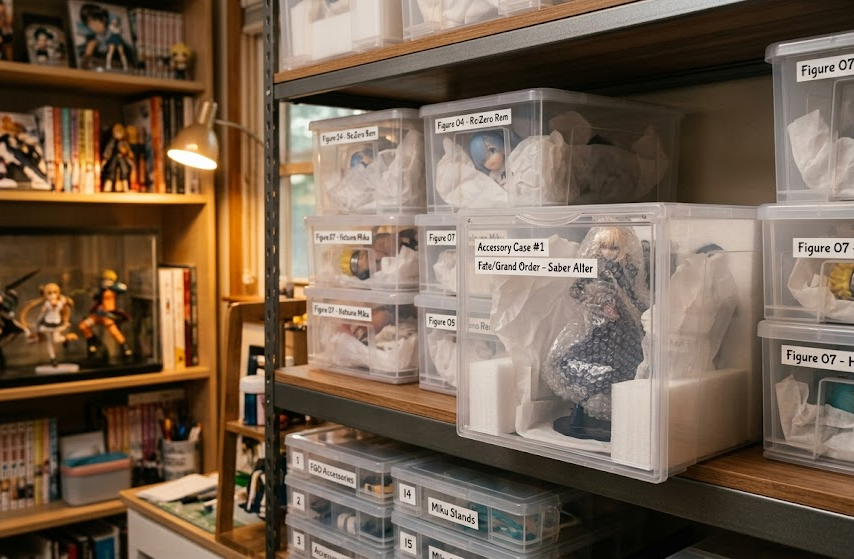
Rigid Plastic Boxes vs Archival Cardboard vs Original Packaging
Collectors often ask whether plastic or cardboard is better, but the real comparison is about control, pressure resistance, and how the figure is immobilized inside.
Rigid plastic bins: best all-around choice for active collectors
Rigid plastic bins are usually the best storage boxes for anime figures when you rotate displays often. The walls hold shape well, clear versions make visual checks easy, and stackable designs are less likely to collapse when multiple boxes are stored together.
Why rigid plastic works well
- the container resists outside pressure better than ordinary cardboard
- clear sides let you identify contents without extra handling
- lids seal out dust better in normal home storage
- medium sizes are easy to dedicate by figure line, scale, or display season
- small inner trays or accessory boxes fit neatly inside
Where rigid plastic can still go wrong
A rigid plastic bin is only protective if the figure does not slide around in it. A large empty tub with a little bubble wrap is not a safe setup for delicate hair strands, effect parts, or thin weapons. The rigidity helps the outside, but uncontrolled movement still damages the inside.
Archival cardboard boxes: useful when you want breathability and cleaner long-term organization
Acid-free or archival cardboard can be a reasonable storage box for collectible figures when the environment is dry, the boxes are not overloaded, and the figures are wrapped or nested carefully. This option makes the most sense for collectors who want labeled storage on shelves rather than heavy bin stacks in utility spaces.
Pros of archival cardboard
- lighter than rigid plastic when moving boxes around a room
- cleaner-looking for shelf or closet organization
- acid-free options are attractive when long-term material contact is a concern
- easier to size-match if you buy several box dimensions
Limits of archival cardboard
- weaker against crushing if stacked too aggressively
- more vulnerable to humidity or accidental moisture
- usually offers less confidence for heavy statues or irregular bases
- often needs more careful handling during moves
Original packaging: still the safest option for fragile or premium figures
Original packaging remains hard to beat because it was designed around the exact shape of the figure. Blister packaging controls movement, supports protruding parts, and usually keeps accessories grouped in the layout intended by the manufacturer.
That does not mean original packaging is always the most space-efficient option. It means it is often the most protective option when the insert is intact and the figure fits correctly.
Original packaging is especially strong when:
- the figure has many interchangeable hands, faces, or effect parts
- thin paint-finished surfaces could rub during storage
- the sculpt includes extended hair, wings, or floating supports
- you care about resale completeness or easier authenticated resale later
- the figure will be stored for a long period rather than swapped in and out every week
If you are deciding whether manufacturer boxes are worth keeping at all, Should You Keep Anime Figure Boxes? What Collectors Need Them For goes deeper on when original packaging matters most.
What Padding Helps Without Rubbing Paint?
The safest padding for painted anime figures is padding that prevents contact pressure and shifting without sticking, shedding, or dragging across the finish. Softness alone is not enough. Some soft materials still trap pressure on paint edges or create friction if the figure moves during transport.
Safer padding choices
- acid-free tissue for a light protective wrap layer
- clean polyethylene foam sheets for spacing and support
- soft unprinted microfiber cloths used loosely, not tightly cinched
- small inner zip bags or cases for accessories kept away from painted surfaces
- original blister trays when you still have them
Padding choices to use carefully
- bubble wrap directly against delicate paint for long periods
- loose packing peanuts that shift and create uneven pressure
- rough paper with dyed surfaces
- adhesive tapes or elastic bands touching the figure itself
The practical padding rule
Padding should support around the figure, not press on the most delicate part of the figure. Think of it as building a stable nest. Hair tips, fingers, effect flames, and weapon points should not be the first thing to meet resistance when the box moves.
Choosing Box Depth for Scale Figures, Statues, and Effect Parts
One of the most overlooked buying mistakes is choosing a box based on height alone. A deep box that leaves too much lateral space can be worse than a slightly smaller box that keeps the figure from shifting.
Good depth choice starts with the widest vulnerable shape
Measure for:
- base width and shape
- widest hair or cape spread
- forward or rear effect parts
- detached accessories that need their own small compartment
- safe padding thickness around the most fragile points
Best-fit guidance by collector situation
| Figure type | Best box depth approach | Why it works |
|---|---|---|
| Prize figure or simple standing scale | Close fit with light padding margin | Reduces side-to-side shifting without overpacking |
| 1/7 or 1/6 scale with wide hair or dress | Medium-depth rigid box with shaped support zones | Protects silhouette details that stick out beyond the base |
| Resin or heavy statue | Minimal movement, strong wall support, low stack pressure | Weight magnifies damage when a box slides or flexes |
| Figures with effect parts or multiple accessories | Extra depth only if paired with dividers or inner cases | Loose extra depth alone just creates collision space |
A useful rule for figure storage container ideas
If extra depth does not also create separate protected zones, it is probably wasted depth. For shoppers exploring this further, see scale figures. For shoppers exploring this further, see storing anime figures in plastic bins. Bigger is not automatically safer.
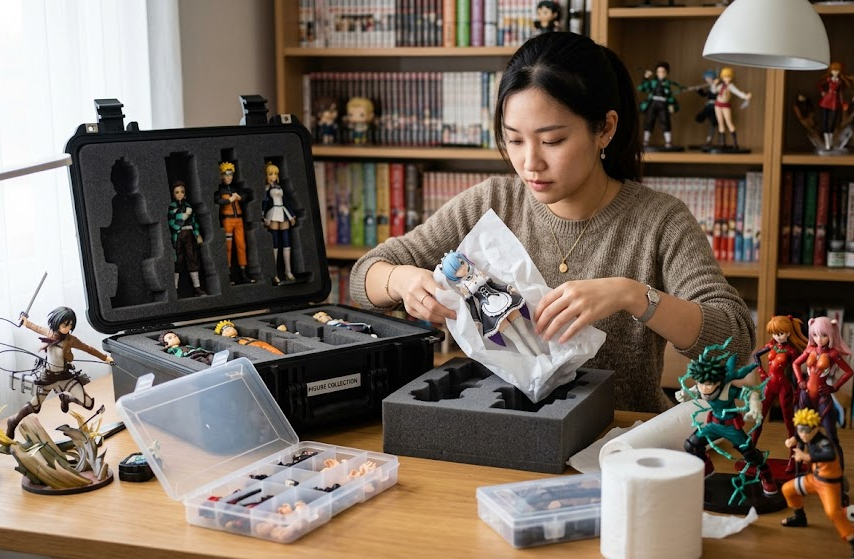
When Dividers or Smaller Inner Cases Are Worth It
Dividers and smaller inner cases matter when the real risk is not the main figure, but the small parts that can knock into it or disappear. This is especially true for anime figures with bonus faces, alternate arms, support rods, tiny weapons, or effect attachments.
Use dividers or inner cases when:
- one figure has many loose accessories
- a delicate figure shares storage with extra parts from the same release
- you rotate displays and need faster, less chaotic reassembly
- your main outer box is good, but too open internally
- you want each figure’s kit to stay self-contained between display cycles
They are less necessary when:
- the original blister insert already organizes everything well
- the figure has no swappable parts
- the entire box is already very closely fitted to one item only
Best Use Cases by Collector Situation
For collectors who rotate display themes often
Go with stackable rigid plastic boxes in moderate sizes, each dedicated to one figure or one tightly related set. This makes it easier to pull one display group out without disturbing ten others.
For collectors storing expensive or especially delicate pieces
Favor original packaging whenever it is still complete and not overly warped. It does the best job of controlling movement and protecting fragile shapes. For shoppers exploring this further, see browse display cases.
For collectors short on space but still wanting orderly storage
Use archival cardboard or slim rigid bins sized closely to the figure group, not giant tubs. Tight organization beats raw volume.
For collectors managing many accessories
Use a rigid outer box with small inner cases or dividers so accessories never become loose abrasive clutter around the main figure.
Pros and Cons of the Main Storage Box Options
Rigid plastic bins
Pros
- strong walls and better stacking confidence
- easy content checks if clear
- flexible for rotating display habits
- good dust resistance in normal storage
Cons
- still risky if oversized and loosely packed
- can encourage overstacking because the outside looks sturdy
- not automatically paint-safe without the right inner support
Archival cardboard boxes
Pros
- lighter and tidy for shelf organization
- acid-free options are appealing for cautious long-term storage
- easy to label and size by collection segment
Cons
- weaker under heavy stacking
- less forgiving in damp or messy environments
- not ideal for heavy or irregularly shaped statues
Original packaging
Pros
- best movement control when inserts are intact
- excellent for accessories and resale completeness
- strong fit for delicate sculpt details
Cons
- bulky and inefficient for space
- awkward if you have many boxes to retain
- less convenient for collectors who constantly swap figures
Buyer Checklist: How to Pick the Right Anime Figure Storage Box
Before buying a storage box for collectible figures, check whether it:
- has rigid walls or enough structure for the figure’s weight
- fits closely enough to limit shifting
- leaves room for paint-safe padding without crushing details
- supports separate storage for faces, hands, rods, or effect parts
- stacks safely in the place you actually plan to store it
- stays dry, clean, and easy to identify later
- matches how often the figure will move between storage and display
Summary Takeaway
The best storage boxes for anime figures are the ones that control movement, support delicate shapes, and keep accessories from turning into loose hazards. For shoppers exploring this further, see store figures safely between displays. For most collectors, that means a rigid plastic box with paint-safe internal organization. For especially fragile, premium, or resale-sensitive pieces, original packaging is still the strongest option. Archival cardboard can work well for cleaner, low-pressure shelf storage, but only if the environment and stacking load stay controlled.
FAQ
Are plastic storage boxes better than cardboard for anime figures?
Usually yes for active collectors, because rigid plastic bins resist outside pressure better and stack more confidently. Cardboard can still work well when it is archival quality, lightly loaded, and stored in a clean dry environment.
Should figures be stored in their original packaging?
If the figure is fragile, expensive, accessory-heavy, or resale-sensitive, original packaging is often the safest choice. It is less space-efficient, but it usually controls movement better than general-purpose boxes.
What kind of padding is safest for painted figure surfaces?
Paint-safe storage usually means acid-free tissue, clean polyethylene foam, microfiber barriers, or the original blister tray. The goal is to stop rubbing and pressure points, not just to add bulk.
Is a bigger figure storage container always better?
No. Extra empty space often lets the figure and accessories shift around. A well-fitted box with controlled internal zones is usually safer than a large loose tote.