
When shelf space is limited, the best anime figure is the one whose base, pose, and scale fit your display comfortably without blocking other pieces, crowding the shelf, or making the setup feel unstable. In practice, that means checking the figure’s footprint before you fall in love with the sculpt.
A small room does not mean you have to stop collecting. It does mean every purchase has to earn its place. The right compact anime figure can look intentional and premium on a narrow shelf, while the wrong oversized figure can make even a beautiful collection feel messy after a week. A small display works best when each figure has enough base clearance and pose clearance to look deliberate instead of squeezed in.
This guide focuses on pre-purchase selection: how to choose an anime figure when you have limited shelf space, what dimensions matter, which figure types are easiest to display, and when it is smarter to skip a figure even if the character is a favorite.
Quick Answer for Space-Limited Buyers
If you have limited shelf space, choose anime figures with a compact base, a contained pose, and a height that leaves breathing room above the figure. Prioritize figures that look good from the front, do not spread weapons or effects far to the side, and can stand securely without needing extra clearance around them.
A good small-shelf figure usually has these traits:
- A base that is smaller than the figure’s visual presence
- Arms, hair, weapons, or effects that stay mostly inside the base outline
- A stable center of gravity
- A height that fits your shelf with at least a little top clearance
- A pose that still reads clearly when placed beside other figures
For many collectors, chibi-style figures, Nendoroid-style figures, smaller articulated figures, noodle stopper figures, and some prize figures are easier to fit than wide-scale statues or dynamic effect-heavy sculpts. For shoppers exploring this further, see Nendoroid and chibi-style figures. For example, a compact collectible such as the Max Factory Little Nightmares Nome Six Nendoroid is the kind of product format that can suit a tighter display because the visual impact is concentrated into a smaller footprint.
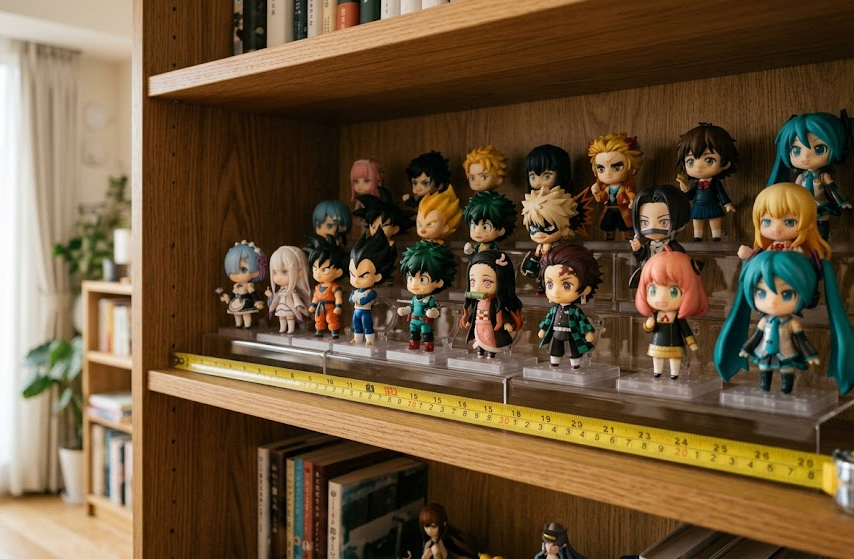
Start With the Shelf, Not the Figure
The most common mistake is choosing a figure first and trying to force the shelf to work later. If your shelf is already crowded, the shelf should set the rules.
Before buying, measure the actual usable space, not just the advertised shelf size. Hinges, doors, back panels, risers, wall brackets, and nearby figures all reduce the space that matters.
The Measurement Checklist
Measure these five things before you buy:
- Shelf width: the side-to-side space available for the new figure
- Shelf depth: the front-to-back space, especially important for bases and extended poses
- Shelf height: the vertical space between shelves or inside a display case
- Remaining clearance: the space left after existing figures are considered
- Viewing distance: how close you usually stand when looking at the display
The shelf depth is often the deciding factor. A figure may be only 18 cm tall but need far more depth because of a cape, weapon, tail, effect part, or angled pose. If the figure’s base or pose hangs over the shelf edge, it is usually a poor fit for a small room anime figure display.
What Dimensions Matter Before Buying
Product listings often highlight height, but height is only one part of the real fit. For anime figure limited shelf space decisions, you should think in three dimensions: height, width, and depth.
Height Tells You Whether the Figure Can Physically Fit
Height matters most when your shelves are fixed. A 1/7 scale figure may look reasonable in photos, but it can become awkward if there is only a narrow gap above the head or raised weapon. For shoppers exploring this further, see 1/7 scale figures.
A figure should not barely scrape into the shelf. Leave enough vertical breathing room so the figure can be placed, cleaned, and removed without hitting the shelf above it. A cramped top clearance makes the display feel accidental, even if the figure technically fits.
Width Tells You Whether the Figure Will Crowd Its Neighbors
Width includes the full left-to-right spread of the sculpt. Hair, outstretched arms, swords, wings, and special effects can make a figure much wider than the body.
For tight shelves, contained silhouettes are easier to manage. A standing pose with arms close to the body usually displays better than a dramatic attack pose that needs empty air around it.
Depth Tells You Whether the Figure Will Actually Sit Safely
Depth is the dimension collectors underestimate most. A deep base, forward lunge, extended dress, tail, or background prop can push the figure too close to the shelf edge.
If the base depth is close to the full shelf depth, skip the figure unless you are willing to give it a dedicated spot. A figure that sits too far forward can look unstable and may make the whole display feel crowded.
Which Figure Types Are Easiest on Small Shelves
Not every figure type behaves the same in a compact display. If you want the best anime figures for small spaces, start by understanding which categories tend to be shelf-friendly.
Chibi and Nendoroid-Style Figures
Chibi and Nendoroid-style figures are often strong choices for small shelves because they compress character identity into a compact form. The head, face, outfit, and accessories usually carry the appeal without requiring a large pose.
They are especially useful when:
- You want multiple characters from the same series
- You display on a desk, cubby, or narrow bookcase
- You prefer a playful collection style
- You need figures that can sit on risers without dominating the shelf
The tradeoff is style. If you want dramatic realism, chibi proportions may not satisfy you. But if your goal is a compact anime figure that still feels expressive, this format is one of the safest options.
Smaller Articulated Figures
Articulated figures can be excellent for limited shelf space because you can adjust the pose. A neutral stance may fit a tight shelf, while a wider action pose can be saved for photos or a larger display later.
Look for figures that include a stand but do not require a huge support arm. Accessories are a bonus only if you have somewhere to store or rotate them. Too many small accessories can become clutter in a small room.
Prize Figures With Simple Bases
Some prize figures are surprisingly shelf-efficient. They often use simpler bases and upright poses, which can make them easier to fit than elaborate scale figures.
However, prize figures vary widely. Check the base shape carefully. A tall figure with a modest round base may fit well, while a seated or leaning pose can take up more depth than expected.
Noodle Stopper and Sitting Figures
Noodle stopper figures and sitting figures can work well on shelf edges, monitor stands, or display risers. They are useful when you have vertical ledges rather than deep shelf space.
The caution is stability. If the figure is meant to sit on an edge, make sure your display location is safe from bumps, pets, vibration, or frequent movement.
Large Scale Figures and Dynamic Statues
Large scale figures can still work in small rooms, but they should be treated as centerpiece purchases. A single wide 1/7 or 1/6 scale figure may take the same display energy as several compact figures.
If you choose a large figure, give it room. Crowding an expensive scale figure between smaller pieces usually weakens the impact and increases the chance of damage.
How Base Size and Pose Affect Real Shelf Fit
Base size and pose decide how a figure behaves in the real world. A figure can look small in listing photos but become difficult to display because the base is wide, irregular, or visually heavy. For shoppers exploring this further, see match figure size to shelf space.
Base Footprint Is the True Space Cost
The base footprint is the area the figure occupies on the shelf. A circular base is easy to plan around. An oval, angled, or scenic base can be harder because it wastes corners or blocks neighboring figures.
Before buying, compare the base to your available shelf depth. If the listing does not provide base dimensions, inspect photos from the front, side, and top if available. User photos can reveal whether the base is larger than the official product images suggest.
Dynamic Poses Need Negative Space
Dynamic poses look exciting because they use movement. But movement needs empty space. A figure with flowing hair, a sweeping blade, a raised arm, or a translucent effect part may need clearance on both sides to avoid looking cramped.
Dynamic poses are not bad for tight displays, but they are risky if you cannot provide visual breathing room. In limited shelf space, a compact pose often looks more premium than a dramatic pose that is squeezed between other figures.
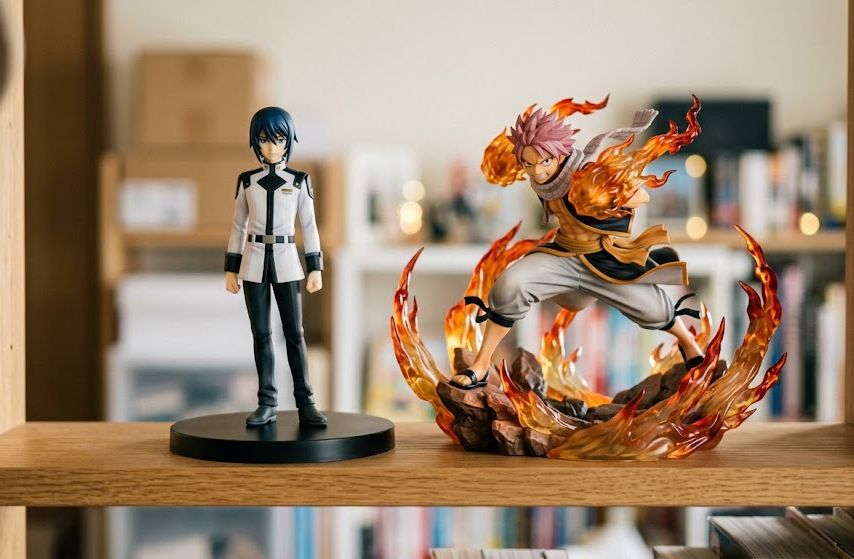
Overhang Creates Practical Problems
Overhang happens when a weapon, hair strand, base decoration, or foot extends beyond the base or shelf. Even if it looks fine in photos, overhang can make dusting difficult and increase the risk of catching the figure with your hand.
If your shelf is at shoulder height or in a walkway, avoid fragile overhangs. A tight display should be easy to live with, not something you are nervous to walk past.
Fit-Planning Steps Before You Buy
Use a simple fit-planning process before committing to a figure. This prevents display regret and helps you buy with a clear plan instead of impulse.
Step 1: Pick the Exact Display Spot
Do not buy for an imaginary future shelf unless you are actually planning to upgrade. Choose the exact spot where the figure will go. If there is no spot, the figure is not a good space-limited purchase yet.
Step 2: Check the Listing Dimensions
Record height, width, and depth if the listing gives them. If only height is listed, look for reviews, unboxing photos, or collector database entries that show the base and side profile.
Step 3: Make a Paper Footprint
Cut a piece of paper to the estimated base size and place it on the shelf. If you do not know the exact base size, make a slightly larger estimate. For shoppers exploring this further, see browse display cases. This gives you a quick sense of whether the figure will crowd other pieces.
Step 4: Add Clearance for Pose and Cleaning
Leave a little extra room around the figure. You need space for hands, dusting tools, and safe removal. A figure that only fits when everything is perfectly aligned will become annoying over time.
Step 5: Decide What Leaves the Shelf
If the shelf is already full, decide what will move before the new figure arrives. The best small room anime figure display is curated, not packed edge to edge.
When to Skip a Figure Even If You Love the Character
Limited shelf space forces harder decisions. Sometimes the right choice is to skip a figure now and wait for a better version later.
Skip the figure if:
- The base is nearly as deep as your shelf
- The pose needs empty side space you do not have
- The figure would block a favorite piece already on display
- The height leaves almost no top clearance
- The product photos hide the base or side profile
- You would need to store several accessories you do not plan to use
- You are buying only because the character is popular or discounted
A figure you love can still be the wrong purchase if it makes your display worse. Space-limited collecting rewards patience. For shoppers exploring this further, see collector size-check guide. Another sculpt, scale, or compact version may fit your shelf better.
Smart Buying Rules for Small-Room Collectors
If your room or shelf is small, use buying rules that protect your display quality.
Favor One Strong Figure Over Three Compromises
A crowded shelf can make good figures look average. One well-chosen figure with enough room often looks better than three figures fighting for attention.
Build Around Visual Balance
Mix heights and shapes intentionally. A shelf of only tall figures can feel stiff, while a shelf of only tiny figures may lack focus. Use compact figures in front, taller figures in the back, and risers only when they do not make the shelf feel overloaded.
Keep a Rotation Box
If you own more figures than you can display, rotate them. A small, organized storage box lets you refresh the shelf without buying more display furniture immediately.
Avoid Buying for Packaging Size Alone
Some collectors assume smaller boxes mean easier display. The box does not tell the full story. A figure can ship in a modest box but still use a wide base or extended pose.
Summary Takeaway
For limited shelf space, the smartest anime figure is not always the smallest one. It is the figure whose base size, pose width, shelf depth, and visual presence work together in your actual display.
Choose compact silhouettes, verify the footprint, avoid risky overhang, and be honest about what your shelf can support. The goal is not to fit the maximum number of figures. The goal is to build a display that still looks intentional after the excitement of the purchase fades.
FAQ
What anime figure size is best for small shelves?
Small shelves usually work best with compact chibi figures, Nendoroid-style figures, smaller articulated figures, noodle stopper figures, and prize figures with simple bases. The best size depends less on height and more on base footprint, pose width, and shelf depth.
How do you know if a figure will fit your shelf?
Measure your shelf width, depth, and height, then compare those numbers with the figure’s height and estimated base footprint. If the listing does not give full dimensions, use side photos, reviews, and a paper footprint to estimate the real space cost.
Are dynamic poses bad for tight displays?
Dynamic poses are not automatically bad, but they need negative space. If a pose has wide hair, weapons, wings, or effect parts, it may look cramped or become fragile in a tight display. Choose dynamic figures only when you can give them enough room.
What should you measure before buying an anime figure?
Measure shelf width, shelf depth, shelf height, remaining clearance around existing figures, and the viewing distance. Shelf depth and pose width are especially important for avoiding unstable or crowded displays.
Should I buy a large scale figure if I have limited space?
You can buy a large scale figure if you treat it as a centerpiece and give it a dedicated spot. If it would be squeezed between other figures or sit too close to the shelf edge, wait for a smaller version or a more compact sculpt.