
How to Clean PVC Figures Safely
PVC anime figures can stay beautiful for years, but cleaning them the wrong way can cause paint rub, sticky residue, warped parts, or cloudy clear pieces. If you collect scale figures, prize figures, Nendoroids, or small display statues, learning how to clean PVC figures safely is one of the most important maintenance skills in the hobby. For shoppers exploring this further, see scale figures category.
Dust, fingerprints, smoke residue, and everyday room grime build up slowly, so many collectors do not notice the problem until a figure already looks dull. The good news is that most PVC figures do not need aggressive cleaning. In fact, gentle and consistent care is almost always the safest approach.
This guide explains how to clean PVC figures safely, which tools are best, what cleaning methods to avoid, and when deeper cleaning actually makes sense.
Why PVC Figures Need Gentle Cleaning
PVC is durable enough for display, but it is not indestructible. Anime figures often combine painted PVC with ABS parts, clear plastic effects, thin accessories, and delicate sculpt details. That means one careless cleaning session can do more damage than months of normal dust buildup.
Paint and surface finish can be easier to damage than people expect
Many premium figures use subtle gradients, matte finishes, glossy accents, and tiny printed details. Scrubbing too hard or using the wrong cloth can reduce the finish quality or create visible rub marks.
Small sculpt details trap dust quickly
Hair strands, ruffles, armor lines, lace textures, and base details collect dust in recessed areas. If that buildup sits too long, collectors may feel tempted to clean more aggressively later.
PVC can react badly to harsh chemicals and heat
Strong cleaners, alcohol-heavy products, and hot water can cause discoloration, surface tackiness, or deformation. Safe figure cleaning is mostly about patience, not force.
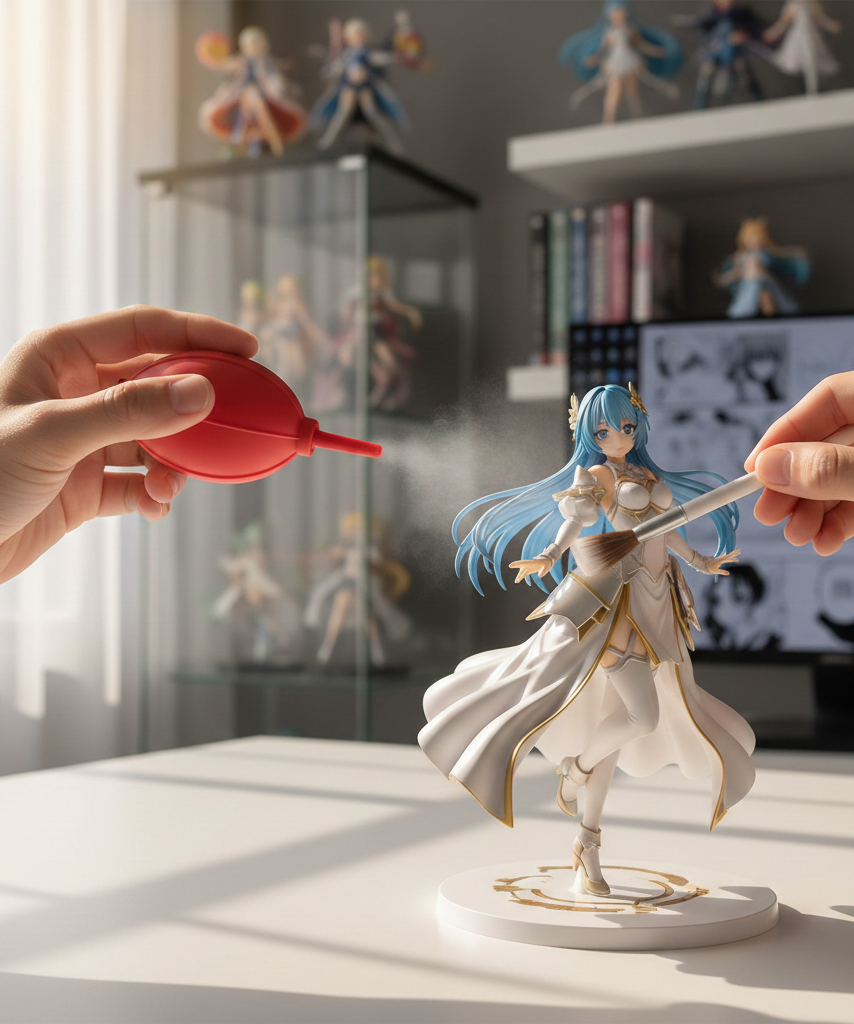
Best Tools for Cleaning PVC Figures
Before you start, gather tools that are low-risk and easy to control. You do not need a complicated kit.
Recommended safe cleaning tools
A practical PVC figure cleaning setup usually includes:
- a manual air blower
- a very soft makeup brush or camera lens brush
- microfiber cloths for shelves, glass, and larger non-delicate surfaces
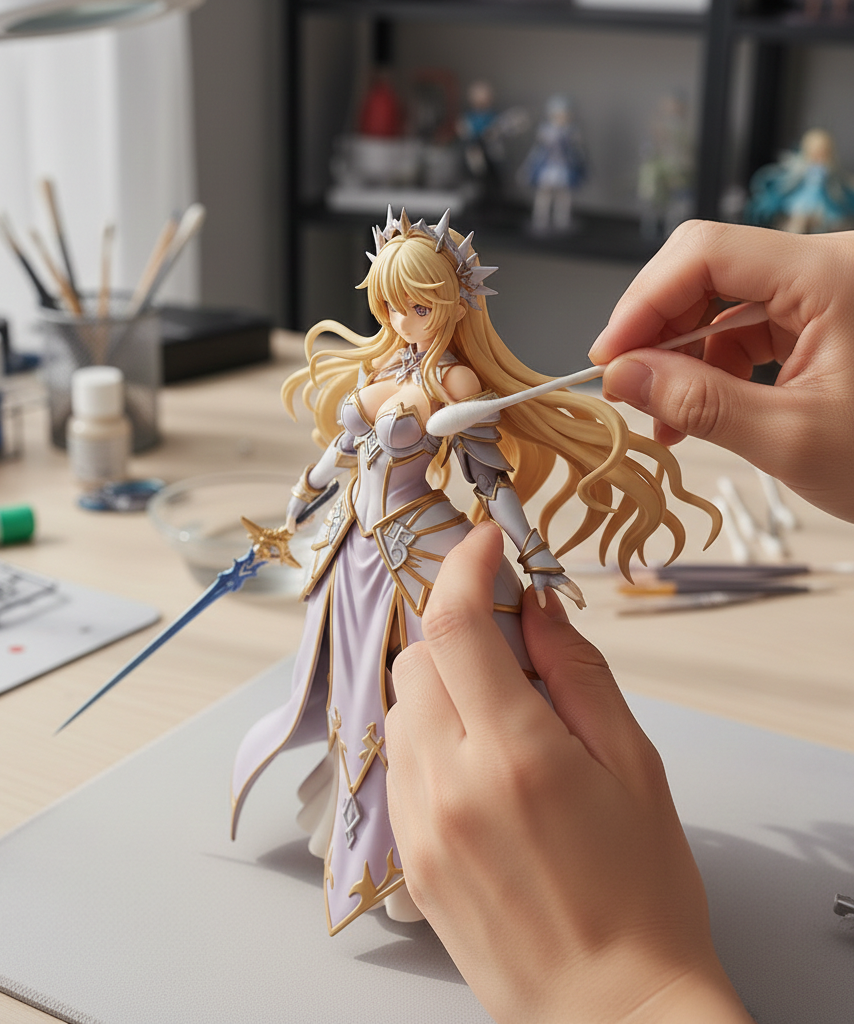
- cotton swabs for tight spots
- lukewarm water for occasional deeper cleaning
- a clean towel or drying mat
- optional cotton gloves if you want to reduce fingerprints on glossy figures
Tools and products to avoid
Do not use these on your figure unless you are dealing with a very specific restoration case and know exactly what you are doing:
- abrasive sponges
- paper towels on painted surfaces
- strong household cleaners
- bleach or ammonia-based sprays
- very hot water
- rough toothbrushes
- compressed air blasted at close range
- alcohol on painted areas
Even if a product seems harmless on plastic in general, anime figure paint and finish layers are much less forgiving.
How to Clean PVC Figures Safely: Basic Dust Removal
For most collectors, regular dust removal is the only cleaning method needed most of the time.
Step 1: Wash and dry your hands first
Clean hands reduce the risk of transferring oils and grime onto the figure while you clean it.
Step 2: Move the figure to a stable workspace
Use a flat, uncluttered surface with good lighting. If the figure has fragile accessories, remove only the parts that are designed to come off easily. Do not force anything.
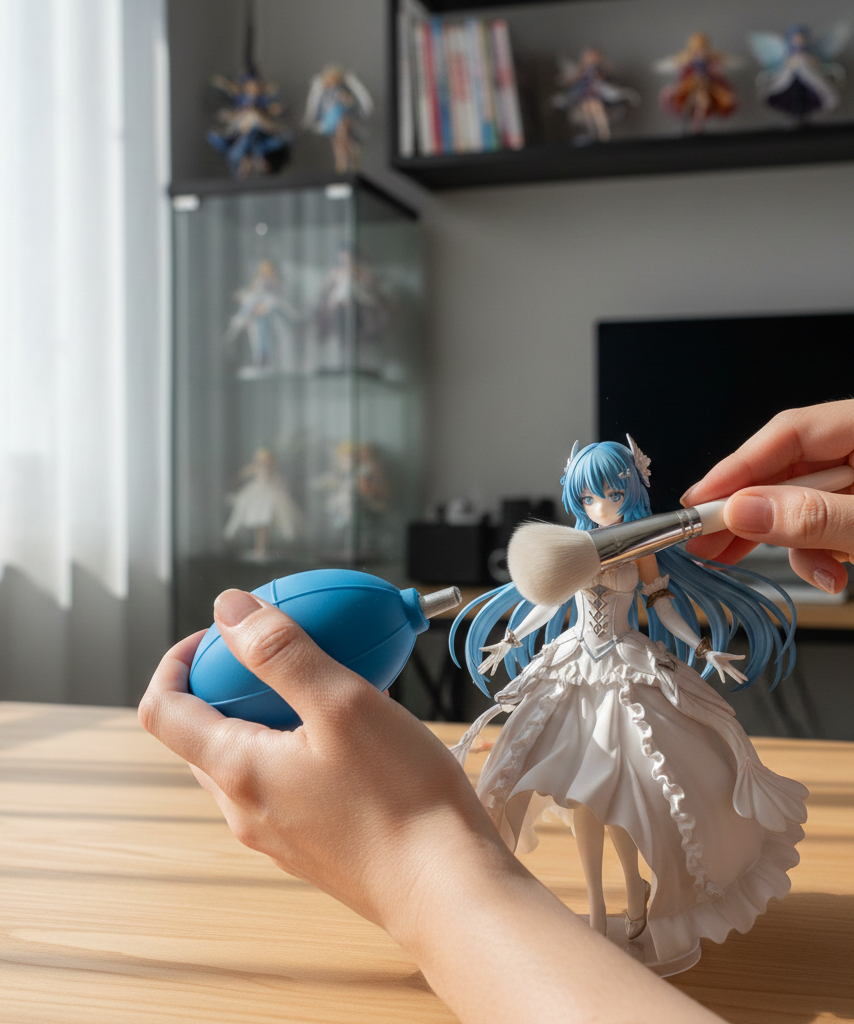
Step 3: Use an air blower first
A manual air blower is the safest first pass because it removes loose dust without physical contact. Start with the most delicate areas such as hair tips, face details, ribbons, and effect parts.
Step 4: Follow with a soft brush
Use a very soft brush to lift any dust that remains in sculpted creases. Work gently, using light strokes rather than scrubbing motions.
Step 5: Clean the display surface too
If you clean the figure but leave dust on the shelf or inside the cabinet, the work does not last. Wipe the surrounding display area during the same session.
When a PVC Figure Needs More Than Dusting
Sometimes a figure has more than loose dust. Fingerprints, sticky residue, smoke film, or older grime may need slightly deeper cleaning.
Signs deeper cleaning may be needed
A deeper but still safe cleaning may help if you notice:
- visible fingerprints on glossy areas
- dirt in recessed sculpt details that brushing does not remove
- sticky or grimy feeling from room residue
- shelf dust that has mixed with humidity over time
Use lukewarm water only when necessary
For light surface grime, plain lukewarm water is often enough. Dampen a soft cloth or cotton swab lightly rather than soaking the figure immediately. Focus only on the affected area first.
For removable parts, minimal soaking can work
If a sturdy removable part has grime in non-electronic, non-paper, non-metal areas, a short soak in lukewarm water can sometimes loosen residue. Keep it gentle and brief. Never use hot water, and never soak parts with decals, magnets, or questionable paint stability unless you are sure they can handle it.
Dry thoroughly before reassembly
Any cleaned part should be fully dry before going back onto the figure. Moisture trapped in pegs, sockets, or tight joints can create problems later.
How to Handle Sticky PVC Figures Carefully
Collectors sometimes encounter PVC figures that feel sticky even when they are not visibly dirty. This can happen from plasticizer migration, long-term storage, heat, smoke exposure, or poor room conditions.
Do not panic and do not scrub hard
Sticky residue often leads people to overclean. That usually makes the situation worse. Start with the gentlest method first.
Try mild cleaning with water and soft contact
Use a soft cloth or cotton swab slightly dampened with lukewarm water. Work slowly on one small area at a time. If the tackiness improves, continue carefully. If it does not, stop before escalating.
Improve the display environment afterward
Sticky figures often benefit from better room airflow, lower heat exposure, less smoke or cooking residue nearby, and more regular maintenance. For shoppers exploring this further, see clean resin statues safely.
Cleaning Mistakes That Can Damage PVC Figures
Many figure-cleaning problems come from common household habits that are fine for furniture but risky for collectibles. For shoppers exploring this further, see protect figures from dust.
Using harsh chemicals
If a cleaner is designed to cut grease aggressively, whiten surfaces, or disinfect strongly, it is usually a bad idea for painted PVC figures. For shoppers exploring this further, see PVC action figures.
Cleaning too often with too much contact
Frequent handling and rubbing can wear delicate finishes faster than light dust ever would. Gentle maintenance beats over-cleaning.
Forcing apart tight joints or accessories
If a part does not come off easily, assume it was not meant to be removed during routine cleaning. Forcing it can crack pegs or stress paint.
Using hot water to speed things up
Heat can soften PVC, shift shapes, and create fit issues. Lukewarm water is the upper limit for safe routine cleaning.
Safe Routine for Long-Term PVC Figure Care
A good maintenance routine keeps figures cleaner and reduces the need for riskier deep cleaning later.
Practical routine for most collectors
A simple schedule looks like this:
- weekly visual check for dust or fingerprints
- light blower and soft-brush cleaning every 2 to 4 weeks
- shelf and cabinet wipe-down during the same session
- deeper spot cleaning only when clearly needed
Reduce future cleaning by improving storage
You can keep PVC figures cleaner longer if you:
- use enclosed display cabinets
- keep figures away from direct sunlight and heat
- avoid placing displays near kitchens or smoking areas
- control room dust with regular vacuuming and cleaning
- avoid overcrowding shelves
FAQ About Cleaning PVC Figures Safely
Can I wash a PVC anime figure with water?
Sometimes, yes, but only gently and usually only when deeper cleaning is necessary. Use lukewarm water, not hot water, and avoid soaking painted parts unless you are confident the piece can handle it.
Can I use alcohol wipes on PVC figures?
It is safer to avoid alcohol on painted figure surfaces. Alcohol can damage paint, dull finishes, or affect delicate coatings.
How often should I clean PVC figures?
Most figures only need light dust removal every few weeks, depending on your room and display setup.
What is the safest way to remove dust from anime figures?
A manual air blower followed by a very soft brush is the safest standard method for most PVC figures.
Why does my PVC figure feel sticky?
Possible causes include age, heat, trapped storage conditions, smoke residue, or plasticizer migration. Start with gentle cleaning and improve storage conditions afterward.
Final Thoughts on How to Clean PVC Figures Safely
If you want to clean PVC figures safely, the core rule is simple: start gentle and stay gentle. Most anime figures respond best to careful dust removal, minimal moisture, and as little physical stress as possible.
A manual blower, a soft brush, a clean workspace, and patience will solve most routine cleaning problems without risking the paint or sculpt. When deeper cleaning is needed, lukewarm water and targeted spot cleaning are usually safer than harsh products.
For collectors who care about long-term display quality, safe PVC figure cleaning is not about making a figure look brand new in one session. It is about protecting the finish, preserving the details, and keeping the collection looking sharp year after year.
Comments